How to Remove Baked On Brake Dust Without Wheel Damage
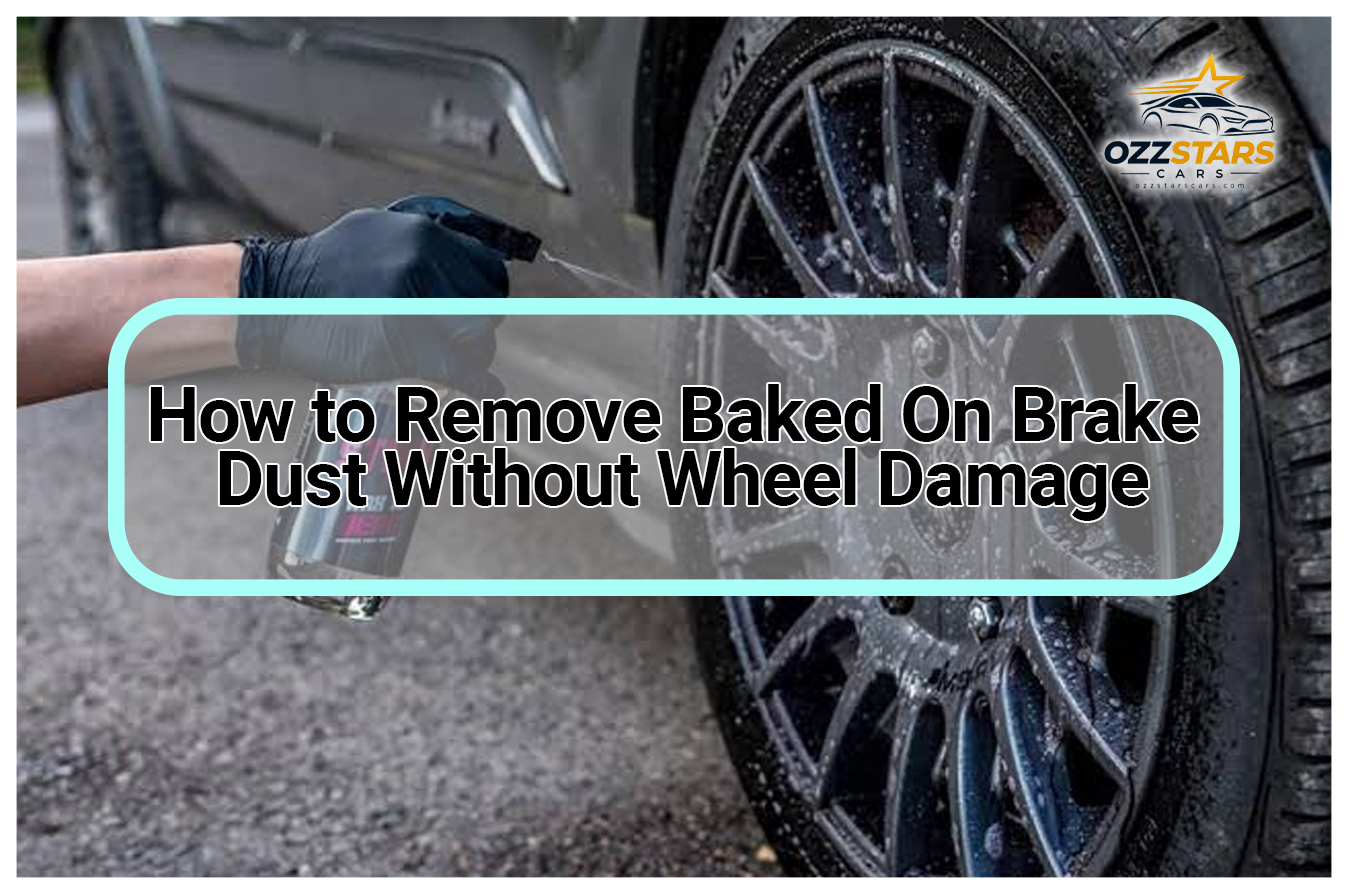
The short answer to how to remove baked on brake dust: work up a ladder of cleaning strength and stop at the first step that works. Start with a cool wheel, a thorough rinse and a mild soap with a soft brush. If that leaves deposits behind, move to a dedicated wheel cleaner or an iron remover that its label approves for your wheel's finish, and rinse it off within the time the label and your carmaker allow. Strong acid or alkaline cleaners are the last resort, not the first, because they can get through a wheel's clear coat and stain the paint underneath.
Car soap alone rarely shifts it, and the reason is in how the dust got there.
Why baked-on brake dust bonds to the wheel
Every time you brake, the pads rub against the brake rotors, and both wear a little. The result is a fine, dark dust made of worn pad material and tiny metal particles, including iron worn off the rotor. It comes off hot and lands on the nearest surface, which is the inside and face of your wheel.
Three things turn that dust into a crust:
- Heat. The particles land warm, and the wheel heats up from the brakes on every drive. Repeated heating helps the residue cling to the finish instead of sitting on top of it.
- Iron and moisture. Iron particles rust when they get wet, which gives them a better grip on the surface. They can anchor into a wheel's clear coat much like the iron fallout that settles on paint.
- Time. Each drive adds a layer and bakes the last one on a little harder. A wheel that is washed often never builds the crust. A wheel left for months does.
That is why normal car soap does so little. Soap is made to lift loose dirt and grease. It does not react with embedded iron, and it cannot soften a layer that has been heat-cycled onto the surface for months. The fix is chemistry that targets the deposit, patience with repeated gentle cleaning, or both.
Know where you are starting: a cool wheel and a known finish
Two things decide how far up the ladder you can safely go.
Temperature. Clean wheels only when they are cool to the touch. Mazda's technical service bulletin 02-004/20, "Dark Stains Appear on Wheels" (last issued February 26, 2020, read September 24, 2026), says not to apply any specialized wheel cleaner when the wheels are hot, such as after driving or sitting in the sun, and to make sure wheel temperature matches the surrounding air before cleaning.
Finish. A clear-coated painted alloy, a polished uncoated aluminum wheel, a chrome wheel and a matte or powder-coated wheel do not tolerate the same chemicals. Your owner's manual usually says what your wheels are and how the manufacturer wants them cleaned. If you cannot tell, treat the wheel as the most delicate finish it could be and stay low on the ladder.
Safety before you start
- Gloves and eye protection. Wheel cleaners are sprayed at close range, often at knee height. The product label lists the protection it expects; follow it.
- Ventilation. Work outdoors or in an open garage, not in a closed space.
- Never mix products. Use one cleaner at a time and rinse it off completely before trying another. Layering wheel chemicals produces reactions and damage nobody can predict.
- Keep it on the wheel. The brake rotor, pads and caliper sit right behind the spokes. Aim cleaner at the wheel face and barrel, rinse thoroughly, and do not assume any wheel cleaner is meant for brake parts. What a product may touch is on its label, and what your car can take is in its manual.
- Leave the wheels on the car. Some guides suggest taking wheels off for cleaning. Lifting a car and refitting a wheel to the carmaker's torque specification is a separate job with its own safety rules, and it is outside this guide. If you want the inner barrels deep-cleaned with the wheel off, a detailer or tire shop can do it.
How to remove baked on brake dust: the cleaning ladder
Climb only as far as you need. Each step up adds risk to the finish.
Step 1: Rinse, then wash with mild soap and a soft brush
Rinse the wheel thoroughly first. Loose grit comes off with water alone, and you do not want to scrub it across the finish. Wetting the dust also stops you brushing dry particles into the air.
Then wash with a car-safe soap or mild detergent. Mazda's owner's manual section on aluminum wheel maintenance (2018 CX-3, read September 24, 2026) says: "Do not use any detergent other than mild detergent," and "Always use a sponge or soft cloth to clean the wheels." It also says not to use "a wire brush or any abrasive cleaner, polishing compound, or solvent on aluminum wheels."
Use tools that only ever touch wheels, and keep them away from your paint. Wheel grime is some of the grittiest dirt on the car, which is why it gets its own bucket in the two-bucket car wash method, and why the debate over whether to wash wheels first or last matters less than keeping their tools separate.
On light buildup, a few rounds of this over several washes may be all it takes.
Step 2: A dedicated wheel cleaner labeled for your finish
If soap leaves a dark film or speckles behind, the next step is a cleaner made for wheels. Read the label before buying: it should name your wheel finish as approved, and many say whether they are pH-neutral, acid-free or acidic. Apply it to a cool, wet wheel, agitate gently with a soft wheel brush, and rinse thoroughly.
Dwell time comes from the label, not from us. Where your carmaker sets a tighter limit, the stricter rule wins. Mazda's bulletin, for example, says to rinse the wheel thoroughly within 15 minutes after any cleaner is applied to its wheels. Never let a cleaner dry on the wheel.
Step 3: An iron remover for the bonded particles
When specks remain after a wheel cleaner, they are often embedded iron. Iron removers are made to react with those particles and loosen them, and many change color as they react, which shows where the contamination was. Our guide to iron fallout removers and what the purple bleed means explains the chemistry and its limits on paint, and the same logic applies to a clear-coated wheel face.
Check that the label approves the product for wheels and for your finish, apply it only to a cool wheel, and follow its dwell and rinse directions. Repeat on a later day rather than leaving it on longer.
Step 4: Strong acid or alkaline cleaners, only if the label and your manual allow
This is where wheels get damaged. Mazda's bulletin 02-004/20 describes exactly what can happen: some automotive cleaning products "contain strong acid or alkali," and when they are used on its wheels, "the chemicals contents penetrate the clear coating of the wheel surface and damage the paint under the clear coating. The damaged area has the appearance of dark stains." The bulletin instructs owners not to use products containing strong acid or alkali on its wheels, and says stains caused by improper cleaning are not covered under the Mazda Vehicle Warranty.
Other carmakers and wheel makers set their own rules, so check yours. If your manual rules strong cleaners out, this step does not exist for your car. If a professional wheel refinisher or detailer thinks the deposit needs one, let them make that call and do the work.
When it is not brake dust anymore
Sometimes the dark marks do not change at all, whatever you use. That usually means the problem is no longer a deposit on the finish but damage in it: stains under the clear coat like the ones Mazda describes, pitting where corrosion has eaten into the surface, or clear coat that is peeling or flaking.
No cleaner fixes those, and stronger chemicals make them worse. One check: after a thorough clean and dry, run a fingertip gently over the spot. A raised speck that feels gritty may still be a deposit. A mark that is flat, or a tiny crater, is in the finish. Our piece on why clean paint still feels rough explains the same touch test on paint. For damage in the finish, the realistic answer is a wheel refinishing specialist. Ask for a quote before deciding.
Keeping it from baking on again
Baked-on brake dust is mostly a timing problem. The crust that is least trouble to remove is the one that never forms.
- Wash wheels regularly, so each layer of dust comes off before heat cycles bond it.
- Rinse after driving on salted or dusty roads, which Mazda's manual also recommends for its aluminum wheels.
- Consider protection. Some owners apply a wheel sealant or coating so fresh dust has less to grip. If you do, use a product labeled for your wheel finish, on a fully clean wheel, following its label.
- Check your manual on automatic car washes. Mazda's says to avoid ones that use high-speed or hard brushes.
FAQ
Why won't car soap remove brake dust from my wheels?
Soap lifts loose dirt and grease. Baked-on brake dust has been heat-cycled onto the finish, and it contains iron particles that anchor into the surface. That usually needs a wheel cleaner or iron remover approved for your finish, sometimes over several rounds.
Is it safe to use an acid wheel cleaner on baked-on brake dust?
It depends on your wheels and your carmaker's instructions, and it should be the last step, not the first. Mazda's bulletin 02-004/20, for example, says strong acid or alkali cleaners can penetrate the clear coat on its wheels and leave dark stains that are not covered by warranty. Check your owner's manual and the product label.
Can I clean my wheels right after driving?
Wait until they are cool. Mazda's bulletin says not to apply specialized wheel cleaner to hot wheels and to make sure the wheels match the surrounding air temperature before cleaning.
What if the brake dust stains will not come off?
If marks survive a full, careful clean, they are probably in the finish rather than on it: stains under the clear coat, pitting or failing clear coat. Stronger chemicals will not fix that. A wheel refinishing specialist can tell you what is possible.
Start gentle, climb slowly, and stop where the label and your manual tell you to. A slightly dusty wheel is better than a stained one.