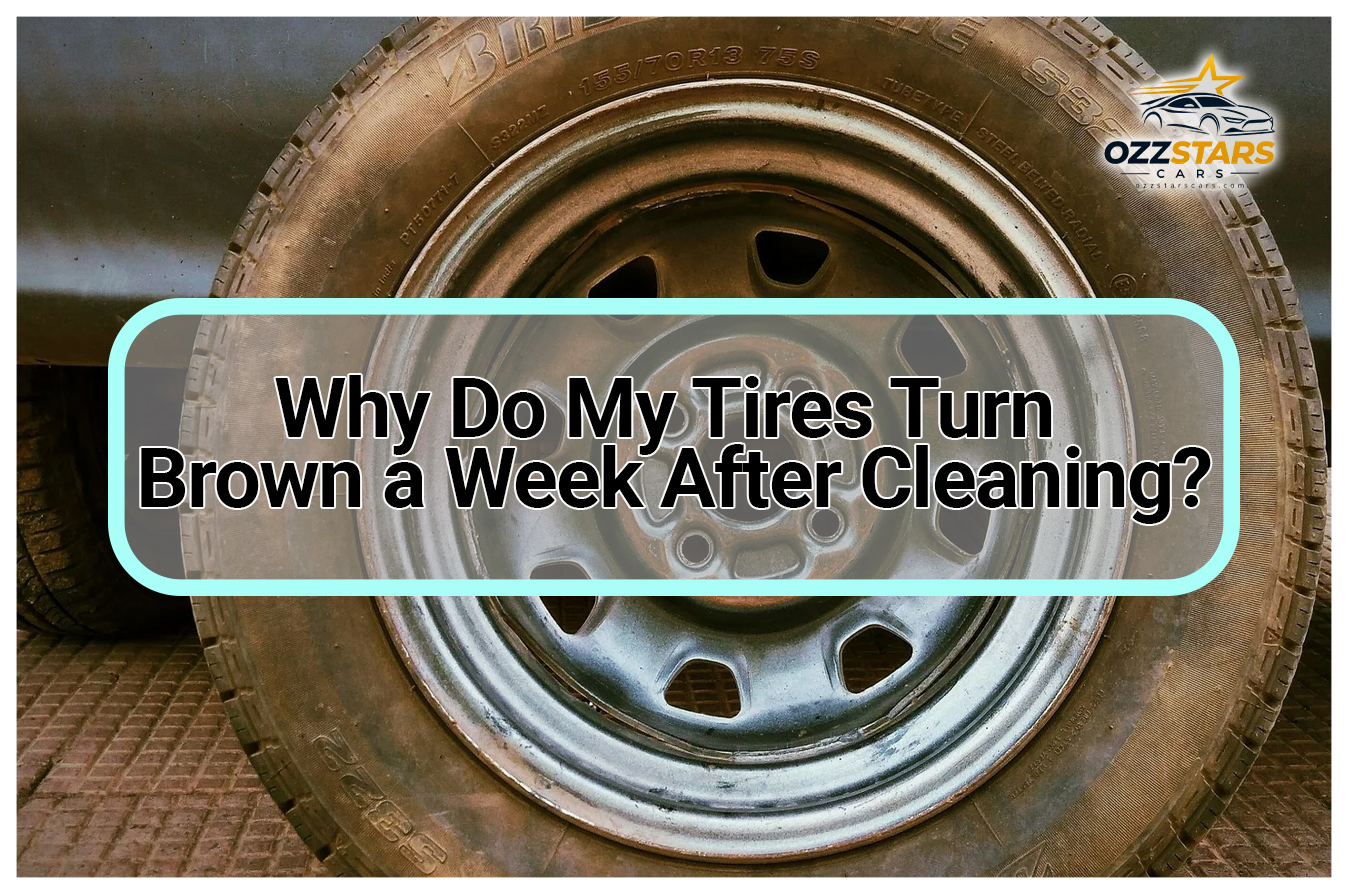
Why Do My Tires Turn Brown a Week After Cleaning?
The short answer to "why do my tires turn brown": the rubber is protecting itself. Tires are made with antiozonant chemicals that slowly work their way to the surface, react with ozone and air, and leave a brown film. Detailers call it blooming. It is normal and it is not a defect. It comes back a week after cleaning for two reasons: the tire keeps pushing out more of the chemical for its whole life, and most quick cleanings leave some of the old brown behind, often sealed under a fresh coat of dressing.
So the goal is not to stop blooming forever. Nothing a car owner can do will. The goal is to clean it out completely, protect the sidewall sensibly, and stretch the time before it shows again. Below we explain the cause first, then how to tell blooming apart from other kinds of brown, then the cleaning routine.
What the brown film actually is
Rubber and ozone do not get along. Ozone in the air attacks the rubber's structure over time, which is one of the ways sidewalls end up cracked. To slow that down, tire makers blend protective chemicals called antiozonants into the rubber compound.
The antiozonant most often named in this context is 6PPD. According to the EPA's 6PPD-quinone research page (read September 23, 2026), vehicle tires contain 6PPD to keep them from breaking down through reactions with ozone and other reactive oxygen species in the air. The design is deliberate: the chemical migrates to the surface, meets the ozone there, and reacts with it before the ozone can damage the rubber underneath.
That reaction leaves a residue. On a black tire it shows up as a dull brown or bronze haze, usually most visible on the sidewall and around the raised lettering. In other words, the brown is evidence that the tire's built-in protection is doing its job.
Why do my tires turn brown again so fast?
This is the part most explanations skip. If blooming were a one-time stain, one good scrub would fix it. It keeps coming back for reasons that stack on top of each other.
The supply never runs out. Cleaning removes what is on the surface. It does nothing to the antiozonant still inside the rubber, which keeps migrating outward. A freshly cleaned tire starts blooming again right away. It just takes a few days for the film to become visible.
The first cleaning often stops at the surface. Brown bloom sits in the texture of the sidewall and in the edges of the lettering. A quick spray and wipe can make a tire look black while wet, then the leftover brown reappears as it dries. If a dressing goes on at that point, it can trap the remaining film under a shiny layer. As the dressing wears off over the next week, the brown shows through again, and it looks as if it came back overnight.
The dressing can collect dirt. Thick, sticky dressings hold on to road dust and brake dust. That is not blooming, but it turns a sidewall brown just as quickly, and the two usually happen at the same time.
Sun, heat and outdoor parking. Tire retailers and detailers commonly report that tires on cars parked outside in strong sun brown faster than garaged ones. That fits the chemistry, since the protective reaction is driven by exposure to the air. We have not seen a published measurement of how much faster, so we will not put a number on it.
Which brown are you looking at?
Not every brown tire is blooming, and one of the possibilities is not a cleaning question at all. A white or light-colored towel helps here: wipe a small patch of dry sidewall and look at what comes off.
| What you see | Where it sits | Towel wipe | What it most likely is | What to do |
|---|---|---|---|---|
| Even brown or bronze haze across the whole sidewall | Sidewall, heaviest around lettering | Brownish residue, not gritty | Blooming (antiozonant film) | Deep clean until the foam runs clear, then protect |
| Brown that feels tacky and looks darker in the grooves | Wherever dressing was applied | Dirty, slightly greasy | Dust and grime held by old dressing | Strip the old dressing, clean, use less next time |
| Dark gray to brown dust, heaviest near the wheel | Outer edge of the sidewall next to the rim | Dark, fine, gritty | Brake dust | Clean wheels and tire together with separate tools |
| Fine cracks, splits, bulges or cuts in the rubber | Anywhere on the sidewall | Not relevant | Not a cleaning issue | Stop and have a tire shop inspect it |
The last row matters. Browning is cosmetic. Cracks, cuts and bulges are about the tire's condition, and no cleaner or dressing fixes them or tells you whether the tire is safe. That judgment belongs to a tire professional, and we do not try to make it here.
How to clean brown tires so they stay black longer
The routine below is built around one idea: get all of the old bloom out before you put anything on. Follow the product labels for dilution and contact time. We do not give our own numbers for either, because they vary by product.
- Start with a cool tire in the shade. Cleaners dry fast on hot rubber and hot wheels, which leaves residue and streaks. The same logic behind what goes wrong when washing a car in direct sunlight applies to tires.
- Decide where tires fit in your wash. Many people do wheels and tires together, first or last. Whether to wash wheels first or last matters less than keeping their tools and water separate from the ones that touch paint.
- Rinse off loose dirt. Get the grit off before you scrub, so the brush works on the film and not on sand.
- Apply soap or a dedicated tire cleaner. Plain soap and water works for light browning. For heavy bloom or old dressing buildup, a dedicated tire cleaner is stronger. Either way, use it as the label directs.
- Scrub with a stiff brush that is only for tires. Work the whole sidewall, including the edges of the lettering. Watch the foam: when the tire still has bloom in it, the suds come off brown.
- Rinse and repeat until the foam stops coming off brown. This is the step that decides whether the brown is back in a week or stays away longer. Heavily browned tires often need more than one pass. Stop when the foam runs clear or close to it.
- Rinse thoroughly and let the tire dry completely. Dressing applied over a wet or soapy tire does not bond well and tends to streak and sling.
- If you use a dressing, apply a thin coat to the sidewall only. Keep it off the tread and away from brake parts. Wipe off the excess with a towel so the surface is not sticky enough to hold dust.
Use separate towels for tires. Tire residue and dressing stain towels and do not always wash out, and a towel that has been on tires should not go back on paint. Our guide to microfiber towels for car paint and when to retire one covers how to keep the two sets apart.
Chemical safety for tire and wheel cleaners
- Read the label before you start, including the gloves and eye protection it calls for.
- Work outdoors or with the garage door open. Some cleaners give off strong fumes in a closed space.
- Never mix products. Do not combine a tire cleaner with a wheel cleaner, bleach, an acid or any other chemical, and do not spray one product over another that is still wet on the surface.
- Do not let cleaner dry on the tire or the wheel. Rinse it off within the time the label gives.
- Keep cleaners and dressings off brake parts. If product lands on the rotors or pads, stop and check your vehicle manual or ask a shop before driving.
What makes browning worse, and what does not help
Petroleum-based cleaning products. Michelin's own guidance is direct on this. The Michelin USA FAQ page (read September 23, 2026) advises avoiding petroleum based tire cleaning products because they can exhaust the tire's protective agents and lead to cracking, and recommends non-petroleum products or plain soap and water. If a product label lists petroleum distillates or solvents, weigh that against this advice. Your own tire maker's guidance is the one to follow for your tires.
Harsh household cleaners. Degreasers and bleach are not made for tire rubber, and they do nothing about the antiozonant still inside it.
Dressing on a dirty tire. This is a very common reason a tire looks brown again within days. The dressing locks in whatever was left behind.
Too much dressing. A heavy, wet-looking coat stays tacky, collects dust and slings onto the paint when you drive. Thin and buffed works better for appearance, too.
Brake dust left to build up. Brake dust contains metal particles from the brakes. If you clean the tires but leave the wheels dirty, the dust keeps landing on the fresh sidewall. Those iron particles are the same kind that iron fallout removers turn purple on paint. If you use a fallout remover on the wheels, check its label for whether it is meant for rubber.
What cleaning cannot do
We would rather say this plainly than sell a routine that overpromises.
- It cannot stop blooming. As long as the tire contains antiozonant, it will keep coming to the surface. Regular cleaning manages the look. Nothing we know of ends it permanently, and we have not seen evidence that any dressing does either.
- It cannot tell you how old or healthy a tire is. A brown tire is not a bad tire, and a shiny black one is not a safe one. Tire age, cracking and wear are inspection questions for a tire shop and your owner's manual.
- It cannot restore cracked rubber. Dressing can make weathered rubber look darker for a while. It does not repair it.
- It is not zero effort. On a car parked outside, keeping tires black means cleaning them properly on most washes, not once a season.
Where the brown goes when you rinse it
The same 6PPD behind blooming reacts with ozone to form a compound called 6PPD-quinone. The EPA page linked above says stormwater from streets and parking lots carries tire particles into streams, and that a 2021 study in the journal Science linked 6PPD-quinone in stormwater to coho salmon deaths.
We could not find a source that measures how much of this comes off a tire during a home wash, so we make no claim about it. The reasonable step is to follow your city's or county's guidance on washing cars at home and where rinse water should go.
FAQ
Is it bad if my tires turn brown?
No. Brown blooming is the antiozonant in the rubber reacting with ozone and air at the surface. It is a cosmetic effect of the tire protecting itself, not a defect. Cracks, cuts or bulges are different, and those need a tire shop's inspection.
Why do my tires turn brown after I use tire shine?
Usually because the dressing went on over a tire that was not fully clean. The leftover bloom sits under the shine and shows again as the dressing wears. Sticky dressings also collect dust and brake dust, which look brown too. Scrub until the foam runs clear, dry the tire, then apply a thin coat.
Can I use a degreaser or bleach on brown tires?
We do not recommend it. Michelin advises against petroleum based tire cleaning products and recommends non-petroleum products or plain soap and water. Use soap or a dedicated tire cleaner as its label directs, and never mix cleaning products.
Do new tires turn brown?
They can. The antiozonant is in the rubber from the start, so a new tire can bloom once it has been exposed to air and sun for a while. How quickly depends on conditions such as heat, sunlight and outdoor parking.
How often should I clean my tires to keep them black?
No fixed schedule fits every car. A practical rule is to clean the tires whenever you wash the car, and to do a full scrub-until-clear clean whenever brown starts to show. Cars parked outdoors will generally need it more often.
Clean it out, not just over. Then let the tire do its job.