Microfiber Towels for Car Paint: Weave, GSM and Retiring One
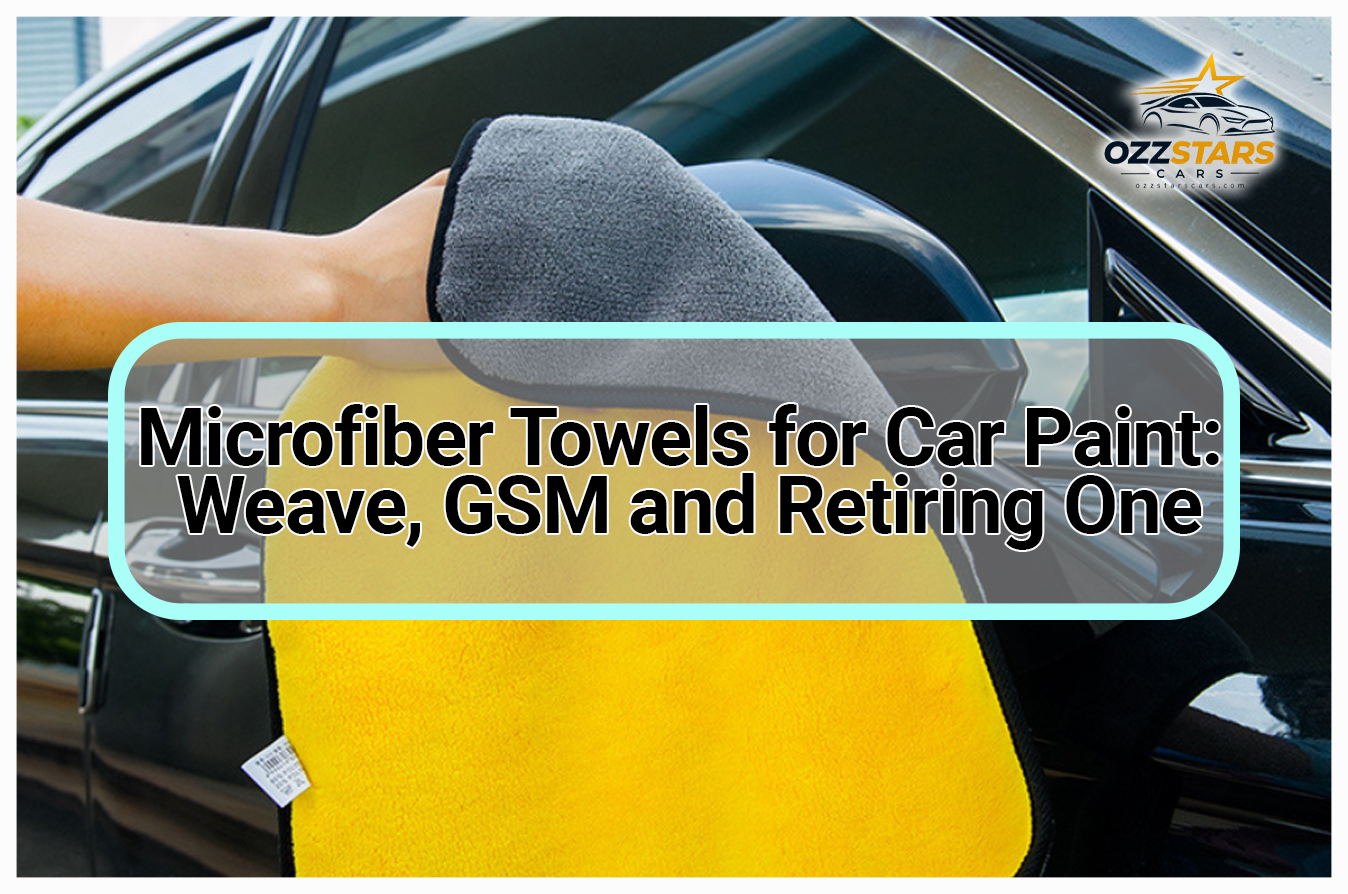
GSM and weave tell you what a towel was built to do. Wear tells you whether it can still do it safely, and that second part is the one most guides skip. GSM (grams per square meter) is a weight and density measurement; manufacturers generally report that a higher GSM means more fiber packed into the towel, which usually means more absorbency and more cushioning between the towel and the paint. Weave changes the job: twist-pile towels, with raised, twisted loops, are built for fast water pickup and drying; waffle-weave towels, with a gridded pocket pattern, are thinner and better suited to glass, trim, and wheels than to bulk drying. None of that stays true forever. A towel that started safe on paint does not stay that way once its fibers wear down, hold embedded grit, or its edges start to fray.
What GSM actually measures
GSM stands for grams per square meter, a straightforward weight-per-area figure. Detailing suppliers and manufacturers commonly report that towels intended for car drying run considerably heavier than towels meant for light wiping, with dedicated drying towels frequently marketed in the high hundreds to over a thousand GSM, while thinner glass and trim towels are marketed well below that. More fiber generally means the towel holds more water before it needs wringing out, and more material between the towel's surface and the paint. That does not mean the highest GSM number on the shelf is automatically the right choice for every task; a thick, plush towel is overkill for wiping a window and can leave more lint or drag on tight interior trim than a thinner one built for that job.
Twist pile vs. waffle weave: what each is built to do
Twist pile towels have long, twisted loops of fiber, similar in feel to a plush drying towel. Manufacturers report this construction increases surface area for water pickup and makes it a common choice for the main drying pass across a car's bodywork, where fast, high-volume absorption matters most.
Waffle weave towels use a gridded pattern that creates small pockets across the surface. As reported by detailing suppliers, this construction is thinner and more flexible than a plush twist-pile towel, holds less water per pass, and is generally recommended for glass, wheels, door jambs, and trim rather than as the primary drying towel for painted panels, since a thinner weave with less cushioning is a better match for tight or delicate surfaces than for broad, flat bodywork.
Most people who take this seriously end up owning both, because they are built for different jobs rather than one being a lesser version of the other.
What actually happens to a towel over its working life
This is the part almost no guide covers, and it is the part that matters most for paint safety. A new towel and a two-year-old towel are not the same tool even if they started as the same product.
- Mechanical wear thins the nap. Every wash-and-dry cycle, and every pass across a car, gradually flattens and shortens the fibers that used to stand up and do the work. A towel with a flattened nap holds less water and has less cushioning between whatever is trapped in it and the paint underneath.
- Embedded grit survives laundering. Fine grit that gets worked deep into the fibers during use does not always come out in a normal wash cycle, especially if the towel was never rinsed or laundered promptly after picking up something abrasive. A towel that looks clean can still be carrying material that will scratch paint on the next use.
- Edges fray and curl. The stitched or bound edge of a microfiber towel is the part most likely to fail first, and a curling, hardening, or fraying edge behaves less like soft fiber and more like a hard seam, which is exactly the kind of firm edge that can mark paint on contact.
None of this happens on a fixed schedule. It happens with use, and it happens faster for a towel that is used carelessly, dropped on the ground and reused without a proper rinse, or laundered with fabric softener or dryer sheets, both of which coat fibers and reduce absorbency over time.
The signs a towel should stop touching paint
- The nap feels noticeably flatter or thinner than it did when new, especially in the center where most drying passes concentrate.
- The towel no longer picks up water the way it used to, even after laundering.
- Any edge feels stiff, curled, or rough to the touch rather than soft.
- The towel was dropped on a driveway, garage floor, or any gritty surface and was not immediately and thoroughly rinsed or laundered before its next use.
- It smells musty or sour after drying, a sign it was stored damp and may be holding residue laundering has not fully removed.
A towel showing any of these is still useful. It is just no longer the right tool for direct contact with paint, and moving it to a lower-risk job, wheels, engine bay trim, or general cleanup, gets more life out of it without the risk.
A simple way to keep a compromised towel away from paint
Color-coding solves this cheaply. Assign one color exclusively to paint-contact drying and detailing, a second color to wheels and lower panels, and a third to glass and interior trim. Once a paint towel shows any of the wear signs above, it gets demoted to the wheel or interior pile permanently rather than being retired outright, and it never moves back up. This removes the guesswork of trying to remember which specific towel has been dropped once or is starting to wear thin, which is the actual reason towels end up causing damage they were never built to cause.
Care that extends a towel's working life
Wash microfiber separately from other laundry, since lint from cotton items transfers onto microfiber and reduces its performance. Use warm water and a low-heat dry, and skip fabric softener and dryer sheets entirely, since both leave a coating on the fibers that reduces absorbency over time. Clean the lint trap before drying towels specifically. None of this makes a towel last forever, but it slows the wear described above and keeps a towel in the safe-for-paint category longer.
Technique still matters more than the towel itself; the mechanics of blotting versus dragging are covered in Drying a Car Without Scratching It, and how a towel fits into a full drying routine, including when to reach for air instead, is compared in Blowing, Blotting or Dragging: Three Drying Methods Compared. The same fiber-behavior logic applies to wash mitts, covered in Mitts, Sponges and Wash Media: What Holds Grit and What Releases It, and the whole system exists to prevent the same problem described in How to Wash a Car Without Putting Swirls Into It.
FAQ
What GSM should I look for in a car drying towel?
Detailing suppliers commonly report dedicated drying towels in a high-GSM range, well above what a general wipe-down cloth carries, because more fiber generally means more absorbency and cushioning. This guide does not recommend a specific product or number; check the manufacturer's own published spec on any towel you are considering.
How long does a microfiber towel actually last?
There is no fixed lifespan. It depends on how often it is used, how it is laundered, and whether it has ever been dropped and reused without a proper rinse. Watch the wear signs described above rather than a calendar.
Is a more expensive towel automatically safer for paint?
Not by itself. A well-made towel used carelessly, dragged instead of blotted, or reused after being dropped, can still scratch paint. Price is not a substitute for correct technique and towel maintenance.
Can I use the same towel for drying paint and cleaning wheels?
Not safely, and not for long. Wheels carry brake dust and road grit that is harder and more abrasive than what typically sits on painted bodywork. Keeping a dedicated color for wheels, separate from paint towels, prevents that grit from ever reaching the clear coat.
Do fabric softener and dryer sheets actually hurt microfiber towels?
Detailing suppliers and towel manufacturers commonly warn against both, since they leave a coating on the fibers that reduces absorbency and can make a towel feel less effective at picking up water and fine particles over time.