Best Way to Dry a Car After Washing (Compared)
There is no single best method, only a best combination for the situation in front of you. A purpose-built air mover clears standing water with zero paint contact, so use one first when you have it. A light blot with a clean microfiber towel picks up whatever the air pass leaves behind, with minimal friction. Dragging a towel across the paint is the method to avoid; it holds any trapped particle against the clear coat for the length of the pass instead of lifting it away. Letting the car simply air-dry is a real fourth option nobody markets, and it trades scratch risk for water-spot risk rather than avoiding both.
Ranking the three by paint contact
The clearest way to compare these methods is by how much contact each one puts between something solid and the clear coat, because contact plus friction is what causes a scratch.
| Method | Contact with paint | What it is good at | What it cannot do |
|---|---|---|---|
| Air (blower) | None | Clears bulk water fast, reaches mirrors, badges, grilles, panel gaps | Cannot fully dry every surface alone on most cars; needs a follow-up pass for beaded water |
| Blot (towel, pressed and lifted) | Brief, low-friction | Lifts remaining water and any trapped particles with one point of contact per spot | Slower than air; still requires a clean, well-maintained towel |
| Drag (towel pulled across the surface) | Sustained, higher friction | Dries fastest per pass if that is the only goal | Holds any trapped particle against the paint for the whole pull; the method most likely to cause swirl marks |
Air: what it removes and what it cannot reach
A purpose-built, low-heat air mover pushes water off flat panels and out of the places a towel struggles with, mirrors, badge lettering, grille slats, and panel gaps around doors and the hood. Because there is no physical contact between the tool and the paint, it introduces essentially no scratch risk of its own, provided the air source itself never touches the surface. This is also why it matters that the tool is purpose-built for the job rather than a general household blower or hair dryer: the wrong tool can apply enough heat or force at close range to cause its own damage, which defeats the reason for using air in the first place.
What air alone usually cannot do is finish the job. Water beads and clings to a clean, well-protected surface even after a strong air pass, and some of that beaded water needs a towel to pick up the last of it.
Blot: the one-point-of-contact method
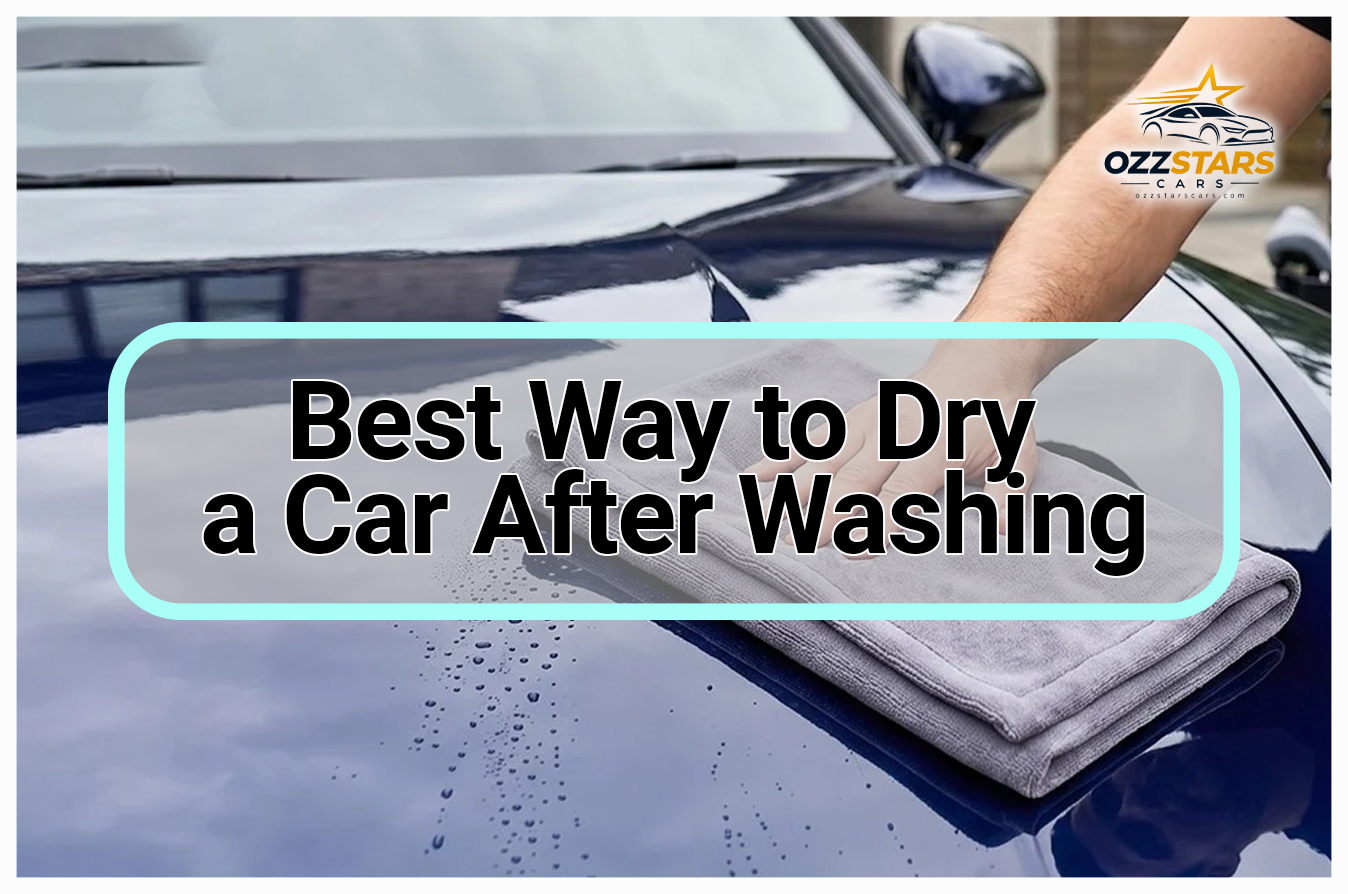
Blotting is a towel pressed against the surface and lifted straight back up, rather than pulled along it. The mechanism is covered in full in Drying a Car Without Scratching It: a particle trapped under a blotting towel gets one brief moment of contact and comes away with the towel, rather than being pushed forward across the clear coat the way a dragged pass would push it. This is the method best suited to whatever an air pass leaves behind, since there is usually not much water left to remove and the towel is doing focused, low-friction cleanup rather than bulk drying.
Drag: why it is the method to avoid
Dragging is pulling a towel along the surface in a continuous motion, the way many people instinctively wipe down a counter. It dries a panel in fewer passes, which is exactly why it feels efficient. The cost is that any grit, sand, or hardened residue caught under the towel travels with it for the whole length of the pass instead of being lifted clear after one point of contact, which is the same mechanism that produces swirl marks during the wash itself, covered in the pillar guide. Dragging often happens without anyone deciding to do it: a towel laid flat and pulled toward the body is a dragging motion even if the person doing it thinks of it as "wiping down."
The scenario table: which combination is the honest answer
Nobody in a driveway has unlimited tools every time. What actually makes sense depends on the situation.
| Situation | Best realistic combination |
|---|---|
| Full detail, equipment on hand | Air first, then a light blot for what remains |
| Quick weekday wash, no blower available | Blot only, working top-down with a folded towel, more passes with lighter pressure |
| Ceramic-coated paint | Air works especially well here since coated paint sheds beaded water more readily, reducing how much blotting is needed afterward |
| Bare or older paint with less protection | Lean on air where possible and keep towel passes to a minimum, since less-protected clear coat has less margin for contact |
| One towel only, no blower | Blot, fold in quarters for multiple clean faces, and prioritize the most visible panels first |
| Apartment parking, no outlet for a blower | Blot only; the technique still works without air, it simply takes more passes |
What letting a car air-dry actually costs you
Skipping a towel entirely and letting the car dry on its own removes towel-contact risk completely, which sounds like the safest option. It is not free. As water evaporates off the paint, whatever was dissolved in it, minerals from tap water, residual soap, road film, stays behind on the surface instead of being lifted away, which is how water spots and streaking form. This risk goes up sharply on a warm panel, since heat speeds up evaporation and shortens the window to intervene, a mechanism covered in more detail in Washing in Direct Sun: What Actually Goes Wrong. Air-drying is a real trade, not a free pass; it swaps one risk for a different one rather than avoiding risk altogether.
FAQ
Is a blower always better than a towel?
Not on its own. A blower removes bulk water with zero paint contact, which is a genuine advantage, but most cars still bead some water a blower cannot fully clear, so a light towel pass afterward is usually still needed.
Can I use a leaf blower or hair dryer instead of a dedicated car dryer?
General-purpose blowers and hair dryers are not built for this job and can apply more heat or force than paint should take at close range. A purpose-built, low-heat air mover is the safer choice if you are going to use air at all.
What if I only have one towel and it gets fully saturated partway through?
Fold it in quarters at the start so you have multiple clean faces before it needs wringing or swapping, and prioritize drying the most exposed panels, hood, roof, and trunk, first.
Does the order I dry the car in actually matter?
Yes. Top-down, following the same logic as wash order, keeps a towel from carrying grime off a dirtier lower panel onto paint that is already clean and dry.
Is it ever fine to just let the car drip-dry and skip drying entirely?
It avoids scratch risk but increases water-spot risk, especially in hard-water areas or on a warm panel. It is a reasonable choice on a cool, shaded day with soft water, and a riskier one otherwise.