Do Grit Guards Actually Work? An Honest Look
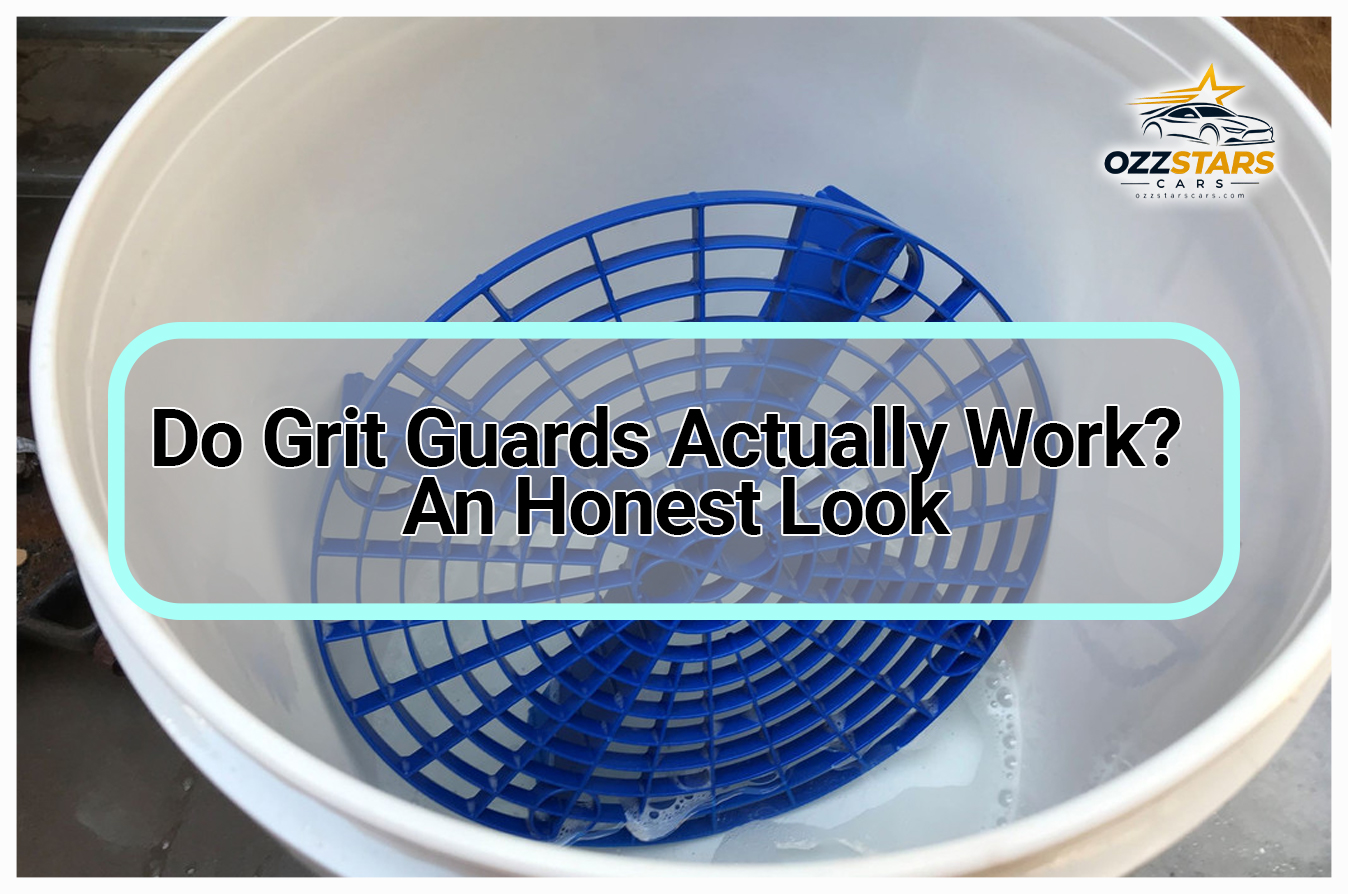
Yes, but for one specific job, not the job the marketing around them sometimes implies. A grit guard, the ridged plastic disc placed in the bottom of a wash bucket, gives a mitt something to press against so trapped grit releases more thoroughly and sinks below the guard, out of reach of the next dip. It does not clean dirty water, it does not remove the need for the two-bucket method, and it will not save a mitt that gets dropped on the driveway and picked back up without a proper rinse. It is a small, honest piece of the same mechanism as everything else in a careful wash, not a stand-alone fix.
What a grit guard actually does, mechanically
Without a guard, a mitt dunked and swirled in a bucket of water releases some trapped grit, but particles can resettle near the bottom and get picked back up on the next dip, especially if the mitt is worked near the bottom of the bucket where settled grit collects. A grit guard's ridged surface gives the mitt something firm to press and work against underwater, which helps dislodge grit from deep in the fibers more completely than swirling in open water alone. Once released, the ridges also physically separate the settled grit below from the water and mitt above, reducing how easily that grit gets stirred back up and picked up again.
This is a real, mechanical improvement to the rinse step of the two-bucket method, covered in full in The Two-Bucket Method, and What It Actually Prevents. It is an enhancement to that method, not a separate technique, and it does not function on its own without the two-bucket setup around it.
What a grit guard does not do
It is worth being direct about the limits, because a ten-dollar piece of plastic gets marketed with more confidence than the mechanism actually supports.
- It does not clean the water. A bucket of rinse water with a grit guard in it still accumulates grit over the course of a wash, the same as a bucket without one, just somewhat more slowly because more of that grit stays trapped below the guard instead of recirculating. Swapping the water partway through a wash still matters on a dirty car.
- It does not rescue a dropped mitt. If a mitt is dropped on the driveway and picked back up without a thorough separate rinse, it now carries whatever was on that driveway, and no amount of bucket hardware corrects for that before the mitt touches paint again.
- It does not replace pre-rinsing. Loose grit removed before the mitt ever touches the car, covered in Why You Rinse Before the Mitt Ever Touches the Paint, never becomes the bucket's problem at all, which is a more effective reduction in risk than anything a grit guard can do after the fact.
- It does not fix a mitt that will not release grit in the first place. Some wash media holds trapped particles more stubbornly than others regardless of what it is rinsed against; that is a separate factor covered in Mitts, Sponges and Wash Media: What Holds Grit and What Releases It.
Is it worth using, given those limits
Within its actual job, improving how thoroughly a mitt releases grit during the rinse step, a grit guard is a genuine, low-cost improvement to the two-bucket method. It costs little, it fits into a bucket that is already part of the recommended routine, and the mechanism behind it, giving a mitt a firm surface to work against and separating settled grit from the water above it, is straightforward and plausible rather than a marketing invention. The honest position is not that it does nothing, and it is also not that it solves the problem on its own. It is one small, specific improvement to one specific step.
What actually matters more than a grit guard
If a reader can only adopt one or two habits from everything in this cluster, a grit guard is not where the highest return is. Rinsing thoroughly before the mitt touches the car, using two buckets instead of one, and washing in straight lines rather than circles all address more of the total risk than a grit guard adds on top of an already-correct routine. A grit guard is a genuine but incremental improvement layered onto habits that matter more on their own, covered together in How to Wash a Car Without Putting Swirls Into It.
Does a grit guard matter more in some conditions than others
Its relative value goes up with how much grit is actually reaching the bucket in the first place, heavier road grime, gravel driveways, salted winter roads, infrequent washing. On a car washed often in a low-grit environment, less grit reaches the bucket to begin with, and the marginal benefit of a guard is smaller simply because there is less for it to catch.
FAQ
Do I need a grit guard in both buckets, or just the rinse bucket?
Most guidance places it in the rinse bucket specifically, since that is where trapped grit is being actively released from the mitt. Some routines use one in the soap bucket as well, though the rinse bucket is where the mechanism does its most direct work.
Can a grit guard replace the two-bucket method entirely?
No. It is an enhancement to the rinse step of the two-bucket method, not a stand-alone substitute for having a separate rinse bucket at all.
Does a grit guard mean I can reuse the same wash water indefinitely?
No. Water still accumulates grit over a wash, and the guard reduces but does not eliminate that buildup. Swapping water partway through a heavier wash still helps.
Is a more expensive grit guard meaningfully better than a basic one?
This guide does not compare specific products or prices. The mechanism, a firm ridged surface for the mitt to work against, is the same regardless of brand.
What happens if I drop my mitt on the ground during a wash?
A grit guard does not correct for this. The mitt has picked up whatever was on that surface, and a thorough separate rinse, ideally under running water, is needed before it touches the car's paint again.