Do You Need a Snow Foam Pre-Wash? The Honest Answer
Snow foam is not required, and it is not a full wash on its own. Its real job is loosening and lifting grit off the paint before a mitt ever touches it, so less abrasive material is sitting on the surface when contact starts. On a genuinely dirty car, that head start meaningfully lowers the risk of dragging grit across the paint. On a lightly dusty car, a thorough plain-water rinse does most of the same job, and snow foam adds less than the videos suggest. The honest answer depends on how dirty the car actually is, not on whether foam looks satisfying running down a panel.
What snow foam actually does, mechanically
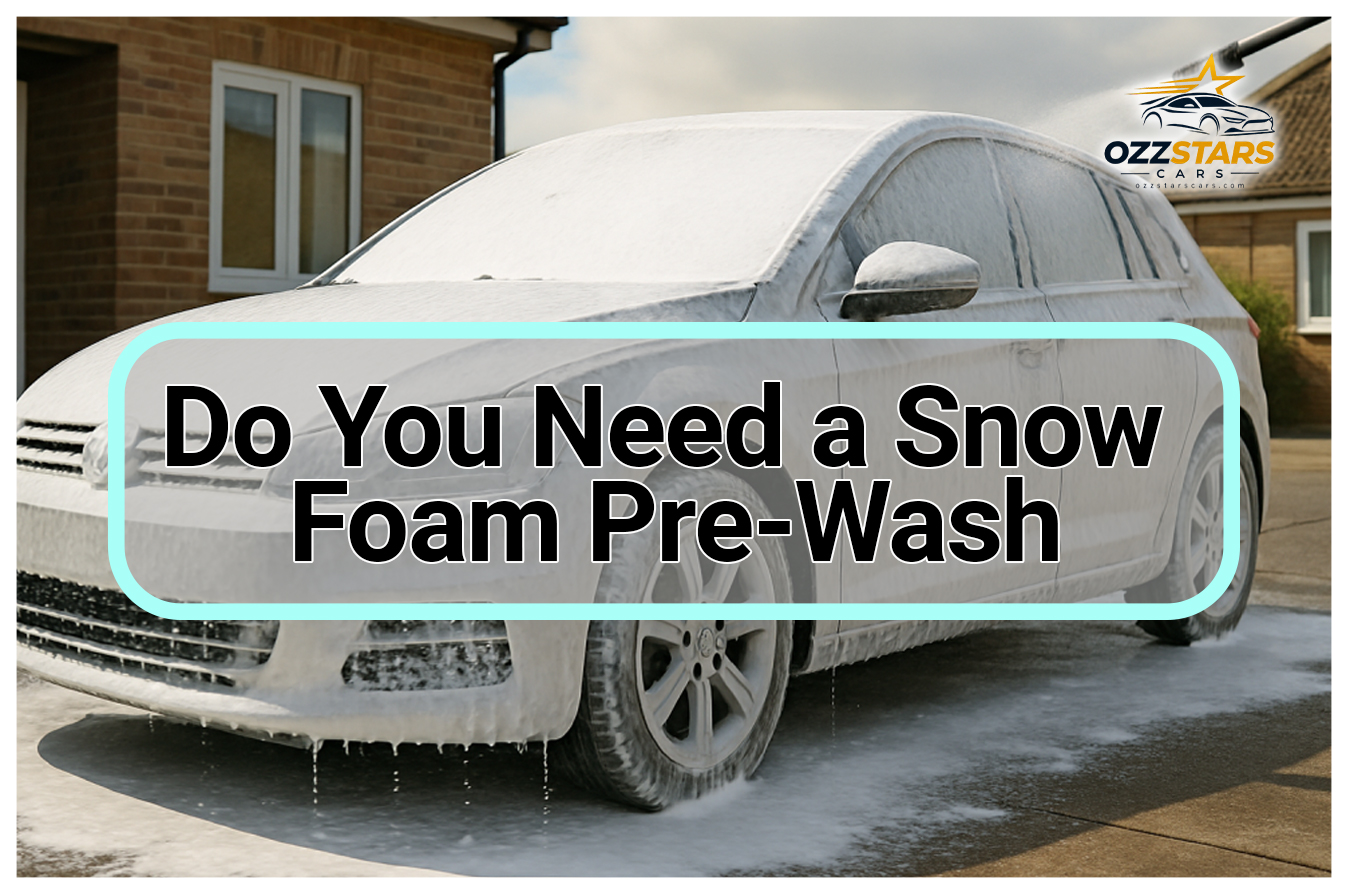
Snow foam is a thick, clinging foam sprayed onto a dry or lightly rinsed car and left to sit for a few minutes before being rinsed off. While it sits, it works on the same principle as a rinseless solution or a good pre-rinse: it encapsulates and loosens dirt particles that are stuck to the paint, so a follow-up rinse carries more of that grit away than plain water alone would on the same car in the same amount of time. The point is not the foam itself. It is what leaves the surface before the mitt gets there.
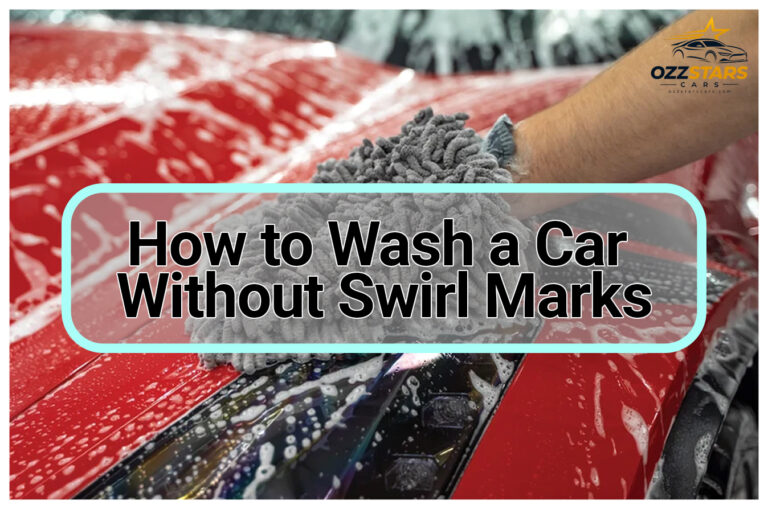
This directly connects to the one mechanism behind nearly every fine scratch called a swirl mark: grit dragged across paint by the wash tools, not by the wash itself. The full explanation is in How to Wash a Car Without Putting Swirls Into It. Anything that removes more grit before contact reduces that risk. Snow foam is one way to do that. It is not the only way.
The step it is often confused with, and the step it actually is
Snow foam is a pre-wash step, not a substitute for the pre-rinse. A thorough plain-water rinse before foam is applied, and again after it is rinsed off, is doing real work of its own: washing away the loosest dust, pollen and road film with nothing but water pressure. The reasoning behind that step, and where the honest disagreement is over how much it matters once foam enters the picture, is covered in Why You Rinse Before the Mitt Ever Touches the Paint.
Put plainly: rinse, then foam, then rinse again, then wash. Skipping the plain-water rinse and going straight to foam undersells what foam can do, because it is being applied over grit a hose alone would have removed for free.
When foam earns its place, and when it does not
| Condition of the car | Does foam add real value over a thorough rinse alone |
|---|---|
| Light dust, a week or two since the last wash | Not much. A careful rinse removes most of what foam would loosen, and foam adds time and product for a small gain |
| Visible road film, moderate everyday grime | Yes, genuinely. Foam's dwell time gives it more opportunity to loosen bonded grime than a rinse alone manages in the same window |
| Heavy road grime, caked-on debris, after a long trip | Yes, and it is closer to necessary here, since a plain rinse alone is unlikely to loosen everything a mitt would otherwise have to fight through |
This is the part most detailing content skips past, because a foam cannon or foam gun running suds down a hood is visually satisfying and makes for a good video regardless of whether the car needed it. On a car that is only lightly dusty, that satisfaction is mostly what you are paying the extra time and product for, not a meaningfully lower swirl risk than a genuinely thorough rinse would have already provided.
Does foam strip wax or sealant?
Some snow foam formulations lean alkaline to help break down heavier road grime, and the same trade-off that applies to touchless wash chemistry applies here: a formulation strong enough to loosen bonded dirt on its own is also more likely to soften wax or a fresh sealant layer with repeated use than a mild, pH-balanced product would be. This does not mean foam should be avoided where wax or sealant matters. It means dwell time should follow the specific product's own label instructions rather than being extended out of habit, and protection should be checked and reapplied on its normal schedule rather than assumed to still be intact after months of foam-first washes. A rinseless solution or a mild pre-wash spray is the gentler alternative on a car where preserving an existing coating matters more than tackling heavy grime.
Foam cannons vs pump sprayers
A dedicated foam cannon, attached to a pressure washer, produces a thicker, longer-clinging foam than a basic pump sprayer, simply because it aerates the solution far more than manual pumping can. That thicker foam clings to vertical panels longer, giving it more dwell time to work on grime before it drips away, which matters most on a heavily soiled car where dwell time is doing real work. On a lightly dusty car, where the honest answer is that a thorough rinse does most of the job anyway, the difference between a cannon and a spray bottle matters far less, since neither one is being asked to do much heavy lifting that day.
What foam does not replace
Snow foam does not replace the two-bucket method, and it does not replace a careful pre-rinse. It sits between them: rinse first to remove the loosest material for free, foam next to loosen what the rinse alone could not shift, rinse again to carry that loosened grit away, and only then does a mitt touch the paint, using the two-bucket setup covered in The Two-Bucket Method, and What It Actually Prevents to keep from reloading itself with whatever grit remains. Skipping straight from a dry car to a mitt, foam or no foam, is the actual mistake. Foam is one tool for reducing what is on the paint before contact, not the only one, and not a substitute for the rinse that comes before and after it.
The honest verdict
If the car is genuinely dirty, road film, a long trip, weeks between washes, foam is doing real work and is worth the extra step. If the car is lightly dusty and was recently washed, a thorough plain-water rinse accomplishes most of the same grit-reduction on its own, and foam becomes a nice-to-have rather than something the paint is depending on. Neither answer is universal, and any claim that foam is mandatory for every wash, or that it never matters, is oversimplifying a step whose value genuinely tracks how dirty the car is that day.
FAQ
Is snow foam necessary for every car wash?
No. It adds real value on a genuinely dirty car by loosening grit before contact, but on a lightly dusty car a thorough rinse accomplishes most of the same reduction on its own.
Does snow foam replace the pre-rinse?
No, it sits alongside it. Rinse first to remove the loosest material, apply foam to loosen what remains, then rinse again before any mitt touches the paint.
How long should snow foam sit on the car before rinsing?
A few minutes is the general guidance behind letting it dwell long enough to loosen bonded grime, though this varies by product and should follow whatever the specific product's own instructions state.
Can snow foam alone clean a car without a mitt wash afterward?
No. Foam loosens and helps remove surface grit, but it is not a substitute for the wash itself. A car still needs a proper mitt wash, using clean, safe technique, after the foam and rinse steps.
Is a foam cannon required, or can I get the same effect another way?
A foam cannon produces thicker, longer-clinging foam than a spray bottle, which generally gives it more dwell time on the car. A spray-applied pre-wash product is a reasonable alternative on a lightly dirty car where a full foam step is not warranted anyway.