Washing a Car in Direct Sunlight: What Goes Wrong
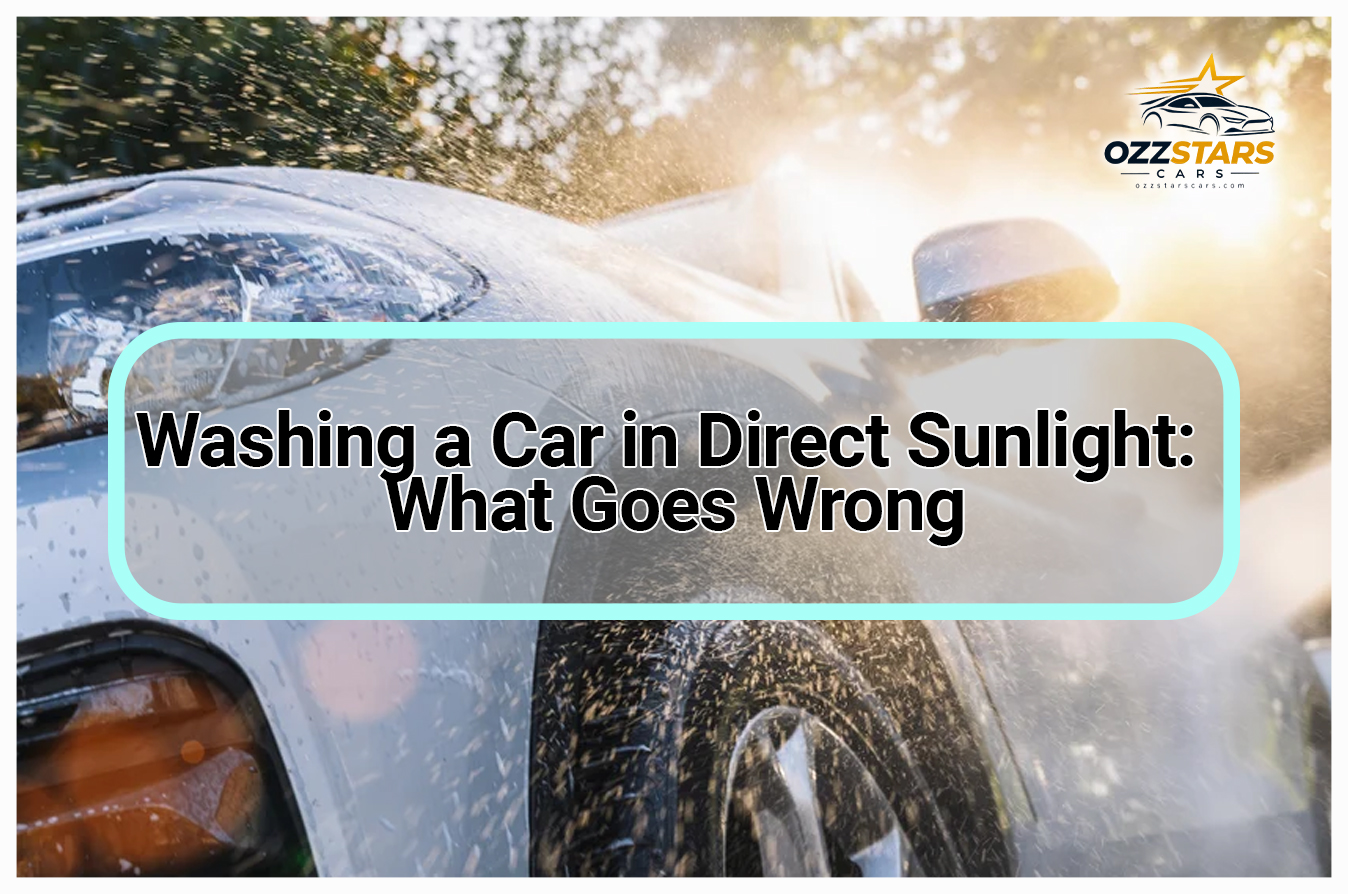
It is not the sun itself that damages a car. It is what a hot panel does to water and shampoo before you get the chance to rinse or wipe it away. Heat speeds up evaporation. On a warm panel, water and soap film can dry in place faster than a normal wash-and-rinse pace can keep up with, leaving mineral deposits and soap residue bonded to the surface instead of rinsed cleanly off it. That shows up as water spots and streaking, and in some cases it can be difficult to remove afterward. The practical variable is panel surface temperature, not air temperature or how bright it looks outside, and that distinction changes how you should read your own situation.
The mechanism: why panel temperature, not air temperature, is what matters
A dark hood in full sun can run noticeably hotter to the touch than the air around it, even on a day that does not feel especially hot. Sunlight hits the paint directly and heats the surface, and a dark, low-reflectivity color absorbs more of that energy and converts more of it to heat than a lighter one does. That means a car can be sitting in air that feels mild while its hood, roof, or trunk lid is genuinely hot to the touch. Air temperature is what a weather app reports. Panel temperature is what the water actually lands on, and the two are not the same number.
What actually goes wrong on a hot panel
Wash water carries dissolved minerals from the tap, along with whatever shampoo or rinse product is being used. On a cool panel, there is time to work section by section, rinse thoroughly, and dry before much of that water evaporates on its own. On a hot panel, evaporation outpaces the wash. The water flashes off before it can be rinsed away cleanly, and what is left behind, dissolved minerals and surfactant residue, dries directly onto the clear coat instead of leaving with the rinse water. That is what produces water spots and streaking, and repeated exposure without correction can make those deposits genuinely harder to remove over time.
Why dark panels make this worse, and why a mild day can still be hot
Color matters because it changes how much heat the panel absorbs from the same amount of sunlight. Darker shades, black, deep blue, charcoal, absorb more visible light and convert more of it into surface heat than lighter colors, which reflect more of that energy instead of absorbing it. This is why a black car can be genuinely difficult to wash safely at midday even on a day that does not feel unusually hot, while a light-colored car in the same driveway has more margin. "Cloudy" is also not a reliable stand-in for "cool," since a hazy or overcast sky can still let through enough sunlight to warm a dark panel meaningfully, and a panel that has been sitting in full sun all morning stays warm for a while even if a cloud passes over right as you start washing.
There is no reliable way to state this as a specific temperature difference without measuring it directly on a given car on a given day, and no measurement was taken for this guide, so the honest version of this section stays qualitative: a dark panel in full sun can run meaningfully hotter than the air around it, sometimes hot enough to be uncomfortable to keep a hand flat against, and that is the condition worth watching for rather than a thermometer reading.
The section-by-section fix, and why it works
Washing one section at a time, and rinsing and drying that section before moving to the next, keeps any single panel wet and working for the shortest time possible. This directly addresses the mechanism above: the risk comes from water and shampoo sitting on a hot surface long enough to start drying in place, so shortening that window on each panel individually reduces the chance of it happening anywhere on the car. Washing the whole car with soap first and rinsing it all at the end, the way many people default to, gives the earliest-washed panels the most time to sit hot and wet, which is exactly the wrong order on a warm day.
Timing that actually helps
Early morning or evening washing avoids the hours when the sun is highest and panel temperatures run hottest, and working in full shade removes the direct-sun component entirely even at midday. Neither of these requires special equipment or product, they simply take the heat variable out of the equation before the wash starts. If neither option is available and a car has to be washed in the middle of a sunny day, working section by section and drying promptly, rather than skipping those steps to save time, is the practical fallback.
Reducing how much standing water sits on a hot panel to begin with also helps, which is part of why Rinseless and Waterless Washes: When They Are Honest Options can be a reasonable choice on a hot day for a lightly soiled car: less standing water on the panel at any one time means less opportunity for it to flash-dry before it is wiped away. Once the wash itself is done, getting the car dry quickly matters more on a hot panel than a cool one, covered in Drying a Car Without Scratching It and compared by method in Blowing, Blotting or Dragging: Three Drying Methods Compared. The wash technique that reduces risk in every condition, sun or shade, is still the foundation this all sits on top of: How to Wash a Car Without Putting Swirls Into It.
What this cannot fix
None of this reverses water spots or bonded residue that is already on the paint from a previous wash done in the heat. That is a correction and decontamination question, separate from the washing technique covered here, and this guide does not claim to solve it. The honest position is prevention: washing at the right time, in the right order, reduces how often this happens going forward. It does not undo damage already sitting on the clear coat.
FAQ
Is it ever actually fine to wash a car in direct sunlight?
Yes, if the wash is done section by section with prompt rinsing and drying on each panel, and especially on a lighter-colored car that absorbs less heat. The risk rises with panel temperature, not with sunlight alone, so a mild day with a light-colored car carries less risk than a hot day with a dark one.
How can I tell if a panel is too hot to wash safely without a thermometer?
A simple flat-hand test works reasonably well: if the panel is uncomfortable to keep your hand pressed against for a few seconds, it is hot enough that water and shampoo will evaporate faster than normal, and working in shade or waiting for a cooler part of the day is the safer call.
Does washing in the shade fully solve this problem?
It removes the direct-sun heating component, but a panel that was sitting in full sun for hours before you moved the car to shade may still be warm for a while. Shade helps most when the car has had time to cool, or was never in direct sun to begin with.
Are water spots from a hot-panel wash permanent?
Not necessarily, but they can become harder to remove the longer they sit uncorrected, since some mineral deposits bond more firmly to the clear coat over time. This guide covers prevention through washing technique, not spot removal or paint correction.
Does this apply the same way to every paint color?
The mechanism is the same for every color, but the risk is higher for darker colors, since they absorb more heat from the same sunlight and reach a higher surface temperature than a lighter color would under identical conditions.