Rinseless Wash vs Regular Wash: An Honest Comparison
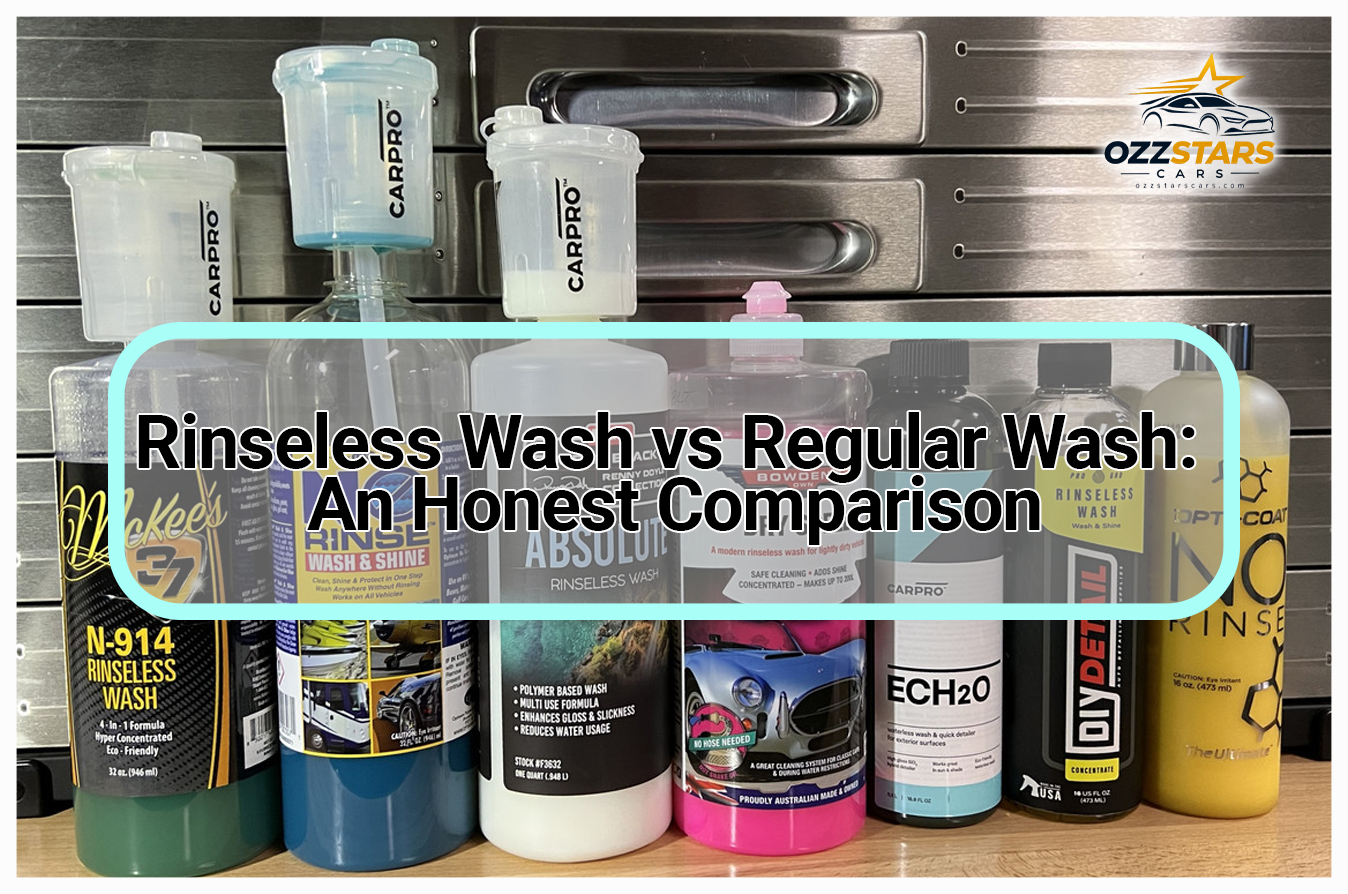
A rinseless wash is a real wash, with the lubricating job that a hose normally does carried inside the solution instead of running water. A waterless wash is a spray-and-wipe product for a lightly dusty car, not a substitute for a wash at all. Rinseless uses a diluted solution, a bucket, a mitt or wash media, and microfiber towels, and it can handle a genuinely dirty car, road film, dust, moderate grime, provided the technique stays careful. Waterless uses a spray bottle and a towel with no bucket step, and its real limit is light dust and pollen only. Neither is a shortcut that skips the mechanism a full wash relies on. One carries that mechanism differently; the other has a narrower job than its name implies.
What a rinseless wash actually is, and why the dilution matters
A rinseless wash uses a solution mixed at a specific dilution ratio into a bucket of water, then applied with a mitt or wash media and wiped or lifted away with clean microfiber towels, with no hose involved at any step. The reason this works without running water is the same reason a traditional wash works at all: the two-bucket method, covered here, keeps a mitt from picking grit back up out of its own wash water, and a proper pre-rinse, covered here, removes loose grit before a mitt ever touches the paint. A rinseless solution's dilution ratio is doing a version of that same lubricating and encapsulating job directly in the water the mitt is working with, surrounding dirt particles so they lift and suspend in the solution rather than staying pressed against the paint as the mitt moves. It is not skipping the mechanism that keeps paint safe during a wash. It is relocating that mechanism from running water into the solution itself.
Because the solution is doing more work per pass than plain rinse water would, rinseless washing has less margin for sloppy technique than a full hose wash. Frequent towel changes, clean mitt passes, and not overloading the solution with more dirt than the dilution ratio was built to encapsulate all matter more here than they do with a hose running to help flush things along.
What a waterless wash actually is, and its real limit
A waterless wash is a spray-on, lubricated product applied directly to the paint and wiped off with a clean microfiber towel, with no bucket or water step at all. It is built for a car that is lightly dusty or has pollen on it, not for a car with real road film, grit, sand, or salt. Applied to a car dirtier than that, a waterless product does not have enough lubrication in the spray itself to keep abrasive particles from grinding against the paint as the towel wipes it away, which is the opposite of what either method is supposed to prevent.
The honest dirt-type framework
"How dirty is too dirty" is a more useful question when it is asked by what kind of dirt is actually on the car, not by a vague sense of how bad it looks.
| Soil type | Best method |
|---|---|
| Light dust or pollen only | Waterless wash is genuinely appropriate here |
| Moderate road film, everyday grime | Rinseless wash, with careful technique and frequent towel changes |
| Visible grit, sand, or heavy road film | Traditional hose wash, or at minimum a real pre-rinse before rinseless technique |
| Caked mud, heavy salt buildup | Traditional wash only; neither rinseless nor waterless is built for this |
Why rinseless tolerates more dirt than waterless
This is the part most comparisons skip past with "rinseless has more product in it," which is true but not the actual reason. A rinseless solution is mixed into a full bucket of water at a specific ratio, so there is a large volume of lubricated liquid for the mitt to work with and for dirt to suspend into as it comes off the paint, the same encapsulation principle a hose-and-bucket wash relies on, just carried in the bucket instead of a running rinse. A waterless product is a thin film sprayed directly onto the surface, with no bucket and a much smaller volume of lubricant actually in contact with the paint at any moment. There is simply less liquid doing the encapsulating work in a waterless pass, which is why it holds up on light dust and starts to fail once there is enough real grit for that thin film to run out of capacity.
When these are the honest choice, not the lazy one
Rinseless and waterless washing get framed sometimes as a shortcut for someone who does not want to bother with a full wash. That framing misses the more common honest reason people reach for them: no driveway or hose access, an apartment or condo with rules against washing a car on the property, or a hot day where less standing water sitting on a warm panel is genuinely the safer choice, covered in Washing in Direct Sun: What Actually Goes Wrong. For a reader in exactly that situation, no hose and no driveway, rinseless is often not a compromise. It is the correct method for the constraint they actually have.
Drying afterward matters the same way it does with any wash, and the technique comparison for that step is covered in Blowing, Blotting or Dragging: Three Drying Methods Compared. The underlying goal, whichever method gets a car clean, is the same one covered in How to Wash a Car Without Putting Swirls Into It: keep grit from getting dragged across the paint, by whatever means actually available.
What neither method can fix
Neither rinseless nor waterless washing corrects paint that already has swirl marks or bonded contamination sitting in it. Both are wash methods, not correction methods, and a car that already looks hazy under bright light needs a different kind of attention than either of these provides. It is also worth being direct about the ceiling on rinseless technique: it is a genuine, capable method within its dirt range, but it is not a universal replacement for a hose wash on a heavily soiled car, and treating it as one increases the risk it was designed to avoid.
FAQ
Is a rinseless wash actually as safe as a regular hose wash?
Done correctly, on a car within its appropriate dirt range, yes. The dilution ratio is doing the lubricating job a rinse normally does. It has less tolerance for careless technique than a hose wash, since there is no running water to help flush extra grit along.
Can I use a waterless wash on a car that just has some dust on it after sitting for a week?
Yes, that is close to the exact use case waterless products are built for: light dust or pollen, nothing more.
What happens if I use a waterless product on a genuinely dirty car?
There is not enough lubrication in a thin sprayed film to safely suspend real grit or road film, so wiping it off can grind particles against the paint rather than lifting them clear, which is the scratch risk both methods exist to prevent.
Do I need special towels for rinseless or waterless washing?
Clean, well-maintained microfiber towels matter here the same way they do in a traditional wash. A towel that is worn, has embedded grit, or has been dropped and not rinsed carries the same risk regardless of which wash method it is used with.
Is rinseless washing a good option if I live in an apartment with no hose access?
Often yes, provided the car's dirt level fits within rinseless range rather than needing a full hose wash. It is a genuine, appropriate method for that situation, not a compromise substitute for one.