pH Neutral Car Shampoo Meaning: When It Matters
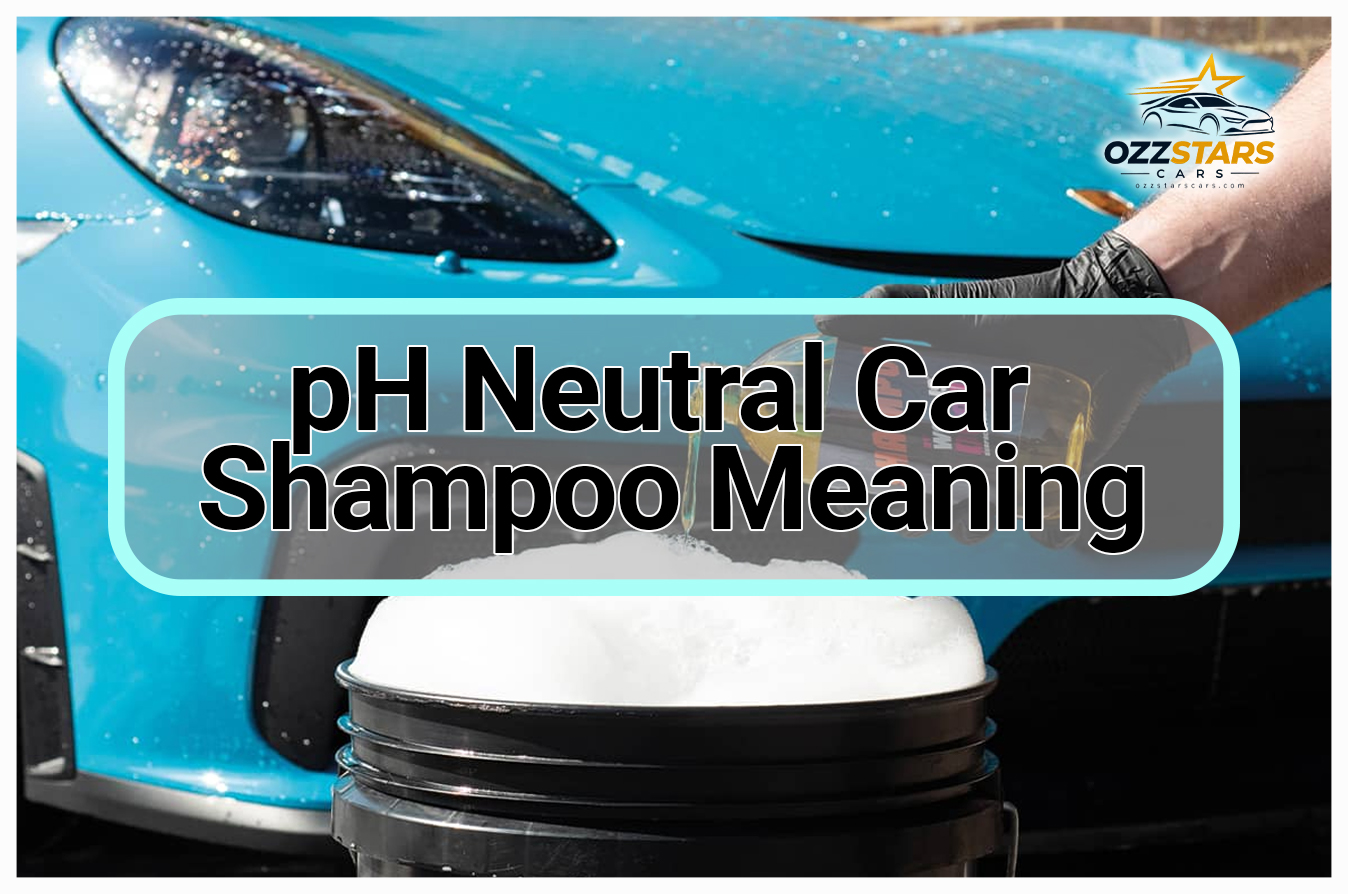
The pH neutral car shampoo meaning is simpler than the marketing makes it sound: the maker is saying the product is neither meaningfully acidic nor alkaline, sitting at or near 7 on the pH scale. In practice that usually signals a gentle, maintenance-style wash that is intended not to strip wax, sealant or coatings. What it does not tell you is how strong the cleaning agents are, whether the claim refers to the concentrate or the diluted wash, or whether the product suits your particular finish. It matters most for routine washes on protected paint, and least when you want to remove old protection anyway.
So it is real chemistry. It is also only one number, and it is carrying a lot of weight on the front of the bottle.
What pH actually measures
pH is a scale for how acidic or alkaline a water-based solution is. The U.S. Geological Survey's Water Science School page on pH and water (read September 28, 2026) sets it out plainly: "The range goes from 0 to 14, with 7 being neutral." Below 7 is acidic, above 7 is basic, which in cleaning products usually gets called alkaline.
The same page explains the part most car care articles skip: "Each number represents a 10-fold change in the acidity/basicness of the water." That means a product one step above neutral is not "slightly" different from one two steps above it. Each step is a large change. It also means a label that says "near neutral" without a number can cover quite a range.
USGS also notes that "Normal rainfall has a pH of about 5.6," slightly acidic because of carbon dioxide in the air. That is a useful reminder that nothing on or around your car sits at a perfect 7 all the time. Rain is not neutral, and your tap water is not necessarily exactly neutral either.
pH neutral car shampoo meaning in practice
When a car shampoo label says "pH neutral," it is making a claim about acidity. In car care, that claim is usually shorthand for three promises the maker wants you to infer:
- It will not strip your wax or sealant. Strong alkaline cleaners are generally better at breaking down oils and waxes, so a neutral product is presented as the safer choice for a protected finish.
- It is gentle enough for frequent washing. A routine wash product is meant to be used week after week without wearing down the protection underneath.
- It is kinder to trim and seals. Rubber, plastics and some metal finishes can react poorly to harsh chemistry.
Those are reasonable goals. The problem is that pH alone does not guarantee any of them.
What "pH neutral" does not tell you
It does not measure cleaning strength
A car shampoo cleans mainly with surfactants: molecules that loosen dirt and hold it in the water so it can be rinsed away. A shampoo can be neutral in pH and still contain a strong surfactant package, or very little. Whether a wash is gentle on your wax depends on what is in it and how concentrated it is, not just on where it sits on the pH scale. Neutral is a helpful signal, not a full answer.
It usually does not say whether it means the concentrate or the mix
You never wash your car with shampoo straight from the bottle. You dilute it in a bucket or a foam cannon, and adding water changes the solution you actually put on the paint. Most labels do not say whether "pH neutral" refers to the concentrate, the diluted wash, or both. If it matters to you, the maker's Safety Data Sheet sometimes lists a pH value for the product as supplied, and the maker can usually answer the question directly.
"pH balanced" is not the same claim
Watch the wording. "pH neutral" points to a specific place on the scale, near 7. "pH balanced" only says the maker adjusted the pH to a level it chose, which may or may not be neutral. Some products use the terms interchangeably; others do not. If a label says "balanced," it has not told you where the balance sits.
It does not replace the directions
A neutral shampoo mixed far stronger than the label says, or left to dry on hot paint in direct sun, can still leave residue or spotting. The dilution and conditions on the back of the bottle matter as much as the number on the front. Follow the label's dilution; do not guess one.
When pH neutral actually matters
There are situations where choosing a neutral, maintenance-style shampoo is a sensible default.
Routine washes on a waxed or sealed car. If you have spent time applying protection, a wash product designed to leave it in place helps it last longer between applications. Our guide to wax vs sealant vs ceramic coating explains how each of those layers wears and why wash chemistry affects them.
Maintaining a ceramic coating. Many coating makers specify how the coating should be washed afterward, and a gentle maintenance shampoo is a common requirement. The coating maker's own care instructions come first; our article on how to maintain a ceramic coating covers what changes in your routine and what stays the same.
Frequent washing. If you wash every week or two, small differences in chemistry add up over many washes. A gentle product reduces how much each wash takes away.
Mixed materials. Cars have painted panels, rubber seals, textured plastic trim and sometimes delicate wheel or trim finishes all in the same wash. A milder product is less likely to disagree with one of them. The owner's manual may also name wash products or pH ranges to avoid for specific finishes.
When it matters less, or not at all
When you are preparing paint for new protection. Before you polish or apply a fresh wax, sealant or coating, removing the old layer and any oily residue is the point. A neutral maintenance shampoo is designed not to do that. A stronger wash or a dedicated panel prep product is often what the product you are about to apply calls for, so check its own instructions.
For heavy grime. Road film, heavy bugs and greasy deposits may need a stronger pre-wash or a dedicated cleaner before the main wash. Those are separate products with separate labels. Read what each says about wax and coatings, and never mix them together in one bucket. Our guide to whether you need a snow foam pre-wash covers when that extra step earns its place.
On unprotected paint. If the paint has no wax, sealant or coating on it, there is nothing on top for a stronger wash to strip. You still want a product made for automotive paint, but the specific benefit of neutral pH is smaller.
Technique matters more than the number
Most wash damage is not chemical. It is mechanical: grit dragged across the paint by a mitt or towel. A perfectly neutral shampoo used with one dirty bucket will still put fine scratches in the clear coat. Lubrication, rinsing the mitt often, and working top to bottom do more for your paint than the difference between two gentle shampoos. Our guide to the two-bucket car wash method explains why separating clean and dirty water is the step that actually protects the finish.
How to read a pH claim on a label
When you are comparing shampoos, a few questions sort useful claims from decorative ones:
| Question | Why it matters |
|---|---|
| Does it say "neutral" or "balanced"? | Only "neutral" points to a specific place on the scale |
| Does it give a number or range? | "Near neutral" without a number could cover a wide range |
| Does it say it is safe on wax, sealants or coatings? | That is the practical promise you actually care about |
| Does it give a dilution? | The mix you use is not the concentrate |
| Does the maker publish a Safety Data Sheet? | It may list the product's pH and its handling warnings |
Safety notes
pH neutral does not mean safe to ignore. Car shampoo concentrates can still irritate eyes and skin. Read the label's warnings, wear gloves if it says to, rinse skin after contact, and keep the bottle away from children and pets. Never mix a shampoo with other cleaners, and follow the label's first aid instructions if it gets into eyes.
Frequently asked questions
Is pH neutral car shampoo really necessary?
It is not required for every wash, but it is a sensible default for routine washing of a car with wax, sealant or a coating on it. When you are stripping old protection before reapplying, a neutral product is not the right tool.
What pH is a pH neutral car shampoo?
Neutral on the pH scale is 7. Labels that say "pH neutral" rarely give an exact figure, and they often do not say whether they mean the concentrate or the diluted wash. Check the maker's Safety Data Sheet or ask the maker if you need the number.
Does pH neutral shampoo remove wax?
A shampoo designed as a gentle maintenance wash is intended not to. But pH is only part of the story: surfactant strength, how strongly you mix it and how you wash all affect how long wax lasts.
Is "pH balanced" the same as "pH neutral"?
No. "Neutral" means near 7. "Balanced" only means the maker set the pH at a level of its choosing, which may or may not be neutral.
Can I use pH neutral shampoo on a ceramic coating?
Usually yes, but the coating maker's own maintenance instructions take priority, because some specify particular types of wash product.
pH neutral is a real chemical property and a useful signal. It is not a guarantee. Read the rest of the label before you trust the word on the front. Choose carefully.