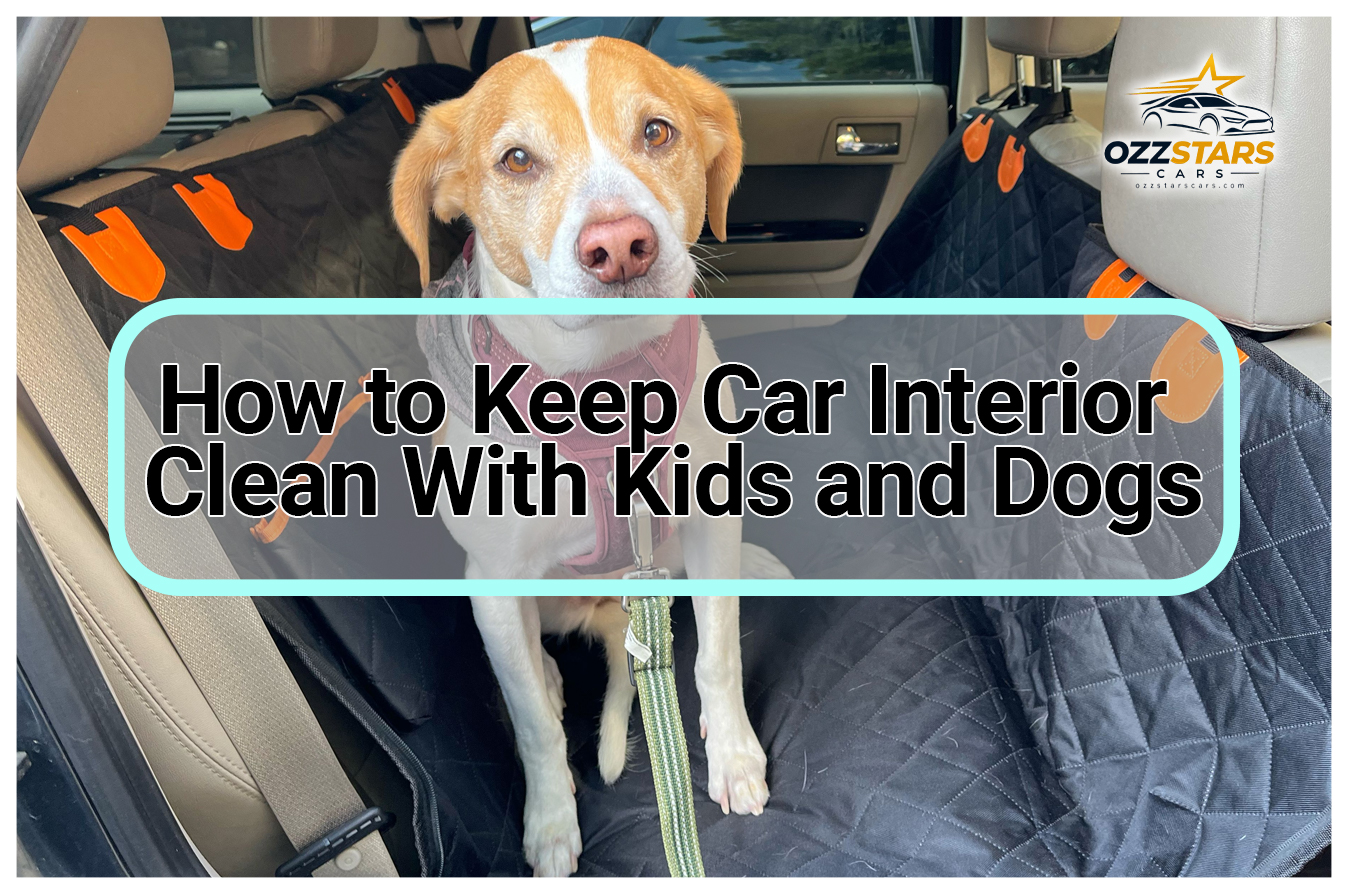
How to Keep Car Interior Clean With Kids and Dogs
The short answer on how to keep car interior clean: stop dirt at the four places it gets in (feet, food, fur and hands), not after it has spread. Put washable liners on the floor and a removable cover on cloth or leather seats, keep a lidded trash bin and a small spill kit in the car, do a quick reset every time you get home, and give it one short vacuum and wipe each week. Deep cleaning becomes occasional instead of a weekend project.
Most advice on this topic is a list of tips. The trouble with a list is that it does not tell you which tip matters for your car. A car that carries toddlers gets dirty in a different way from one that carries a muddy dog, and both are different again from a solo commute. So we start with where the mess comes from, then build a routine around it.
Why a car interior gets dirty again so fast
A car is a small room that people walk into with outdoor shoes, eat in, and rarely air out. Four things do most of the damage:
- Feet. Grit, sand, road salt and mud come in on shoes. Loose grit is abrasive, so it wears carpet fibers every time a foot moves on it. Salt leaves white tide marks as it dries.
- Food and drink. Crumbs feed smells. Sugary drinks and milk leave a sticky residue that holds dust and can stain fabric if it sits.
- Fur. Dog hair works its way into woven fabric and carpet, and a normal vacuum pass often lifts only the top layer.
- Hands. Skin oils, lotion and sanitizer build up on the steering wheel, door pulls, shifter and screens. That film is why touch points look grubby even when the rest of the car is tidy.
Every method below is aimed at one of those four. If you only have time for one change, pick the one that matches your biggest source of mess.
Stop dirt at the door: the setup that does most of the work
The cheapest cleaning is the cleaning you never have to do. A few pieces of kit, set up once, catch much of the mess before it reaches the carpet or the seats.
Floor liners with raised edges. Rubber or molded liners hold water, salt and crumbs in a tray you can lift out and rinse. One safety point that product listings rarely mention: the driver's mat has to be anchored and must never be stacked. Honda's 2025 Accord owner's manual, Interior Care section (which we read on 2026-09-23) says not to put any additional floor mats on top of the anchored mat, and that any mat not supplied with the car should be designed for that specific vehicle, fit correctly and be secured by the floor anchors. A loose or doubled mat can slide toward the pedals. Check your own manual for how your mats anchor.
A removable seat cover or hammock. For dogs, a hammock-style cover across the back seat catches hair and mud and can be washed according to its care label. For kids, a wipeable cover on the seat backs catches kicks. If your seats have side airbags built into them, read the owner's manual before fitting any seat cover, and choose one the manual allows.
A lidded trash bin. A small bin with a lid, fixed so it cannot slide or fly around under braking, stops wrappers from ending up in door pockets and under seats.
A tray or organizer for kids. Snacks, cups and toys that have a place to live spend less time on the floor.
A cleaning plan for kids
Kids create mess in three ways: crumbs, spills and sticky hands. The goal is to make the everyday mess small enough that a quick reset handles it.
- Choose snacks that crumble less. It is not a rule, just a lever. Dry, crumbly foods spread furthest.
- Use lidded cups. A spill-proof cup prevents the stain that no upholstery cleaner is guaranteed to remove.
- Keep a spill kit within reach: two or three microfiber cloths, a small bottle of plain water, a few interior-safe wipes, and a sealable bag for anything wet or soiled. Blot a spill straight away and do not rub, because rubbing pushes liquid deeper into the fibers.
- Check the child seat's manual before putting anything under it. Some child seat makers restrict mats or protectors placed under their seats. The seat's own manual is the authority, not the listing for the mat.
Milk, vomit and other biological spills need their own approach, because they soak in and cause smells if they are not dealt with properly. Treat those as a separate job, not as part of the weekly routine.
A cleaning plan for dogs
Dog hair is one of the hardest everyday messes to remove once it is in, so prevention matters most here.
- Keep the dog on the cover. A hammock or cover protects the fabric only if the dog stays on it. It is a cover, not a restraint, so use it alongside whatever travel restraint you already use.
- Deal with mud before the dog gets in. A towel kept in the trunk and a quick wipe of paws and legs keep much of the mud out.
- Lift hair before you vacuum. A rubber-bladed pet hair tool or a rubber glove, dragged in one direction, rolls embedded hair into clumps. The vacuum then picks up the clumps instead of skating over the woven-in strands.
- Wash the cover before it smells. Follow the cover's care label. A cover that smells passes that smell to the cabin.
If you clean surfaces with any product, let them dry and air the car out before the dog or the kids get back in, and follow any label directions about children and pets.
A cleaning plan for commuters
The commute car suffers from slow build-up rather than big spills: grit on the driver's mat, coffee drips around the cup holder, and a film on the wheel and screen.
- Shake out the driver's mat often. On a solo commute it is the one mat used on every trip, so it fills up first.
- Keep a cup holder liner. A silicone insert lifts out and rinses, so drips are less likely to dry into the console itself.
- Wipe the touch points. The steering wheel, shifter, door pulls, window switches and indicator stalks usually need only a damp microfiber cloth. Wring it well so no liquid drips into switches.
- In winter, catch salt early. Salt on the carpet leaves marks as it dries, and liners catch most of it before it gets there. On carpet, vacuum dried salt first, then treat the tide marks with a cleaner made for automotive carpet, following its label.
How to keep car interior clean without a weekend project: the routine
This is the part that replaces the Saturday deep clean. It works because each level stops the next one from building up.
| When | What to do | Which dirt it stops |
|---|---|---|
| Every trip home | Take out trash, cups and anything that did not come with the car | Food smells, clutter |
| Every trip home | Shake or knock out the driver's mat | Grit and salt |
| Weekly | Vacuum seats, then carpet, then mats | Crumbs, hair, sand |
| Weekly | Damp wipe of the touch points and cup holders | Skin oil, sticky residue |
| Weekly | Wipe screens with a clean, dry or lightly damp microfiber cloth | Fingerprints |
| Monthly | Wash liners and covers; clean the inside of the glass | Build-up and haze |
| Monthly or seasonally | Deeper clean of fabric, leather and carpet | Stains that got past the setup |
If you use an automatic wash, the vacuum bays at some wash sites make the weekly vacuum easy to fold into a trip you already make. Whether that is worth paying for on a plan depends on how often you would use it, which we worked through in our breakdown of car wash membership costs.
What to use, and what the car's manual rules out
For everyday upkeep, the simplest products are usually the right ones. Carmakers' owner's manuals tend to point the same way: mild soap and water, soft cloths, and caution with anything stronger. Honda's 2025 Accord manual, for example, recommends cleaning leather with a soft cloth dampened with a mild solution of water and neutral soap, then wiping away any soap residue with a clean damp cloth. It also warns against organic and alkali solvents such as gasoline or benzene on interior parts.
A few materials need specific care:
- Cloth seats and carpet: vacuum first. Use a cleaner labeled for automotive fabric, and follow the label for how much to use and how long to leave it.
- Leather and leatherette: use only products the label says are for that surface, or the plain soap and water approach your manual gives. Do not guess from the look of the seat whether it is real leather.
- Screens: follow the manual. Avoid ammonia-based glass cleaners on displays unless your manual says they are fine, because they can harm anti-glare coatings on some screens.
- Seat belts: never use bleach, dye or solvents on the webbing. Several carmakers' manuals warn these can weaken it. Use mild soap and water, then let the belt air dry fully before it retracts.
Chemical safety. The EPA's guidance on volatile organic compounds and indoor air quality (read on 2026-09-23) advises increasing ventilation when using products that emit VOCs, meeting or exceeding label precautions, and never mixing household care products unless the label directs it. A car cabin is a very small space, so open the doors while you work and never combine cleaners. The same caution about where liquid ends up applies under the hood too, which is why cleaning an engine bay safely starts with what not to spray.
Shortcuts that make things worse
These are the habits that feel like cleaning but add to the problem. The ranking pages we reviewed mention some of them in passing; few put them together, and they are where a low-effort routine usually goes wrong.
- Glossy dressing on the wheel, pedals or mats. It looks clean, but it can make surfaces slippery. Keep dressings off anything your hands or feet need to grip, and read the product label for where it may be used.
- Air freshener instead of cleaning. A scent covers the smell while the source (a crumb stash, a damp mat, a soiled cover) keeps producing it. Find and remove the cause first.
- Soaking fabric to get a stain out. Too much water can reach the padding underneath, dry slowly and leave a musty smell or a ring. Use less liquid and more blotting.
- Household cleaners on car surfaces. Some carmakers' manuals warn that household products can stain or discolor upholstery. Use products labeled for car interiors.
- Storing aerosols in the car. Many aerosol cans carry a label warning about heat. A parked car can get very hot, so read the can before leaving a spray in the door pocket.
- Loose items rolling around. Bottles and tools in the footwell are a mess problem and can end up under a pedal. Everything in the cabin should have a secure place.
Matching the product to the surface is the same principle that runs through our guide to caring for matte paint on a car: the wrong product on the wrong finish causes the damage, not the dirt.
What this routine cannot do
We want to be honest about the limits. A liner and a weekly vacuum will not remove a stain that has already set, lift years of ground-in dog hair, or fix a smell coming from a wet carpet pad or a tired cabin air filter. Those are separate jobs. What the routine does is stop new problems from stacking on old ones, so a car you deep clean once stays closer to that state. We have not run a long-term trial of any routine or product on this site. Your car's manual and each product's label are the final word for your specific interior.
FAQ
How often should I vacuum my car if I have a dog?
Weekly is a practical starting point for most dog owners, with a quick hair pass in between if the dog rides daily. Heavy shedders or long coats may need more. A seat cover means you vacuum the cover instead of working hair out of the upholstery.
What is the fastest way to keep a car interior clean every day?
Take out everything you brought in each time you get home, and knock out the driver's mat. That reset is quick and stops most of the build-up that turns into a weekend job.
Are baby wipes safe to use on a car interior?
It depends on the wipe and the surface. Some contain lotions or other ingredients that can leave residue. Check the wipe's label and your car's manual, and prefer wipes labeled for car interiors on leather, screens and trim.
Do seat covers really protect car seats?
They stop hair, mud and spills from reaching the seat fabric, which is much of what wears and stains it. They need regular washing to stay effective. If your seats contain side airbags, confirm in the owner's manual which covers are allowed.
How do I keep sand and salt out of my car?
Use liners with raised edges, knock shoes against the door sill before getting in, and empty the driver's liner often. For salt marks on carpet, vacuum the dried salt first, then use an automotive carpet cleaner as the label directs.
Keep it simple. Catch it at the door.