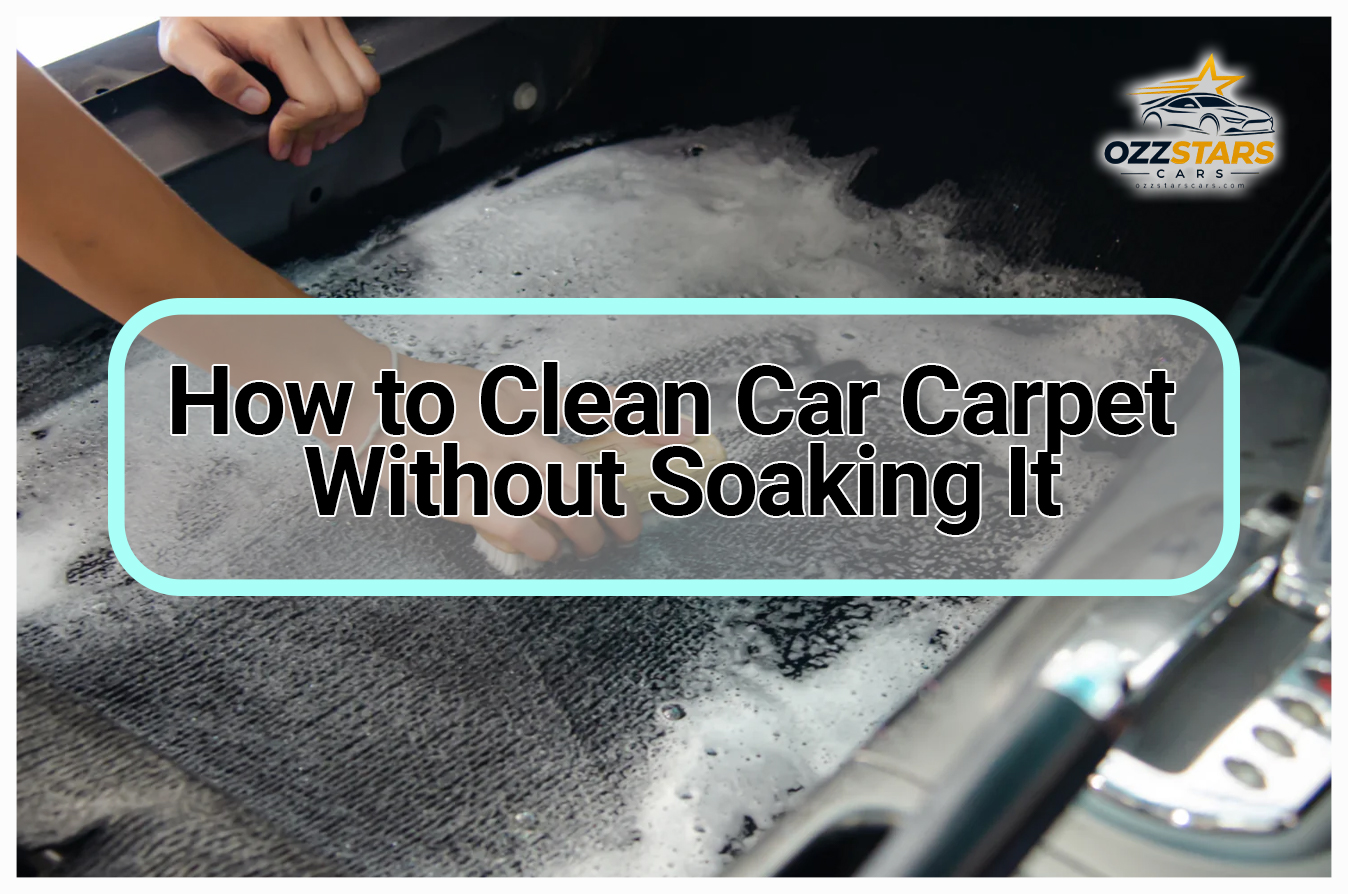
How to Clean Car Carpet Without Soaking It
Short answer: to clean car carpet, take the mats out, brush the carpet hard in two directions to loosen grit from the base of the fibers, then vacuum slowly in crossing passes. Treat stains with an automotive carpet cleaner or foam used exactly as the label says, working it in with a brush and blotting or extracting it back out. Use as little liquid as possible, rinse out the residue, and let the carpet dry completely with the doors or windows open before the mats go back in.
That is the whole job. The rest of this guide explains why each step matters, because most car carpet that "never gets clean" is failing at one specific step, usually the first one.
Why the vacuum never lifts ground-in grit
Car carpet takes a kind of punishment house carpet never sees. Shoes bring in sand, road grit and, in winter, salt. Your heels grind it in at the same few spots every drive. Over time the heavy particles work their way down to the base of the pile, where the fibers are packed tight and the backing is right underneath.
A vacuum pulls air across the top of the carpet. Loose crumbs on the surface go straight up the hose. Grit wedged at the base of dense automotive carpet often does not, because the airflow never reaches it with enough force to pull it past the fibers holding it in place. You can vacuum the same footwell three times and leave most of the sand where it was.
The fix is to break that grip before you vacuum. A stiff brush worked back and forth, then side to side, stands the fibers up and flicks the grit toward the surface where suction can finally reach it. This is the step most guides mention in passing and most people skip. If you only change one habit, change this one: agitate first, vacuum second.
It is the same principle behind why a freshly washed car can still feel rough to the touch. We explain that in why clean paint still feels rough after washing: washing moves loose dirt, but bonded or embedded particles need a different kind of mechanical help to come out.
Check your owner's manual before any liquid touches the floor
This is the step almost no carpet guide mentions, and it matters more than any product choice.
Some carmakers are very cautious about water on the floor. Toyota's own interior-cleaning guidance, which repeats the "shampooing the carpets" wording in its owner's manuals (we read this on September 23, 2026), tells owners to apply a commercial foaming-type cleaner with a sponge or brush, rub it in with overlapping circles, and not use water. The same Toyota manual section warns against washing the vehicle floor with water because electrical components above or under the floor can be damaged, and warns not to get any airbag (SRS) components or wiring in the interior wet.
That is one manufacturer, not a universal rule. But it tells you something useful about cars in general: the floor is not just carpet over metal. Depending on the model, there can be wiring harnesses, connectors and modules under or near it. Your own manual's "cleaning the interior" section is the authority for your car, and it takes two minutes to read. If it says keep the carpet as dry as possible, that shapes every step below.
What you need
You do not need a detailing shop's equipment for a normal clean. Product types, not brands:
- A stiff nylon carpet brush for agitation, plus a smaller detail brush for edges and seat rails.
- A vacuum with a crevice tool. A shop-style wet/dry vacuum helps if you plan to lift liquid back out.
- An automotive carpet cleaner or foaming upholstery cleaner made for car interiors.
- Microfiber towels, several of them, for blotting.
- A spray bottle of clean water for rinsing residue out, used lightly.
- Nitrile gloves, and a way to air the car out while you work.
If your carpets are heavily soiled or smell, a carpet extractor or a hot-water extractor rental is the next level up. It is not required for most cars.
How to clean car carpet, step by step
1. Empty the car completely
Take out the floor mats, loose items, car seats and anything in the door pockets that might fall. Slide each front seat all the way forward, then all the way back, so you can see the carpet underneath and behind it. You will almost certainly find coins, receipts, food and a surprising amount of sand.
2. Dry agitation
Brush the dry carpet firmly in one direction, then across it. Pay attention to the driver's heel area, the passenger footwell and the edges along the sills, where grit collects. Knock the loosened dirt toward the middle so it is easy to vacuum.
3. Vacuum in crossing passes
Go slowly. Make overlapping passes one way, then at a right angle. Use the crevice tool along the seat tracks, around the pedal area (with the car off), and where the carpet meets plastic trim. If the brush-then-vacuum cycle keeps bringing up sand, repeat it. Rushing here means you will be scrubbing grit into wet carpet in the next step, which grinds it deeper.
4. Treat stains with the least liquid that works
Spray or foam the cleaner onto the stain, not the whole floor. Work it in with a brush and let it sit only as long as the label says. Then blot with a clean, damp microfiber towel, or pull it out with a wet/dry vacuum.
Dilution and dwell time are the label's job, not ours, and they can change with the method. Simple Green's car carpet instructions (read September 23, 2026) are a good example: the same maker gives one dilution for spot cleaning by hand and a weaker one for use in a carpet cleaning machine, tells you to spot test first, and says not to let the solution dry on the carpet. Whatever product you use, read its label for the method you are actually using.
5. Rinse out the residue
This is the second step people skip. Cleaner left in the fibers stays slightly sticky, and sticky carpet grabs the next load of dirt. Mist the treated area lightly with clean water and blot or extract again until the towel comes up clean and the carpet no longer feels tacky. Keep it to a light mist; you are rinsing the fibers, not flooding the backing.
6. Dry it properly
Open the doors or windows and let air move through the car. A fan pointed into the footwell helps. The carpet should be dry to the touch and dry when you press down hard with a dry towel, because the padding underneath holds moisture long after the surface feels fine. Do not put the mats back until it is.
7. Brush the pile back into line
Once dry, a quick brush in one direction leaves the carpet looking even and makes it obvious if you missed a spot.
Floor mats: carpet and rubber are different jobs
Floor mats are the easiest part of the floor to clean because they come out of the car, which means you can use more water on them without risking anything underneath.
Carpet mats get the same brush, vacuum and treat routine, and can be rinsed more freely outside the car. They must be completely dry before they go back in, or they will hold moisture against the carpet under them.
Rubber and all-weather mats can be scrubbed with a brush and a general cleaner, then rinsed with a hose. One firm rule: do not dress rubber mats with a tire shine or a slick protectant. It makes the mat slippery underfoot, and a foot that slides off a pedal is a safety problem, not a cosmetic one.
When you put any mat back, make sure it sits flat and hooks onto the retention clips or posts if your car has them. A mat that creeps forward can bunch up near the pedals. Check your manual for how your car's mats are meant to be secured, and never stack a second mat on top of the factory one.
What lives under the seats, and what not to wet
The area under the front seats is where the worst dirt hides and where the most caution is needed.
On many modern cars, the wiring under the front seats includes connectors for seat-mounted airbags, seat belt pretensioners and, on some cars, a sensor system that tells the airbag system whether the passenger seat is occupied. Those are safety systems. So:
- Vacuum and dry-brush under the seats. Do not spray cleaner under them. If there is a stain there, apply cleaner to a towel and work it by hand, then blot.
- Do not unplug seat connectors or remove seats unless you are following your manual's procedure for your specific car. If a seat has to come out for a deep clean, that is a job we would leave to a shop, because an airbag warning light afterward is not something to troubleshoot from a blog.
- Keep liquid out of the seat tracks. They carry lubricant, and cleaner pooling there can pick up grease and spread it onto the carpet.
This is the same logic we apply under the hood. Our guide to cleaning an engine bay without spraying the wrong parts is built on the idea that knowing where the electrical parts are matters more than which cleaner you pick. The cabin floor deserves the same respect.
Which method for which mess
| Situation | Method | Moisture risk | Note |
|---|---|---|---|
| Sand, grit, crumbs | Dry brush, then vacuum in crossing passes | None | Solves most "dirty carpet" complaints on its own |
| Small fresh spill or spot | Cleaner on the spot, brush, blot | Low | Blot, never rub hard, and rinse the residue out |
| General dull, grubby carpet | Foaming carpet cleaner worked in and wiped off | Low | Matches the approach Toyota's manual describes |
| Heavy soiling or lingering smell | Carpet extractor with clean-water rinse pass | Moderate to high | Only if your manual allows water on the floor; dry thoroughly |
| Carpet that is damp without a spill | Do not clean yet | Already high | Find the water source first (see below) |
Mistakes that make car carpet dirtier
- Scrubbing before vacuuming. Wet grit acts like sandpaper on the fibers and gets pushed deeper.
- Soaking the carpet. The pad underneath holds water, dries slowly and can start to smell musty.
- Leaving cleaner in. Residue is why some carpet looks worse a week after a "deep clean."
- Household mixtures. Home recipes built on dish soap or laundry detergent can be hard to rinse fully out of dense carpet, and whatever stays behind attracts the next layer of dirt. An automotive product used per its label is simpler to control.
- Scent over dirt. A fragrance spray on a dirty carpet just adds a smell on top of the dirt.
Chemical safety
Work with the doors open or the car outside, not in a closed garage. Wear gloves. Never mix cleaning products, and in particular never combine anything containing bleach with ammonia-based or acidic cleaners, because some combinations release harmful gases in an enclosed space like a car cabin. Use one product at a time, rinse between products if you must switch, and follow each label's safety directions. Keep bleach off car carpet entirely unless the carpet maker or your manual says otherwise, since it can permanently remove color.
What this guide cannot fix
We want to be straight about the limits here. We have not tested products for this article, and nothing above is a promise that a particular stain will come out. Some stains, especially dyes and old set-in spills, may lighten but not disappear.
The bigger limit is dampness. If your carpet is wet and you did not spill anything, cleaning is the wrong first step. A carpet that gets damp on its own usually points to water getting in from somewhere, such as a door or window seal, a blocked drain, or a leak in the heating or cooling system. Cleaning and drying it will only buy a few days. That needs a diagnosis, and if you are unsure, a shop.
And if you are wondering whether a car wash membership will take care of all this, it usually will not. Most of what a membership covers is the outside of the car, which is why our honest math on car wash memberships treats interior care as a separate job.
FAQ
How do you clean car carpet without a shampooer?
Brush the carpet firmly to loosen grit, vacuum in crossing passes, then treat stains with an automotive carpet cleaner or foam and a brush. Blot the cleaner out with damp microfiber towels, rinse residue with a light mist of water, and let it dry fully. Most cars never need a machine.
Can you use water on car carpet?
Some manufacturers advise against it. Toyota's manuals tell owners to use a foaming cleaner and not use water, and warn that water can damage electrical components near the floor. Check the interior cleaning section of your own owner's manual before wetting the carpet.
How long does car carpet take to dry?
It depends on how much liquid you used, the weather and how much air moves through the car. The surface can feel dry well before the pad underneath is. Keep the doors or windows open and do not refit the mats until the carpet feels dry when you press down hard with a dry towel.
Why does my car carpet look dirty again right after cleaning?
Usually one of two reasons: grit was left at the base of the fibers because the carpet was vacuumed without being brushed first, or cleaner residue was left in the carpet and is attracting new dirt. Brushing before vacuuming and rinsing after cleaning fix both.
Is it safe to clean under car seats?
Vacuuming and dry brushing under the seats is fine. Avoid spraying liquid there, because many cars have airbag and seat belt wiring under the front seats. Apply cleaner to a towel instead, and leave seat removal to your manual's procedure or a shop.
Clean floor, dry floor. Brush first, and let the label and your manual set the limits.