How to Clean Vomit Out of Car Seat Fabric and Leather
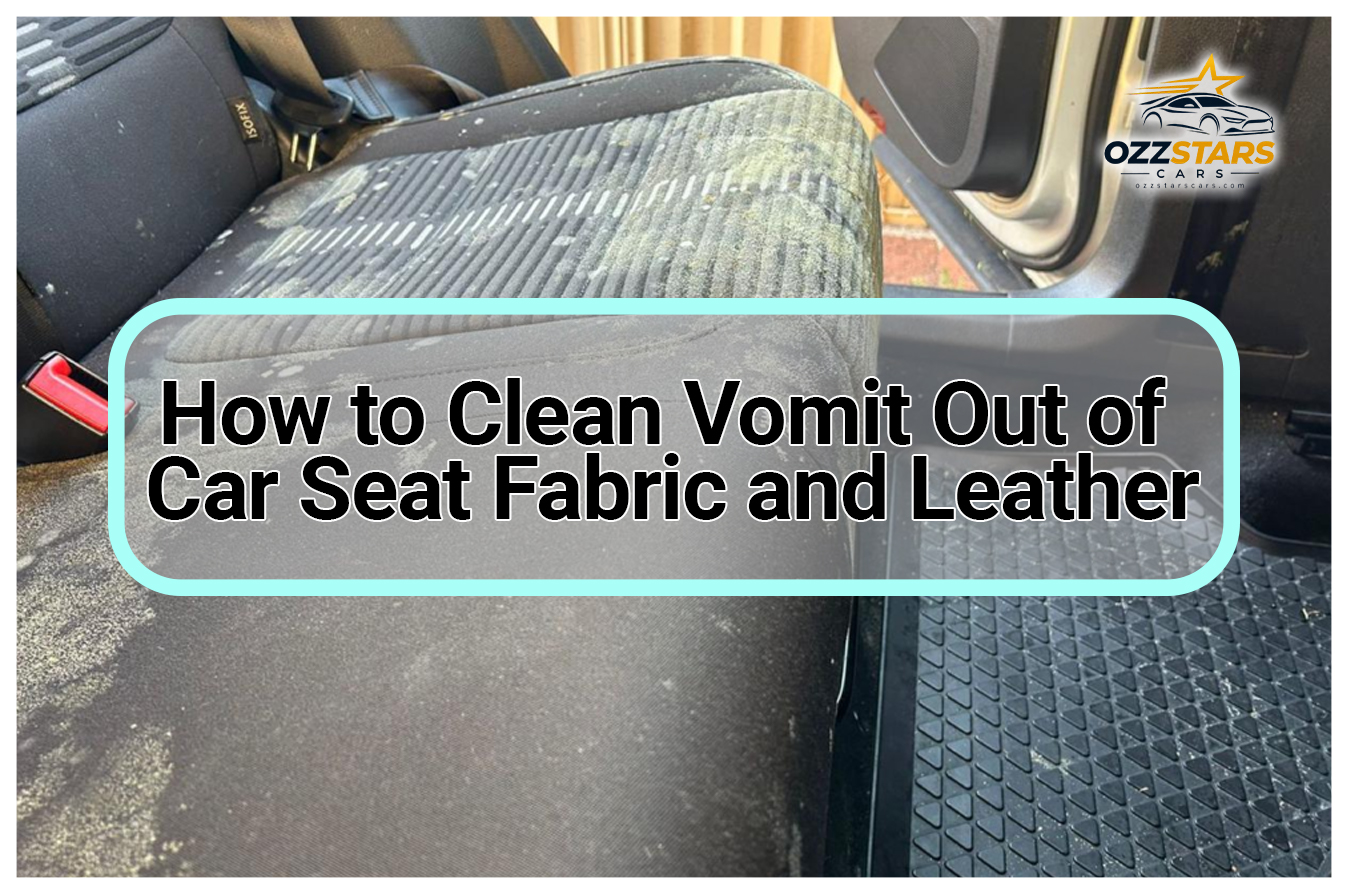
If you need to know how to clean vomit out of car seat fabric or leather right now, the order is: gloves on, lift the solids off without pressing, blot up the liquid, and get air moving through the car. Later, clean the seat with a product made for automotive upholstery, disinfect only with a product whose label approves it for that surface, and dry the seat completely before anyone sits on it. Household bleach does not belong on car upholstery. If it is a child's car seat, stop and follow its manual, because the harness straps are safety equipment with their own cleaning rules.
Milk and other biological spills follow the same order, with one extra problem covered below: they can smell worse days later.
First, which "car seat" are you cleaning?
The phrase means two different things, and the rules are different.
- The vehicle's own seat, upholstered in cloth, leather, vinyl or leatherette. This is a cleaning job, with one safety wrinkle on the front passenger side.
- A child car seat, the removable restraint. Its cover, foam and especially its harness straps are governed by the seat maker's instructions, not by general cleaning advice.
If it is a child seat, read the section on child car seats before doing anything beyond removing the solids.
Right now: the first few minutes
Stop somewhere safe before dealing with anything. Get passengers out, especially children, and open the doors or windows.
The CDC's norovirus prevention guidance (read September 24, 2026) describes cleanup after vomiting this way: "Wear rubber or disposable gloves and wipe the entire area with paper towels and throw them in a plastic trash bag." On a car seat, that translates to:
- Lift, do not press. Use a plastic scraper, an old card or folded paper towels to lift solids off the surface. Work from the outside edge toward the middle so you do not spread it. Pressing or rubbing pushes it into the fabric weave, the leather grain or the stitching.
- Blot the liquid. Press dry paper towels onto the wet area and lift them straight off. Repeat with fresh towels until they come up nearly dry. Do not add water yet.
- Bag everything. Towels, scraper and gloves go into a plastic bag that gets tied shut.
- Check the hidden places. Seat seams, the gap between the cushion and the backrest, the seat belt and buckle, the side of the seat facing the door and the floor below.
The CDC's guidance ends with washing your hands with soap and water afterward. A small kit in the trunk (disposable gloves, plastic bags, paper towels, a plastic scraper and a bottle of water) makes all of this less miserable.
Properly later: how to clean vomit out of car seat fabric and leather
Once you are home, check your owner's manual's interior care section for what the manufacturer allows on its upholstery, and test any product in a hidden spot first.
Cloth seats
Use an upholstery cleaner made for automotive fabric, following its label for dilution and dwell time. Work it in gently with a soft brush, then lift it out with a wet/dry vacuum or by blotting with clean towels. Repeat until the towels come up clean.
The key is liquid control. Seat cushions are foam, and anything that soaks through the cover is hard to get back out. Use as little liquid as you can, extract it immediately, and repeat in small rounds rather than soaking the seat once.
Leather, vinyl and leatherette
Wipe these as soon as you can. Stomach contents are acidic, and leaving them to dry on a finished surface is not a good idea. Use a cleaner made for automotive leather on real leather, then a conditioner if the product maker recommends one. Vinyl and leatherette usually take a general interior cleaner, but check the manual.
Perforated or ventilated leather needs extra care. The holes let liquid through to the cushion underneath, so wipe and blot, and never flood the surface.
Seat belts
If the belt was hit, clean it separately. Owner's manuals such as Mazda's call for a mild detergent diluted with water, applied by dabbing with a soft cloth, and warn that solvents or bleaching may weaken a belt. Let it dry fully before it retracts.
Disinfecting: read the label, not the internet
Cleaning removes the mess. Disinfecting is a separate step, and it is where people damage seats.
The CDC lists two options for disinfecting after vomit: a chlorine bleach solution, or an EPA-registered disinfectant with a claim against norovirus, used "as directed on the product label." On car upholstery, bleach is the wrong tool: it can permanently discolor fabric and damage leather.
That leaves a registered disinfectant, and here the label decides everything. The EPA's page on selected registered disinfectants (read September 24, 2026) says users "must read and understand the label to determine if the product is approved for the intended-use site," and that the surface "should be visibly wet for the entire contact time." In practice:
- Check the surface type on the label. A product approved only for hard, nonporous surfaces is not approved for a cloth seat.
- Follow the contact time exactly, then remove the residue if the label says to.
- Plan for the liquid. Keeping fabric wet for a contact time means more liquid in the foam, so extract and dry carefully afterward.
If you cannot find a product labeled for your seat's material, a professional detailer can advise on what they use for biological cleanup.
The front passenger seat has a sensor in it
This is the part almost no cleaning guide mentions. Many cars have an occupant classification system in the front passenger seat that helps control whether the passenger airbag deploys, and liquid can interfere with it.
A Hyundai owner's manual page on the Occupant Classification System (read September 24, 2026) says: "If large quantity of liquid has been spilled on the front passenger seat, the airbag warning light may illuminate or malfunction." It also says: "Make sure the seat has been completely dried before driving the vehicle." Mazda's CX-5 manual lists liquids spilled on the seat and a washed seat among the conditions in which its sensor cannot detect a passenger correctly.
So on the front passenger seat, keep liquid to a minimum, dry the seat completely, and check the airbag warning light before driving. If the light stays on after the seat is dry, follow your manual and have a dealer check the system.
Why milk smells worse a few days later
Milk is the spill that fools people. It wipes up easily and looks gone, then the car starts to smell sour days later. What soaked into the seat foam or carpet padding sours out of sight, and the smell rises through the cover as the car warms up.
The fix is the same extraction routine, repeated: small amounts of upholstery cleaner, immediate extraction and full drying, until the towels come up clean. Products sold as enzyme cleaners are marketed for organic spills like milk and vomit. If you use one, confirm its label covers automotive upholstery, and follow its dwell time and rinse instructions.
If a sour or sick smell persists after the seat is fully dry, the source is deep in the foam. A detailer with hot-water extraction equipment is the next step, and a trim shop can replace cushion foam if it comes to that. Once the seat is sorted, working through the rest of the cabin top to bottom, as in our guide to cleaning a car interior in the right order, catches splashes you missed.
Child car seats: the manual is the only rule
A child car seat is crash protection, and its maker's instructions override everything else in this article.
As one example, Britax's cleaning guide (updated May 15, 2026, read September 24, 2026) says to "use a combination of warm water and mild soap to spot clean the harness straps," and warns: "Do not fully submerge the straps in water or use strong detergents, as this can damage the fibers and compromise safety." It suggests ordering replacement straps if they are frayed or excessively dirty, and directs owners to their product's user guide.
Other makers have their own rules for covers, foam and buckles, so find the manual for your exact seat and follow it. Do not use disinfectant sprays, bleach, enzyme products or baking soda on a child seat unless its manual allows them. If vomit soaked into the harness and the smell will not come out, contact the maker about replacement straps rather than trying stronger chemicals.
If the vomiting came from illness, questions about the child go to their pediatrician. This article covers the seat.
Afterward: towels, gloves and the washing machine
Treat everything that touched the mess as contaminated. For fabric items, the CDC says to "wash the items with detergent and hot water at the maximum available cycle length and then machine dry them at the highest heat setting." Check each item's care label first, because not every towel or cover tolerates that. Towels used on vomit are often better thrown away than rescued; our guide to microfiber towels and when to retire one covers the judgment call.
FAQ
How do I get the vomit smell out of my car?
Remove the source first: every trace in the seams, belt, carpet and seat foam. Then extract, dry fully and air the car out. Fresheners only cover a smell whose source is still there. If it persists after drying, the residue is in the foam, and professional extraction is the next step.
Can I use bleach on car seats after someone throws up?
It is not a good idea. The CDC lists bleach solution as one disinfection option, but bleach can permanently discolor car fabric and damage leather. Use an EPA-registered product whose label approves it for your seat's material.
Does baking soda help with vomit on a car seat?
On a vehicle's cloth seat, baking soda sprinkled on after the liquid is blotted can help absorb moisture and odor before you vacuum it up. On a child car seat, do not use it unless the seat's manual allows it.
What if vomit got on the seat belt or child seat straps?
For the vehicle's seat belt, follow the owner's manual; Mazda's, for example, calls for a mild detergent and warns that solvents or bleaching may weaken the belt. For child seat harness straps, follow the seat maker's instructions; Britax, for example, says to spot clean with warm water and mild soap and not to fully submerge the straps.
When should I call a professional detailer?
When the smell survives a full clean and dry, when the spill soaked deep into a cushion, or when you cannot find a disinfectant labeled for your seat's material. A detailer's extraction equipment reaches foam that towels cannot.
Deal with it fast, then deal with it properly. The second step is the one that stops the smell.