Clay Bars and Clay Mitts: Is Dragging Clay Across Paint Safe?
The question in the search box is the right one. Dragging a block of anything across your paint sounds like a bad idea, and understanding why it usually is not, and exactly when it is, is more useful than a list of steps.
What clay actually does
It shears embedded particles off at the paint surface.
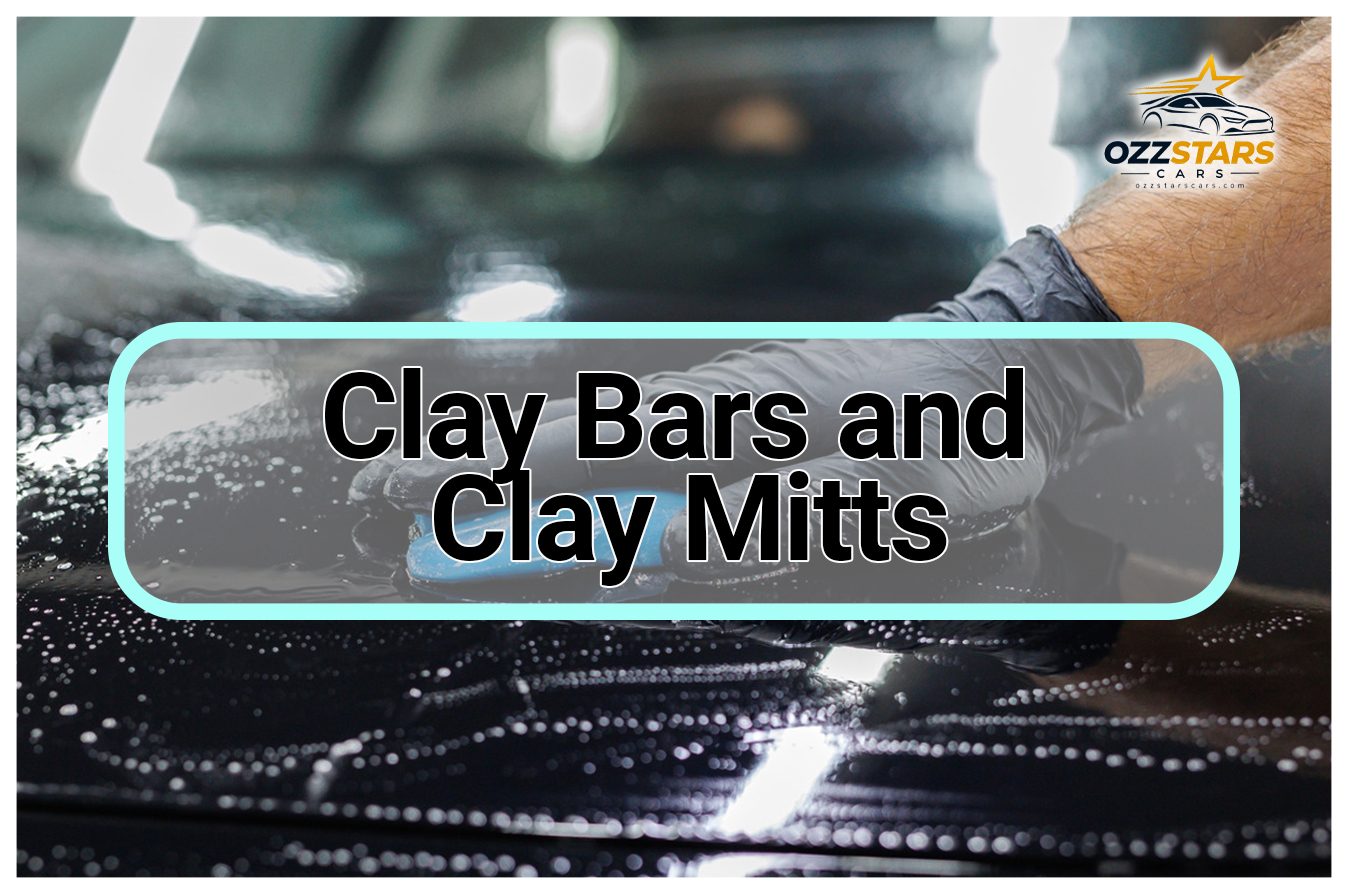
A contaminant that is embedded sits partly in the paint and partly above it. Clay is soft and slightly tacky. Dragged across a lubricated surface, it grips the protruding part of the particle and pulls it out, and the particle stays in the clay.
So the clay is not scrubbing your paint. It is taking hold of the things sticking out of it. That is why it works on bonded contamination and does nothing at all for a scratch.
And it is why lubrication is not optional. Without a lubricant between the clay and the paint, the clay is in direct contact with the surface, and any particle already trapped in the clay is now a hard object being dragged across soft clear coat with pressure on it.
Every way this job goes wrong is a version of that sentence.
The three ways it goes wrong
1. Not enough lubricant. The most common. The surface goes from gliding to grabbing, and grabbing is the sound of marring being created. If the clay stops gliding, stop and add more lubricant. That is the single most important instruction on this page.
2. A dropped bar, picked up and used again. A clay bar that touches the ground has picked up grit, and grit in clay is an abrasive tool. A dropped bar goes in the bin. Not rinsed, not wiped, not inspected. The bin. People do not do this because the bar cost money, and the paint costs more.
3. Claying a dirty car. Everything loose has to be gone first. Claying an unwashed car is dragging road dirt across the paint under pressure, which is the same mechanism as how swirl marks are actually created, applied deliberately.
Chemical first, mechanical second
This is the ordering rule that most reduces risk, and it is missing from most instructions.
Iron removers and tar removers dissolve what they can dissolve. Every particle they take off chemically is a particle the clay is not dragging. The iron remover step has its own page on this site, because the purple bleed it produces is the most common question about it.
Then the bag test again: hand inside a thin plastic bag, fingertips gliding over washed, dried paint, horizontal panels first. Chemical decontamination alone often reduces the roughness enough that the clay step is either much shorter or not needed at all, and a shorter clay step is a lower-risk clay step.
Bar or mitt
A bar conforms to the shape it is pressed against, which is why it works around badges, mirrors and edges. It has to be kneaded to expose a fresh face as it loads up, and it is the one that must be binned when dropped.
A mitt or a clay towel covers ground much faster and it is more forgiving of the fold-and-knead discipline, because there is no fresh face to expose. Its failure mode is the same one: it must be rinsed clean often, and it must not be used after touching the ground.
We are not going to recommend one, and we have not tested either. The mechanism is identical and the difference is handling.
The method, stated as a set of rules rather than steps
Wash and dry completely first.
Work cool, in shade. Lubricant that flashes off in the sun is lubricant that is not there, and the surface being warm means it dries faster.
One small area at a time. Roughly the area you can keep genuinely wet.
Wet it heavily. More lubricant than looks necessary. This is the cheapest insurance available in the whole job.
Straight lines, not circles. The same reason it matters in a wash: straight-line marring is less visible and less likely to compound than circular marring, and it is discussed in what order to wash a car.
Almost no pressure. The clay's tackiness does the work, not your arm. If you are pressing, you are doing it wrong.
Fold and inspect constantly. The bar or mitt is collecting hard particles. Once a face is loaded, it becomes the thing you are worried about.
Wipe the panel and re-check by feel before moving on.
Protect afterwards. Non-negotiable, and the reason is below.
The part people miss: what you have left behind
Claying strips whatever wax or sealant was on the paint. It has to, because it is removing things bonded to the surface and the protection is at the surface.
So a car that has been clayed and left is a car with no protection on it at all, right after a process that has slightly softened its appearance of gloss. It must be sealed, waxed or coated afterwards. Skipping this is not a small omission; it means you have spent an afternoon making the paint more exposed than it was.
When not to clay
When the bag test says it is smooth. Claying a smooth car is a small unnecessary risk for no gain.
On matte or satin paint. Everything about that finish inverts and it is a separate article.
On a vinyl wrap, without checking what the wrap manufacturer says.
On a car you have just clayed. This is not a routine.
When what you actually want is correction. If the problem is swirls, dullness or scratches, clay does not touch those. That is a different job with different tools and different consequences.
What we are not going to tell you
Which clay to buy, or which grade. We have not tested any, and grades differ between makers in ways that make a general recommendation meaningless.
What to use as a lubricant beyond "enough of whatever the maker of your clay specifies". Read the back of the bottle.
How long it takes. It depends entirely on how contaminated the paint is.
That marring will not happen. Some light marring is a normal outcome of claying and is the reason correction and claying are often discussed together. A page promising a perfect result from a process that shears particles off a soft surface is not being straight with you.
FAQ
Is claying a car safe?
It is safe when the paint is clean, the surface is heavily lubricated, the pressure is minimal, and the clay has never touched the ground. Every common failure is a version of a hard particle contacting paint without lubricant between them.
What happens if I drop the clay bar?
Bin it. It has picked up grit, and grit embedded in clay is an abrasive being dragged across your clear coat. This applies to mitts and towels too.
Do I need to wax after claying?
Yes. Claying removes whatever protection was on the paint along with the contamination, so an unprotected car is the state you are left in until you fix it.
Clay bar or clay mitt?
The mechanism is the same. A bar conforms around badges and edges and must be kneaded to expose a fresh face; a mitt covers ground faster. Both must be discarded or thoroughly cleaned after touching the ground. We have tested neither.
Will claying remove scratches?
No. Clay removes things bonded to the surface. A scratch is damage to the paint itself and needs correction, which is a different process with different risks.
This page names no product, no price, no clay grade, no grit number and no dwell time. It publishes no tire pressure, tread depth, torque value, wheel load rating or load index, which is a standing rule on this site.
The shearing mechanism and the marring risk described are general detailing knowledge stated as such. No clay product was tested for this page and nothing here is presented as a test result.