Is Ceramic Spray Coating Worth It? An Honest Answer
Short answer. A ceramic spray is a sealant carrying silica chemistry, sprayed on and wiped off in minutes with no cure step and no preparation beyond a clean surface. It is worth it as a maintenance product: the thing you use after a wash to keep a car slick and easy to clean. It is not a substitute for a cured coating, and the word ceramic on the bottle is not a specification.
That is the whole answer. The rest of this page is why the category is so confusing, and how to tell whether the bottle in front of you is doing anything.
What a ceramic spray actually is
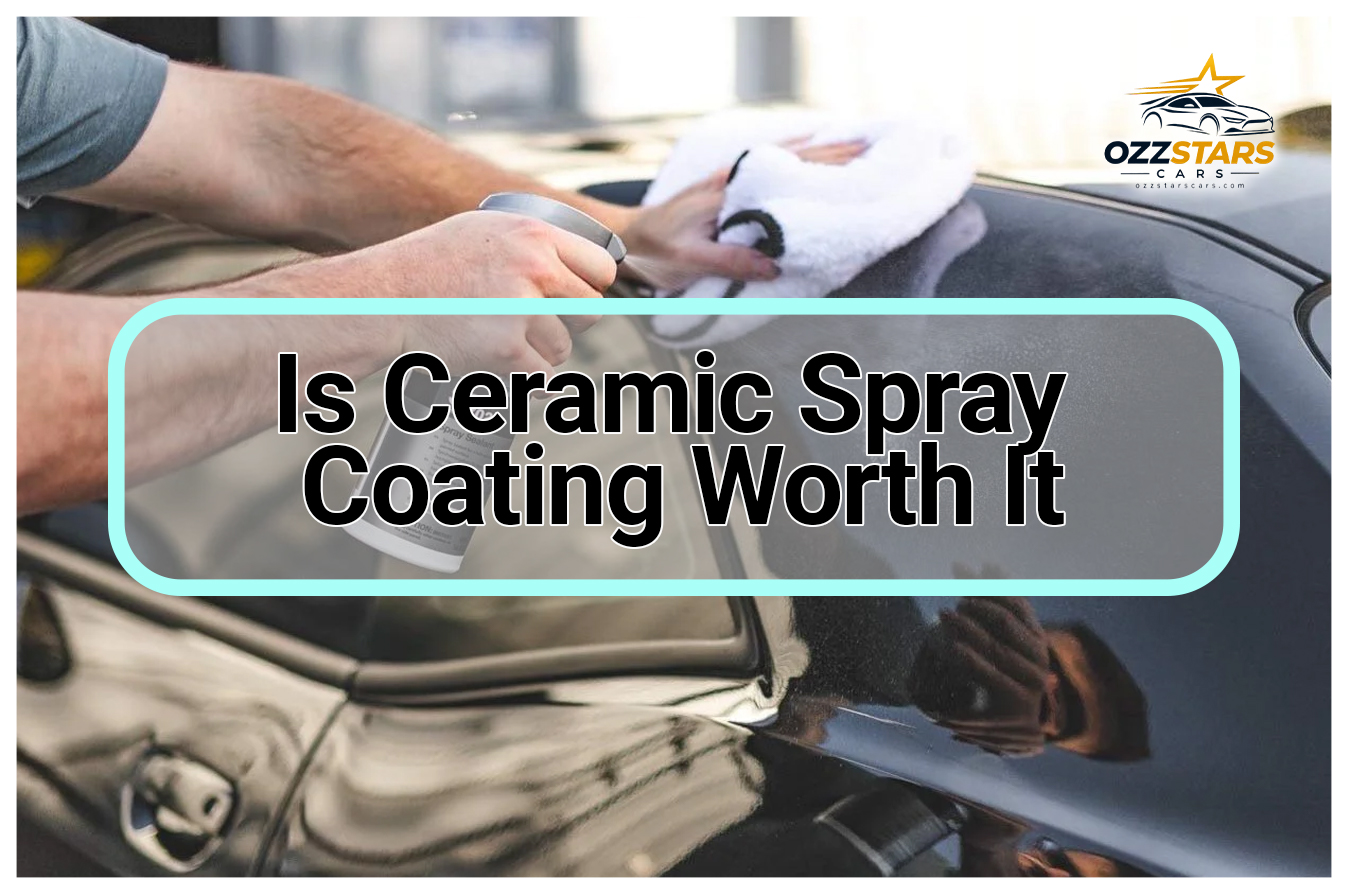
Strip the branding and you have a spray sealant with silicon dioxide in the formulation. You spray it onto a panel, spread it, wait a short time, and buff it clear with a second towel. There is no curing period, no dedicated applicator block, no panel wipe stage and no point of no return.
The application instructions are short by design. CarPro's own product page for Reload 2.0, read 2026-09-08, gives the whole method as six steps: shake, spray a section of roughly 50 by 50 centimeters, spread evenly with a microfiber towel, wait 30 to 60 seconds, then final wipe with a second towel until the finish is clear. It also states the product can be applied to a damp surface.
Compare that to a cured coating, which is applied to a corrected and stripped surface, leveled panel by panel under controlled light, and cannot be undone with a towel. The difference in effort is the difference in what you are getting.
Why "ceramic" on a spray bottle is not a specification
There is no test or industry standard that a product must pass to be sold as a ceramic spray. The word describes a family of chemistry, not a defined content, and the amount of silica in the bottle is often not published at all.
This matters because the active content is what varies. Two sprays with identical marketing can behave differently, and there is usually no number on either label that would have told you in advance. Where a manufacturer does publish a figure, it is worth more than any adjective on the front of the bottle.
The hardness claim travels with the marketing, and it should not. Some sprays borrow the 9H figure from the coating category. That figure comes from ASTM D3363, the Standard Test Method for Film Hardness by Pencil Test, which we checked on 2026-09-08. It records the hardest graded pencil lead that will not cut a coated test panel when pushed across it at 45 degrees, and 9H is simply the hardest lead in the set. It is a comparative laboratory grade. It is not a statement about keys, stones or a gritty wash mitt, and on a film a few microns thick the panel underneath heavily influences the result.
The one thing a spray cannot fix
A spray goes onto whatever surface you present it with, and it does not clean the paint.
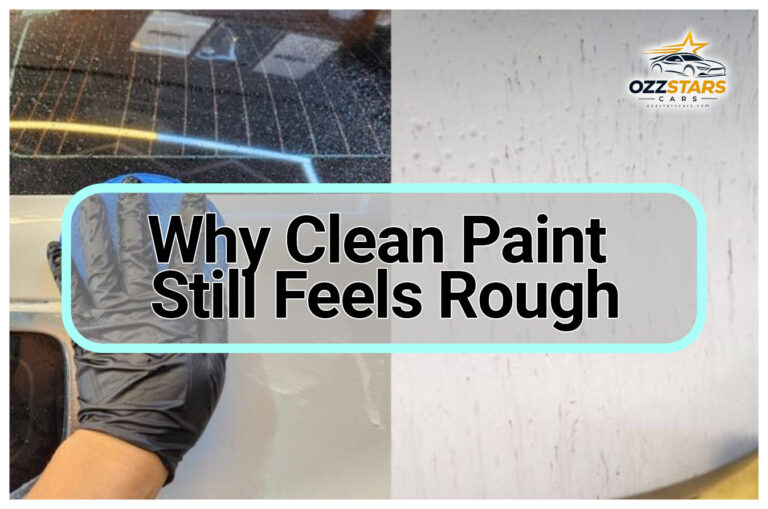
If the paint is contaminated, the spray sits on the contamination. That is why a car can be freshly washed, freshly sprayed, and still feel like fine sandpaper to the fingertips. The reason clean paint still feels rough after washing is bonded fallout and road film that a wash mitt slides straight over, and no spray sealant removes it.
And if the paint is swirled, a spray hides very little of it. Gloss enhancers can fill fine marring temporarily. They do not remove anything, and the effect washes out.
The honest sequence is: get the surface clean, then decide about protection. A spray applied over a properly decontaminated panel behaves noticeably better than the same spray over a neglected one, which is one of the few claims in this category that costs nothing to test yourself.
Is ceramic spray coating worth it? Where it genuinely fits
As a drying aid. This is the use that made the category popular. A light mist onto a wet panel during the drying pass adds lubrication and leaves protection behind at the same time. If you already have a routine for drying a car after washing, a spray slots into it without adding a separate job.
As maintenance on top of a cured coating. Many coating makers sell a matching spray for exactly this, and some guarantee terms specify what may be applied. Check the coating's own instructions before you top it with anything.
As the practical option for a car that has to be done quickly. After a rinseless wash in an apartment car park, a spray is realistic where a paste wax and two buffing passes are not. Our comparison of rinseless washing against a regular hose wash covers when that setup is honest and when it is not.
As the low-risk way to protect trim, glass and wheels on the same afternoon, if the maker states the product is suitable for those surfaces.
Where it does not fit
It is not the answer if you want protection you can stop thinking about. Sprays are reapplied as a routine. That is their nature, not a defect.
It is not a step up from a good sealant in every case. A ceramic spray and a synthetic sealant are close relatives, and the marketing gap between them is much wider than the chemical one.
It will not correct anything. Scratches, etching and swirl marks are removed by abrasion or not at all.
It does not stop stone chips, and neither does anything else in a bottle. Impact protection is a film, not a liquid.
The durability question, and why there is no number here
Every spray publishes a claim. The one we read on 2026-09-08 was phrased as a maximum on a daily driver, which is a ceiling rather than an expectation, and that phrasing is standard across the category.
This site publishes no durability figure for any protection product. We have tested nothing, every figure in circulation originates with a seller, and there is no independent measurement to check any of them against. What is more useful than a number is knowing what fails first: water behavior flattens off well before the product is chemically gone, which is why owners conclude a spray has stopped working while it is still doing the job they bought it for.
The practical version: judge a spray by how the car cleans, not by how the water beads.
The technique detail that decides the result
Use two towels and change them. The first spreads, the second removes the residue. A single saturated towel smears product and leaves streaks that look like a product failure and are not.
Buff before it dries, in the shade, on a cool panel. Every maker says this and it is the most ignored instruction in car care.
The towel matters more than the bottle at this stage. Choosing the right microfiber towel for car paint affects both the finish and whether you are adding fine marring while you buff.
Less product than you think. Streaking is almost always over-application, and the fix is more towel, not more spray.
FAQ
Is a ceramic spray coating as good as a real ceramic coating?
No, and it is not sold as one by careful manufacturers. A spray is wiped on and off in minutes with no cure step, so it is a maintenance product. A cured coating requires decontamination, usually correction, and a controlled application, and it cannot be removed by washing.
How often should I apply a ceramic spray?
Follow the maker's instructions for that product, since the formulations differ. In practice most people reapply when the car stops feeling slick or stops cleaning easily, which is a better signal than the calendar.
Can I use a ceramic spray on top of wax?
Some sprays bond poorly over a soft wax layer, and manufacturers generally ask for a clean surface free of oils and old product. If you want the spray to do its job, apply it to decontaminated paint rather than over a wax you applied last month.
Will a ceramic spray remove swirl marks?
No. It can add gloss and can temporarily reduce how visible fine marring is, but removing a defect means removing a small amount of clear coat, and no spray does that.
Is the 9H figure on a spray bottle meaningful?
Not in the way it reads. It comes from a pencil hardness test performed on a coated panel in a laboratory, it tops out at 9H because that is the hardest lead in the set, and it does not describe resistance to keys, stones or a gritty wash mitt.
Sources read 2026-09-08: CarPro published product page and application instructions for Reload 2.0, used as the example of a manufacturer's own stated method and durability framing; ASTM D3363, Standard Test Method for Film Hardness by Pencil Test.
This page publishes no price, no product ranking, no durability figure of our own and no test result. No spray has been applied or tested by this site.