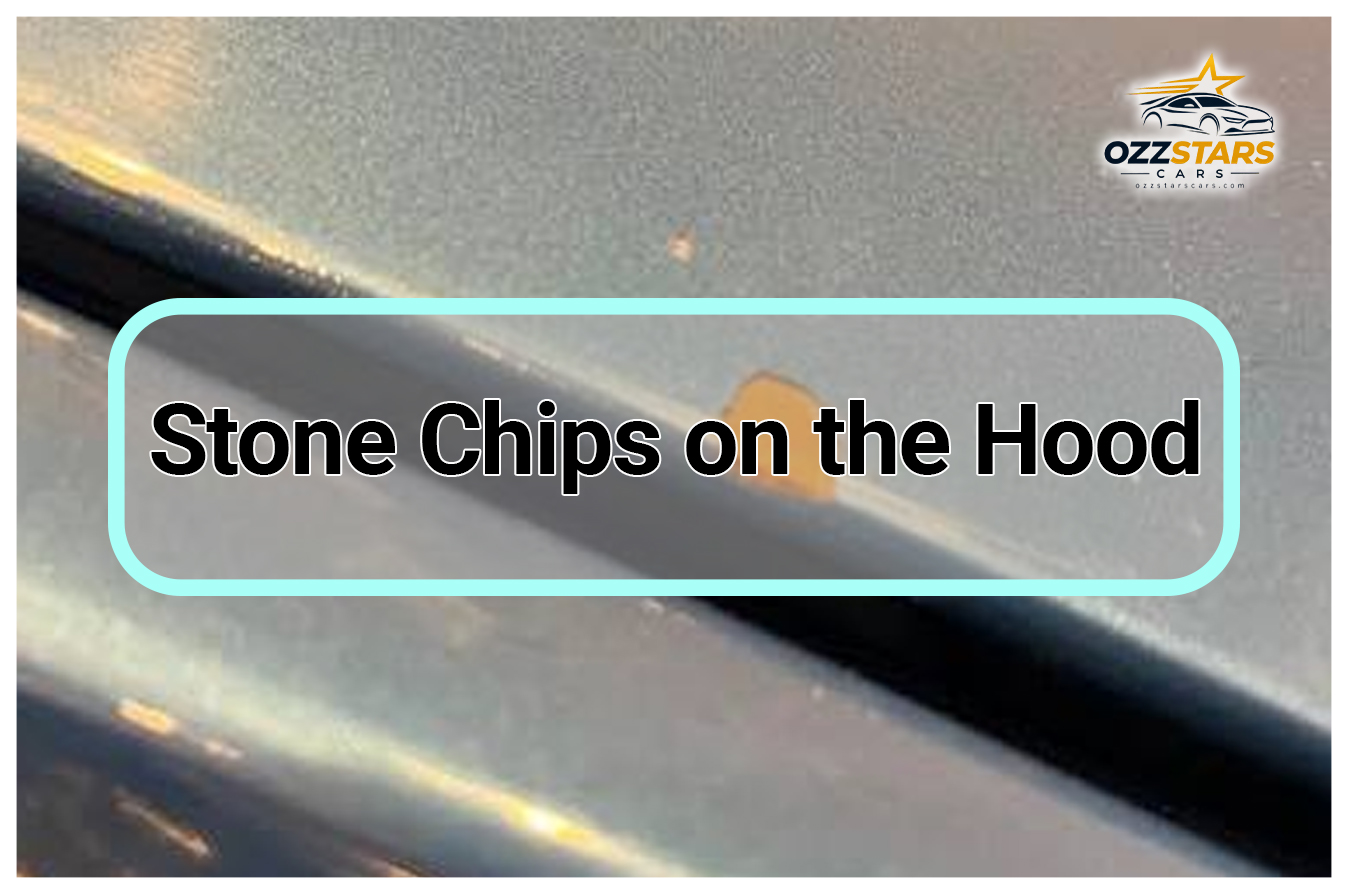
Stone Chips on the Hood: Fix, Seal or Leave Alone
Dozens of little marks across the front of the hood, and one real question underneath: do these turn into rust?
Some of them will and most of them will not, and you can sort them yourself in two minutes.
The inspection that sorts them
Clean the area, dry it, and look at the chips in good light. A magnifier or a phone camera zoomed in makes this much easier.
You are putting each chip into one of three piles.
Pile one: the chip stopped in the clear coat. You see a mark, and the color in the bottom of it is your car's color, undisturbed. These are cosmetic and they are not going to rust, because nothing is exposed.
Pile two: the chip went through the color to the primer. The bottom of the chip is a different color from the car, usually white, gray or black. Primer is a barrier and it is doing its job, but it is a thinner one than intended, and these are the ones to watch and to seal if you are sealing anything.
Pile three: bare metal is showing, or there is already a spot of rust. Shiny, or brown. These are the ones that matter and they are the reason to do anything at all.
Most people have a small handful of pile three and a great many of pile one, and until you look you assume they are all the same thing.
What to do with each pile
Pile one: leave them
Sealing a chip that has not breached the color adds material to a defect that is doing no harm, and a dab of touch-up paint on top of intact paint is more visible than the chip was.
If they bother you visually, that is a correction question rather than a repair question, and the honest test for whether a mark is polishable is a fingernail across it: if it glides, it is shallow.
Pile two: judgement, and time is the variable
Primer is protecting the metal, and it is not a permanent finish. Sealing these is reasonable, particularly on a car you are keeping and particularly before a salt season.
If you are only going to do a handful, do these and pile three and leave the rest.
Pile three: seal them, and do it before winter
This is the one with an actual consequence. Exposed steel corrodes, and it corrodes outward under the surrounding paint where you cannot see it. A chip you can cover with a pinhead becomes a blister the size of a coin, and the blister is the point at which it stops being a chip and starts being a repair.
Any rust already present has to come out before anything goes over it. Painting over rust seals moisture in and the corrosion continues underneath, invisibly, which is worse than leaving it open.
If the rust is more than a speck, or if the paint around it has started to lift, stop. That is a body shop question and it is outside what a detailing page should be walking you through.
The realistic expectation for the sealing itself
It will not be invisible. A filled chip is a chip you have to look for rather than one you notice, and that is the correct target. The reasons are geometric rather than a matter of product choice, and touch-up paint has its own article on this site.
Thin layers, several of them, aimed slightly below flush rather than proud. A raised blob catches more light than the crater did.
Test the color somewhere hidden first, inside a door shut or under the fuel flap, because a paint code matches the car as built and factory paint shifts with sun exposure.
The prevention question, honestly
Chips are impacts, and nothing chemical stops an impact.
A coating does not stop stone chips. A stone at road speed carries far more energy than a thin chemical layer can absorb, and that is worth being clear about because it is one of the things people believe they bought.
A physical film does, and it is the only thing on this page that addresses the cause rather than the consequence. It is a clear plastic layer applied over the impact zones: the leading edge of the hood, the front bumper, the mirror faces, sometimes the area behind the wheels.
We name no product, no brand and no price, and we have not had any applied. What can be said honestly is that it is a physical barrier for a physical problem, which is a better match than a chemical barrier for a physical problem, and that its cost, its appearance and its edges are things to look at in person before committing.
And the free version: more distance behind the vehicle in front, and less time in the lane where the trucks are. A large share of hood chips are collected in the first two seconds behind something with dirty tires, and no product competes with not being there.
Where this sits against everything else on the paint
Chips are the one damage type on a car that is not caused by how you wash it. Almost everything else on this site's paint pages is, which makes chips unusual and makes them worth treating differently.
Which does not mean the wash is irrelevant here. A chip with a ring of swirls around it looks far worse than a chip on clean paint, and dragging a dirty mitt over a chip can lift the edges of the paint around it. The mechanism is how swirl marks actually happen, and the drying stage, where a lot of the damage occurs, is in how to dry a car without scratching it.
What we will not tell you
Which touch-up product or film to buy. We have tested none and this site carries no picks.
A repair cost figure, for touch-up, for film or for refinishing. It depends on the panel, the paint, the vehicle and the local market.
How to blend or wet sand a repair. It removes clear coat, which is finite, and it is not a first attempt on a hood.
That any chip is safe to ignore indefinitely. Pile one is cosmetic today; whether it stays that way depends on whether anything else happens to it.
FAQ
Do rock chips turn into rust?
Only the ones that have reached bare metal. Chips that stopped in the clear coat or in the color layer are cosmetic. Sorting them takes two minutes with good light and a magnifier.
Should I fix every stone chip on my hood?
No. Seal the ones showing bare metal or rust, consider the ones showing primer, and leave the ones that stopped in the clear coat, because filling those adds a visible blob to a harmless mark.
Does ceramic coating stop stone chips?
No. A stone at road speed carries far more energy than a thin chemical layer can absorb. The product that addresses impacts is a physical film.
How urgent is a chip with rust in it?
More urgent than it looks, because rust travels under the surrounding paint where you cannot see it. If the rust is more than a speck, or the paint around it is lifting, that is a body shop question rather than a touch-up one.
Is paint protection film worth it?
It is a physical barrier for a physical problem, which is the right category of solution. Whether it is worth the cost depends on the car, the mileage and the roads, and its appearance and edges are worth seeing in person before committing.
This page names no product, no film brand, no price and no repair cost figure. It publishes no tire pressure, tread depth, torque value, wheel load rating or load index, which is a standing rule on this site. Rust beyond a surface speck, and any paint that has begun to lift, are routed to a body shop rather than described here.
The corrosion and impact mechanisms described are general automotive finishing knowledge stated as such. No product or film was tested for this page and nothing here is presented as a test result.