Polish, Compound and Glaze: Three Tubs, Three Jobs
Similar names, similar tubs, similar shelf. And you bought the wrong one.
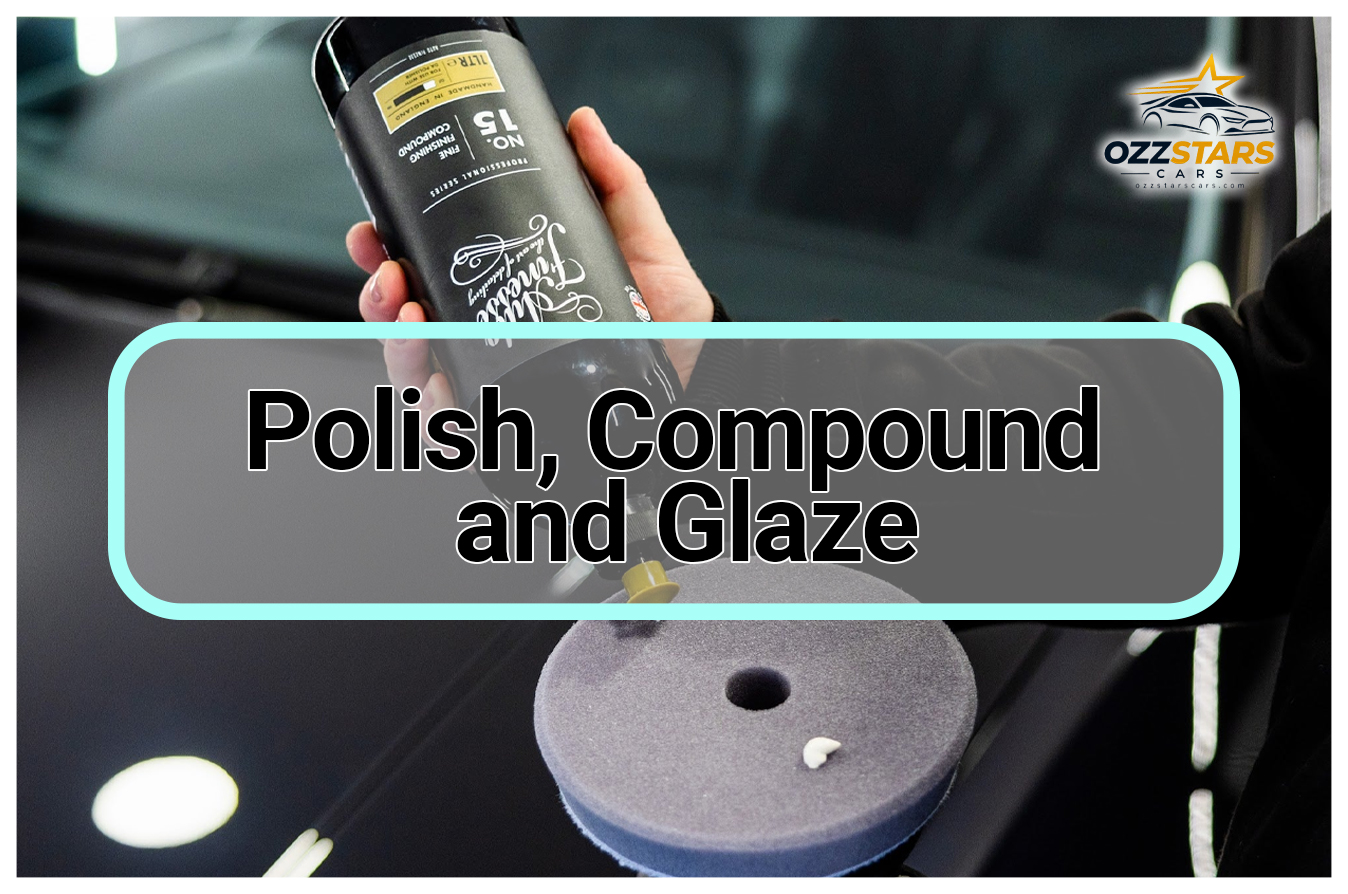
That is the actual query behind this search, and the answer is short enough to give now: compound removes more clear coat, polish removes less, and glaze removes none and hides what is left.
Everything below is why that matters more than it sounds.
The thing all three act on
Almost all modern car paint is clear coat over color. The color layer is underneath and it is not what you touch. The clear coat is the transparent layer on top, and it is what gets scratched, what gets dull, and what every product on this page is working on.
Clear coat is finite. There is a certain thickness of it and it is never replaced except by a repaint. Every product that improves your paint by removing a scratch is improving it by removing clear coat down to the bottom of that scratch.
That is the single fact that makes this a real decision rather than a shopping question, and it is important enough to have its own article on this site.
The three, defined by what they take away
Compound: takes the most away
An abrasive product designed to remove enough clear coat to level out deeper defects.
Use it when the defect is deep enough that less aggressive products will not reach the bottom of it, and accept that you are spending more of a finite layer to do so.
Compound usually leaves its own light haze behind, which is why compounding is nearly always followed by polishing. That is not a defect in the product, it is how the sequence works, and it is the reason the two are sold beside each other.
Polish: takes a little away
A milder abrasive, and this is the one that does most of the work most of the time.
Polish removes light swirls, fine marring and general dullness, and it refines the surface after a compound has been used. On the majority of cars in the majority of situations, polish alone is the correct product, and reaching for compound first is how people take clear coat off for defects that polish would have handled.
Glaze: takes nothing away
A glaze contains fillers and oils. It sits in the defects rather than removing them, and it makes them optically less visible.
This is the honest description and almost nobody gives it, because "hides" sounds like a criticism. It is not a criticism, it is a legitimate use. If you want a car to look its best for a weekend, or for photographs, or before a sale, a glaze does that with no clear coat spent at all.
Two things to know about a glaze.
It is temporary. Fillers wash out. Weeks or a few washes, not months, and then the defects reappear looking exactly as they did.
It is why "before and after" photographs are so unreliable in this category, and it is a reason to be skeptical of a dramatic result whose product you cannot identify.
And one thing that is genuinely dishonest: glazing a car before selling it, so a buyer sees paint that will look different a month later. We are not going to help with that. Cosmetic preparation for sale is legitimate; concealing defects from someone about to hand over money is a different thing.
The decision, in the order that spends the least paint
1. Wash and decontaminate first. Working abrasive product over embedded contamination drags hard particles through your clear coat, which is the same mechanism as how swirl marks are created, only with more pressure. The check for whether decontamination is needed is a thin plastic bag over your fingertips on washed, dried paint, horizontal panels first.
2. Look at the defect properly, in the right light. Direct sun or a strong single-point light. Diffuse daylight hides everything and is why people conclude their paint is fine.
3. Start with the least aggressive product that could work. This is the rule the whole subject reduces to. Try polish on a small test area. If it resolves the defect, you are finished and you have spent the minimum.
4. Only step up if the test says so. If polish did not touch it, compound is the next option, and it is a decision to spend more clear coat rather than a default starting point.
5. Refine after compounding. Compound then polish, in that order.
6. Protect afterwards. All three of these leave bare paint. Wax, sealant or coating goes on after.
What none of them do
None of them repair a scratch that has gone through the clear coat. If the defect is deep enough to catch a fingernail, you are usually past what abrasives can level, and that is a body shop question. The test people use for that has its own article on this site.
None of them fix chalky, oxidized paint permanently if the clear coat has failed. Compounding through a failing clear coat removes what is left of it.
None of them are a protective product. They are preparation.
None of them should be used often. The reason is the finite layer, and the arithmetic is unforgiving in a way that is not obvious until you understand it.
What we will not publish
No product names and no prices. We have not tested any and this site does not carry picks.
No abrasive grade, cut rating or grit number. These are not comparable between makers and a number quoted out of one maker's system means nothing in another's.
No clear coat thickness figure in microns. Publishing one would invite arithmetic about how many corrections a car has left, and that arithmetic depends on the specific vehicle, its paint, its history and any previous work, none of which a page can know. A wrong number here costs the reader a repaint.
No machine recommendation. That is a tool purchase and it is not this site's row.
FAQ
What is the difference between polish and compound?
Both are abrasive and both remove clear coat. Compound removes more, to reach deeper defects, and usually leaves a light haze that polish then refines. Polish removes less and handles light swirls, fine marring and dullness.
What does a glaze do?
It fills and optically hides defects rather than removing them. It spends no clear coat, and it is temporary, washing out over weeks.
Should I use compound or polish first?
Polish, on a small test area. If it resolves the defect you are done and you have spent the least clear coat. Compound is a decision to spend more, taken only after the milder option has been shown not to work.
Can polishing damage my paint?
Polishing removes clear coat, which is finite and is not replaced without a repaint. Doing it repeatedly, or reaching for the most aggressive product first, is how a car runs out of clear coat.
Do I need to wax after polishing?
Yes. All three products leave the paint bare, so protection goes on afterwards.
This page names no product, no price, no abrasive grade, no grit number, no cut rating and no clear coat thickness figure. It publishes no tire pressure, tread depth, torque value, wheel load rating or load index, which is a standing rule on this site.
The abrasive and filling mechanisms described are general detailing and coatings knowledge stated as such. No product was tested for this page and nothing here is presented as a test result.