Why You Rinse a Car Before Washing It
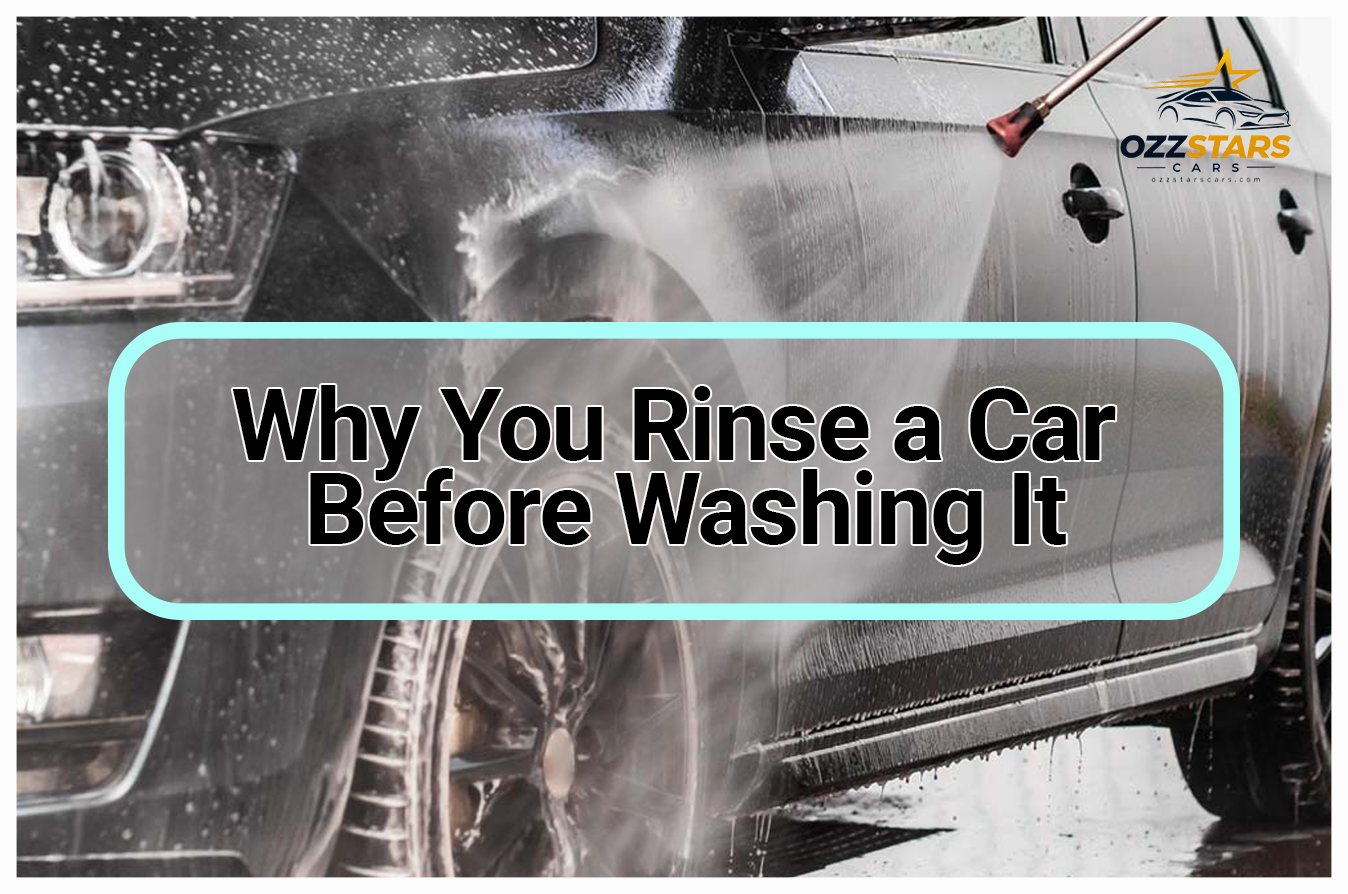
A pre-rinse removes loose dust, pollen, and road grit from the paint before any mitt or towel makes contact, so the highest-friction part of the wash is not dragging abrasive material across the surface from the very first wipe. It does not replace the two-bucket method or careful motion; it removes the easiest material to remove before the harder work even starts. Skipping it means the mitt's first passes are working against a dirtier, grittier surface than they need to.
What loose grit actually is, and why it matters before the mitt arrives
Dust, pollen, and fine road grit sit on top of the paint without being bonded to it. A plain water rinse, from a hose or a pressure washer, physically flushes this material away with no contact at all between any tool and the paint. Nothing scrubs, nothing wipes, nothing presses. That is the entire value of the step: it is the only part of a wash that removes material with zero abrasion risk.
Once a mitt touches the paint, the mechanics change completely. Now every particle still on the surface is a candidate for getting pressed and dragged, which is exactly what causes swirl marks, covered fully in How to Wash a Car Without Putting Swirls Into It. A thorough pre-rinse reduces how much of that material is present when the higher-risk contact stage begins.
Does a pre-rinse remove everything
No. Bonded contaminants, tree sap, tar, baked-on bug residue, brake dust that has had time to etch into a wheel finish, do not come off with plain water. A pre-rinse is specifically effective against loose material sitting on top of the surface, not against anything that has chemically bonded or hardened. That is a separate problem with separate solutions, and a pre-rinse should not be expected to solve it.
The debate worth being honest about
Not every source agrees on exactly how a pre-rinse should be sequenced. Some detailing guidance recommends rinsing thoroughly, then applying a foam pre-wash directly onto the wet surface. Other guidance argues that applying foam to a dry surface lets the soap bond and start working immediately, and that a heavy rinse right before foam dilutes the chemical and can interfere with how well it clings and dwells on the paint.
Both positions agree on the more important point: loose grit should be removed by a chemical pre-wash step, whether foam or a spray-on pre-wash, before the mitt makes contact, and plain water alone, done thoroughly, achieves a version of the same goal even without foam. The disagreement is about sequencing and product interaction, not about whether removing loose grit before mitt contact matters. This guide does not pick a winner on the foam-sequencing debate; it states plainly that a thorough pre-rinse, foam or plain water, is the right instinct either way.
Can you skip it if the car is not that dirty
A car that looks clean can still be carrying fine dust and pollen that is not visible from a few feet away. The pre-rinse costs very little time compared with the rest of a wash, and the risk of skipping it, dragging that invisible material with the first few mitt passes, is exactly the scenario the two-bucket method and straight-line motion are also trying to manage. Skipping the pre-rinse does not make either of those steps fail, but it does mean they are working against a dirtier starting surface than necessary.
How pre-rinsing fits with wash order
A pre-rinse is typically done in the same top-down direction as the wash itself, so loosened debris runs downward onto panels that have not been washed yet rather than back up onto ones that have. This is the same logic behind washing the car top to bottom in general, covered in Top-Down Wash Order, and Why the Bottom Panels Come Last. The pre-rinse is effectively the first pass of that same top-down sequence, just with water alone instead of a mitt.
What happens to the grit that does not get rinsed off
Whatever loose material survives the pre-rinse becomes the mitt's problem. That is where the two-bucket method, covered in The Two-Bucket Method, and What It Actually Prevents, takes over: it manages grit that the mitt does pick up, by giving the mitt a place to release it before the next dip. A pre-rinse and the two-bucket method are not competing techniques. They handle grit at two different points in the same process, and both matter.
What a pre-rinse cannot fix
It will not remove bonded contamination, it will not substitute for clean wash water, and it will not compensate for scrubbing in circles once the mitt is in hand. It is one specific, low-risk step that reduces the load on every step that follows it, nothing more and nothing less.
FAQ
Should I use a pressure washer or just a hose for the pre-rinse?
Either works for the goal of flushing loose surface material away. This guide does not specify a pressure setting, since safe pressure depends on the equipment and distance from the paint, and no single figure applies universally.
Does a pre-rinse remove bird droppings, tree sap, or bug residue?
Generally not on its own if the material has already bonded or dried. Those are separate problems handled with dedicated technique rather than a plain water rinse.
Is applying foam to a dry car actually better than rinsing first?
Detailing sources genuinely disagree on this point of sequencing. Both approaches agree that loose grit should be addressed chemically or mechanically before the mitt touches the paint; this guide does not take a side on the foam-sequencing debate itself.
How long should the pre-rinse take?
Long enough that visible dust and debris are gone and water is running clean off the panels, rather than a fixed time, since dirt load varies by vehicle and environment.
Do I still need to rinse if I just washed the car two days ago?
A recently washed car generally has less loose material on it, but dust and pollen accumulate quickly even over a day or two, so a quick pre-rinse still reduces the amount of material the mitt encounters first.