What Order to Wash a Car: Top to Bottom
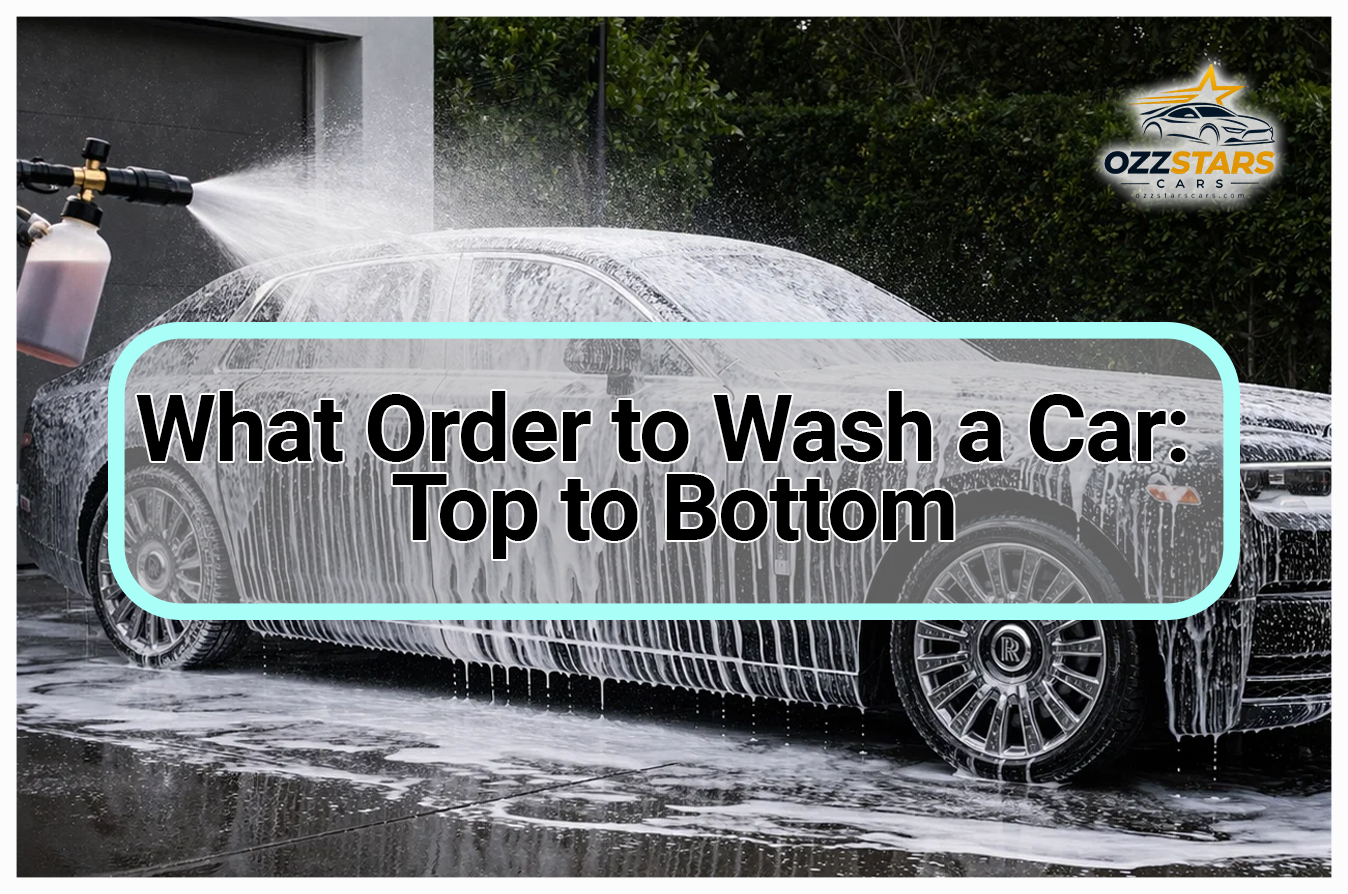
Wash a car from the top down: roof, hood and trunk lid, upper doors, lower doors, then bumpers and rocker panels last, with wheels handled separately using their own tools. The bottom third of a car collects the most road grime and brake dust, so washing it early means that mitt is now the dirtiest tool on the car, and every panel it touches afterward gets contaminated with material from the ground. Working top to bottom, clean to dirty, keeps that grime moving away from clean panels instead of onto them.
Why the bottom of a car is genuinely different
Road spray, brake dust, and ground-level grime concentrate on the lower twelve inches or so of a car in a way the roof and upper body panels never experience. Even a short drive kicks up material that lands and clings to rocker panels, lower doors, and bumpers. This is not a minor difference in degree. It is a different category of contamination, heavier, coarser, and more likely to include brake dust, which is genuinely abrasive.
Washing a lower panel with a mitt, then continuing to use that same mitt on the roof or hood without a proper rinse, transfers that coarse material upward onto paint that was cleaner and, often, more visible. That is the specific failure top-down order is built to prevent.
The panel-by-panel order
- Roof, hood, and trunk lid first. These horizontal panels are usually the cleanest, and washing them first also lets rinse water and any remaining suds run downward onto areas about to be washed anyway, effectively pre-treating the next section.
- Upper doors and fenders next. Still relatively clean compared with what is coming.
- Lower doors and rocker panels after that. This is where road grime becomes noticeably heavier.
- Bumpers and the lowest twelve inches last. The dirtiest material on the car, closest to the ground and most exposed to road spray.
- Wheels and wheel wells separately, with their own tools. Brake dust is abrasive and often bonded onto the wheel surface, and wheel-cleaning tools should never be used on paint afterward, nor should paint tools be used on wheels first.
Does washing top down replace the two-bucket method
No. Wash order and the two-bucket method solve two different problems. Top-down order stops grime from being carried upward from dirtier panels onto cleaner ones during the wash. The two-bucket method stops a mitt from reloading itself with grit it already picked up, panel by panel, regardless of which panel it just came from. Both matter together, and the full mechanism connecting them is covered in How to Wash a Car Without Putting Swirls Into It.
Why wheels get washed separately, not first or last in the same sequence
Wheels and paint face different types of contamination. Brake dust bonds to wheel surfaces in a way that ordinary road dust does not bond to paint, and wheel cleaning often involves stronger products designed for that bonded material. Using the same mitt or the same wash water on wheels and paint risks transferring bonded brake dust particles, which are genuinely abrasive, onto paint. Most detailing guidance treats wheels as their own separate step with dedicated tools, done before or after the paint wash but never blended into the same mitt-and-bucket rotation used on the body.
Does the order matter if the car is not that dirty
The order matters less on a car washed frequently and kept relatively clean, since the gap in grime between upper and lower panels is smaller to begin with. It still costs nothing extra to follow top-down order regardless, and the risk it protects against, an already-contaminated mitt touching cleaner paint, does not disappear just because the car looks reasonably clean.
How wash order connects to the pre-rinse and the drying step that follows
A pre-rinse, covered in Why You Rinse Before the Mitt Ever Touches the Paint, is typically done in the same top-to-bottom direction as the wash itself, so it functions as the first pass of the same sequence. Once the wash itself follows that top-down order and finishes, drying is its own separate step with its own risks around towel choice and motion, not covered in this guide.
What top-down order cannot fix
Following the correct order does not eliminate the need for clean wash water, a mitt that releases grit, or careful motion. It solves one specific problem, grime being carried upward from dirtier to cleaner panels, and it solves it reliably, but it works alongside the other habits rather than instead of them.
FAQ
Should I always wash the roof first, even on a two-door car with a small roof?
Yes, the same top-to-bottom logic applies regardless of vehicle size or shape; the roof and upper panels are still generally the cleanest starting point.
Do wheels really need entirely separate tools from the paint?
Most detailing guidance recommends this because brake dust is abrasive and can bond to wheel surfaces in ways ordinary road dust does not bond to paint, so cross-contamination is a real risk if the same mitt touches both.
What if my car is muddy all over, not just on the bottom?
A heavier pre-rinse before starting the panel-by-panel wash removes as much loose material as possible first, regardless of how evenly the dirt is distributed.
Does the order matter for a car that lives in a garage and rarely gets dirty?
Less so, since the gap in grime between upper and lower panels is smaller, but the habit costs nothing extra to maintain.
Can I wash bumpers and rocker panels with the same mitt used everywhere else if I rinse it well between panels?
The two-bucket method, rinsing the mitt between every panel, reduces this risk significantly, but washing the dirtiest panels last still avoids concentrating the heaviest contamination onto the mitt before the rest of the car is finished.