
How to Remove Salt Stains From Car Carpet for Good
To remove salt stains from car carpet, vacuum up the loose crust, dissolve the rest with a mix of white vinegar and hot water, blot it out, then rinse with plain water and pull the moisture out with a wet vacuum before drying the carpet completely. The last two steps are the ones most people skip, and they are why white tide marks reappear. Salt that is only moved around, not removed, sinks into the backing and wicks back to the surface every time the carpet gets wet and dries again.
Below is the full method, the reason the rings keep returning, and what to do differently for fitted carpet, carpet mats and rubber mats.
Why road salt leaves white rings on car carpet
In winter, snow and slush on your shoes carry de-icing chemicals into the car. When the water in that slush evaporates, the salt stays behind as a white crust.
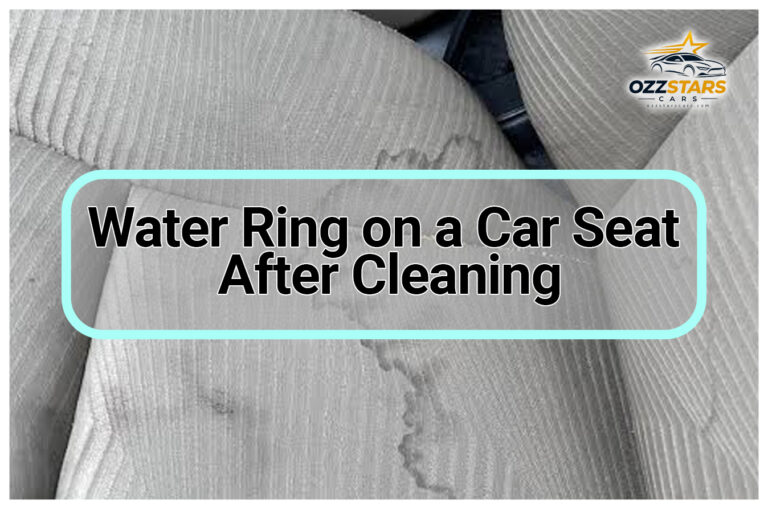
The ring shape comes from how a wet patch dries. As water evaporates from the edges of a damp area, dissolved salt is carried outward and left behind where the drying stops. That is why the stain often looks like a tide line rather than an even patch.
The rings come back after a thaw because a quick spray and wipe only moves some of the salt. The rest soaks into the carpet backing. The next time the carpet gets wet from snowy boots, that buried salt dissolves again, travels up the fibers as the surface dries, and leaves a fresh white line.
Why some winter salt keeps the carpet damp
Not all road de-icers are plain rock salt. Many roads and sidewalks are treated with calcium chloride or magnesium chloride, which draw moisture from the air. Cal-Chlor, a maker of calcium chloride ice melt, says on its product FAQ page, which we read on September 27, 2026, that "hygroscopic ice melt products may cause water to evaporate at a slower rate and remain damp longer than naturally melting water."
For a car floor, that means salt residue left in the carpet can keep it slightly damp for longer than you might expect, and damp carpet dries into more rings. The same page recommends that carpets tracked with deicer, dirt and grime get "a pH neutral detergent wash followed by hot water extraction," which is the professional version of the rinse and extract steps below.
Why it matters beyond looks
Damp carpet is not only an appearance problem. Kia's owner's manual for the Syros warns, in its exterior care section read on September 27, 2026, that "moisture can collect under the floor mats and carpeting and cause corrosion. Check under the mats periodically to be sure the carpeting is dry." Salty moisture sitting against the floor is exactly what you want to avoid.
Damp carpet can also start to smell musty. Getting the salt out and the floor dry deals with both problems at once.
How to remove salt stains from car carpet, step by step
What you need
- A vacuum, ideally a wet and dry vacuum
- A stiff but not wire brush
- Distilled white vinegar and hot tap water
- A spray bottle or small bucket
- Clean, absorbent cloths or microfiber towels
- A second spray bottle of plain water for rinsing
Work with the doors open for airflow, and make sure the carpet will have time to dry afterward, ideally on a dry day or in a warm, well-ventilated space.
1. Take out the mats and treat them separately
Remove any floor mats and deal with them outside the car. This lets you clean the fitted carpet underneath and lets the mats dry properly.
2. Break up and vacuum the dry salt
Brush the white crust gently to loosen it, then vacuum thoroughly. Getting the dry salt out first means less of it is dissolved and pushed deeper in the next step. Do not scrub hard at this stage; you only want to lift what is loose.
3. Apply the vinegar and water mix
Cars.com, in its guide dated February 23, 2023, recommends a "50/50 cleaning solution of household distilled white vinegar and hot water." Spray or dab it onto the stain so the fibers are damp, not soaking. Soaking the fitted carpet pushes salty water down into the padding, where it is hard to get out and slow to dry.
The same guide warns about "making sure to avoid contact with any electrical connections" while applying the solution. Many cars have wiring and connectors under the seats and near the floor, so keep the spray on the carpet and away from anything electrical.
4. Agitate and blot
Let the solution sit briefly, then work it in with the brush. Blot with a clean, dry cloth, pressing firmly to lift the dissolved salt out. Turn to a clean part of the cloth often. Work from the outer edge of the stain toward the middle so you do not spread the salt into a wider ring.
Repeat on heavy stains rather than flooding the area with more liquid.
5. Rinse with plain water
This is the step that stops the rings coming back. Lightly mist the area with plain water and blot again. You are rinsing out dissolved salt and vinegar that would otherwise dry back into the fibers.
6. Extract the moisture
If you have a wet and dry vacuum, go over the area slowly to pull the water and the dissolved salt out of the carpet. This removes far more than blotting alone. If you do not have one, blot with dry towels, pressing hard, until they come away nearly dry.
7. Dry the carpet completely
Leave the doors or windows open and give it time. Airflow does most of the work. If you want to use the car's heater to speed things up, only run the engine outdoors in the open air, never in a closed or attached garage, where exhaust fumes can build up. Check under the mats and at the edges of the carpet before you call it done. The vinegar smell usually fades as the carpet dries.
For the rest of the cabin, our guide on how to clean a car interior in the right order covers where the carpet fits into a full clean.
Carpet mats, rubber mats and fitted carpet
Carpet floor mats are the easiest. Take them out, use the same method, rinse well, and hang them up to dry fully before putting them back. A mat that goes back in damp will hold moisture against the carpet underneath.
Rubber and all-weather mats do not stain the same way. Rinse them with water, wash with a mild soap if needed, and dry them before refitting. The main job is emptying and rinsing them often, because they hold salty water that can spill onto the carpet when you take them out.
The car's fitted carpet needs the most care. It sits on padding and sometimes over wiring, it cannot be taken out easily, and it dries slowly. Use as little liquid as you can, extract as much as you can, and dry it thoroughly.
Safety and product notes
- Never mix cleaning products. Do not combine vinegar with bleach or with other cleaners. Mixing can release harmful fumes. Use one product, rinse, then try another only after rinsing.
- Test first. Try the solution on a hidden area of carpet to check the color does not change.
- Read the label on any carpet or upholstery cleaner you use instead, and follow its directions for dilution, contact time and rinsing. Check that it is suitable for automotive carpet.
- Ventilate. Keep doors open while you work.
- Check your manual. Some carmakers give interior cleaning guidance or name cleaners to avoid.
When the stain will not shift
If rings keep returning after two or three careful rounds, the salt is probably deep in the padding. A professional detailer with hot water extraction equipment can flush and extract more thoroughly than hand tools. Steam cleaning is another option some detailers use.
If the carpet stays damp for days, smells musty, or you find water under it that is not from boots, the cause may be a leak rather than salt. That is worth having checked, because no amount of cleaning will fix a carpet that keeps getting wet from below.
How to keep salt off the carpet next winter
- Use deep, all-weather mats that hold slush instead of letting it soak into the carpet.
- Knock snow off your boots before getting in.
- Empty and rinse the mats regularly during salt season, and let them dry before refitting.
- Vacuum often in winter, so dry salt is removed before it gets wet again.
- Deal with fresh stains early, while the salt is still near the surface.
Salt also works on the outside of the car. Our guide on how often to wash your car looks at what different authorities recommend during salt season.
FAQ
What removes salt stains from car carpet?
A mix of distilled white vinegar and hot water, which Cars.com gives as a 50/50 solution, dissolves the white residue. Blot it out, rinse with plain water, extract the moisture and dry the carpet fully.
Why do salt stains keep coming back on my car carpet?
Salt left deep in the carpet backing dissolves when the carpet gets wet again, then dries back on the surface as a new ring. Rinsing and extracting, not just spraying and wiping, removes more of it.
Can I use a carpet cleaner instead of vinegar?
Yes, if its label says it is suitable for automotive carpet. Follow its directions, test it on a hidden spot first, and never mix it with vinegar or any other product.
Does vinegar damage car carpet?
Diluted vinegar is widely used on car carpet, but test it on a hidden area first to check for color change, and rinse it out afterward rather than leaving it in the fibers.
Can salt in the carpet cause rust?
Moisture held in the carpet can contribute to corrosion of the floor underneath. Kia's owner's manual warns that moisture under the mats and carpeting can cause corrosion and advises checking that the carpet is dry.
Get the salt out, not just around. Rinse, extract and dry, and the white rings stop coming back.