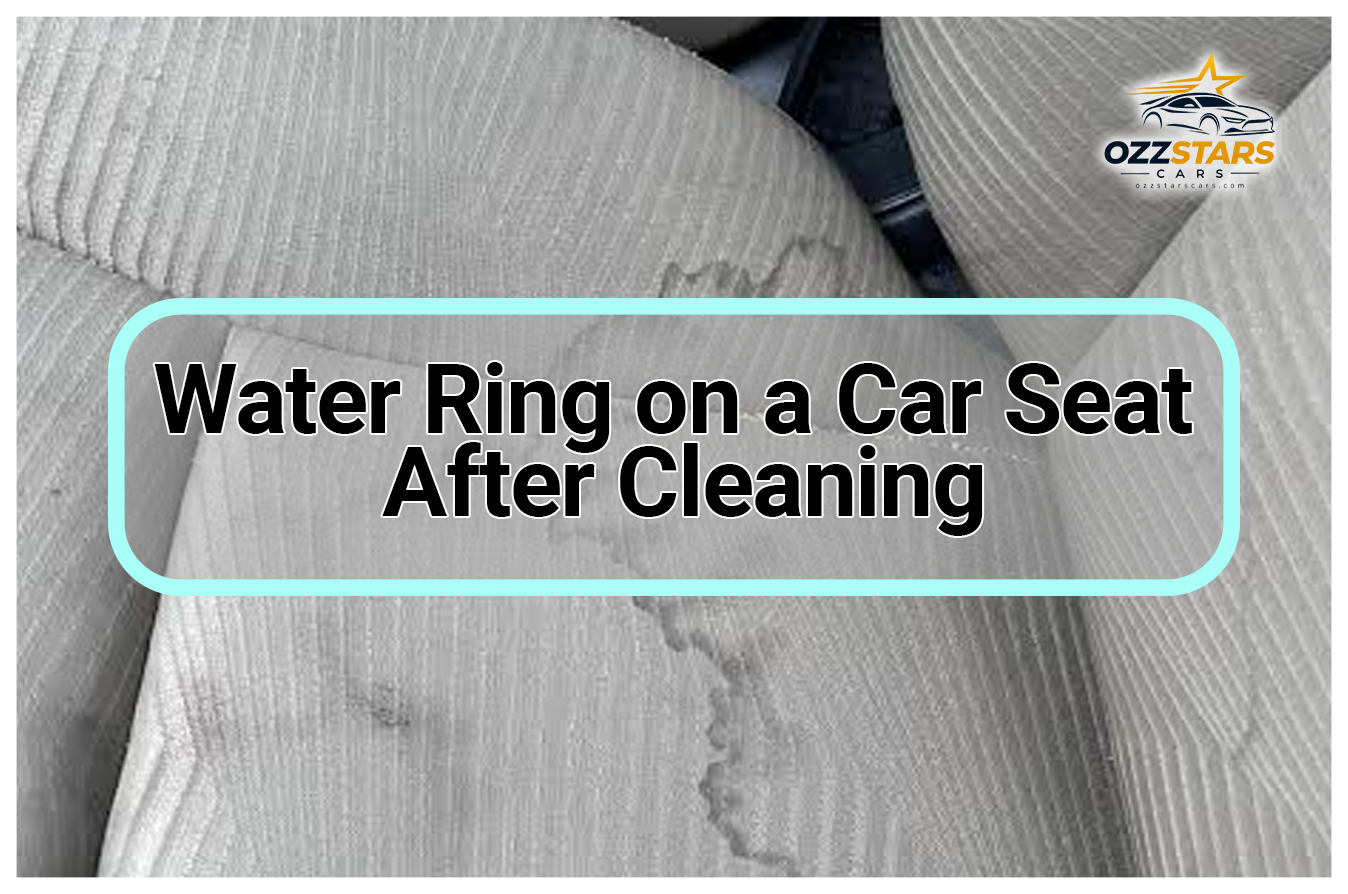
Water Ring on a Car Seat After Cleaning: Why and How to Fix
A water ring on a car seat after cleaning is not the original stain spreading. It is dirt, minerals and cleaner residue that the water carried outward as it dried, left behind at the edge of the wet patch. To fix it, clean the whole panel of fabric out to its seams with very little moisture, blot out as much water as you can, and dry it quickly and evenly so there is no edge for the dirt to collect at.
This happens on cloth upholstery, where a fabric cover sits over a foam cushion. It is one of the most common ways a small stain becomes a bigger problem.
Why the ring forms at the edge
The physics is well studied. In 1997 a team of physicists led by Robert D. Deegan published "Capillary flow as the cause of ring stains from dried liquid drops" in the journal Nature (Deegan et al., Nature 389, read September 11, 2026). They explained why a dried drop of coffee leaves a dark ring rather than an even spot. The edge of the drop stays pinned in place, and as liquid evaporates from the edge, it "is replenished by liquid from the interior." That flow toward the edge carries dissolved and suspended material with it, and it is deposited in a ring.
A wet patch on a car seat behaves in a similar way. The paper studied drops on surfaces, not fabric over foam, so treat it as the most useful model rather than a finding about car seats. It explains what owners see. The edge of the wet area dries first. Water from the damp middle, and from the foam underneath, keeps moving toward that drying edge, carrying whatever it has dissolved. When it evaporates, that material stays behind as a line.
Why the ring is bigger than the stain you cleaned
Water spreads further than you think. Fabric pulls liquid sideways through its fibers, so the wet area is always larger than the spot you sprayed.
Water goes down, then comes back up. Liquid soaks into the foam, dissolves dirt and old residue that have built up there over years, then wicks back up to the surface as the seat dries.
Tap water carries minerals. When it evaporates, the minerals stay in the fabric. The same thing happens when water dries on paint, which is why washing a car in direct sunlight leaves spots.
Cleaner left in the fabric adds to it. Detergent residue that is not rinsed out dries at the edge along with everything else, and it attracts more dirt later.
So the ring is a new mark made of old dirt. Your cleaning worked on the spot. The ring is the dirt that was already in the seat, moved and concentrated at one line.
What the ring tells you
| What the ring looks like | Likely cause | What to do |
|---|---|---|
| Brown or gray line | Dirt from deep in the foam wicked up | Clean the whole panel, extract moisture well |
| White or pale line | Minerals from tap water, or dried cleaner | Blot with distilled water on a towel, then dry |
| Ring that feels stiff | Cleaner residue left in the fabric | Rinse lightly with a damp towel, blot dry |
| Ring that comes back after cleaning | Too much water reaching the foam again | Use less liquid, dry faster, work to the seams |
| Musty smell with the ring | Foam stayed wet too long | Dry thoroughly with airflow before anything else |
How to fix a water ring on a car seat after cleaning
1. Let it dry fully first. Trying to fix a ring on a seat that is still damp adds more water to the foam. Open the windows and let it dry.
2. Vacuum the panel. Remove loose dirt so you are not dissolving it into the next attempt.
3. Find the seams. Seat fabric is usually divided into panels by stitched seams. The seam gives you a natural boundary, a place where a slight change in tone will not show as a ring.
4. Dampen a towel with clean water. Distilled water carries no minerals, so it will not leave a new mineral line of its own. Wring the towel so it is damp, not wet.
5. Wipe the whole panel evenly, seam to seam. Work across the entire panel, not just the ring, so the whole area is equally damp. With no dry edge in the middle of the panel, there is no line for the dirt to collect at.
6. Feather toward the seams. Use lighter pressure and less moisture as you approach the edges of the panel.
7. Blot out the water. Press a dry, clean towel firmly into the fabric, move to a dry part of the towel, and repeat. The more water you remove now, the less there is to carry dirt to the surface as it dries. The idea is the same as on paint: remove the water before it evaporates, as covered in the best way to dry a car after washing.
8. Dry it fast and evenly. Leave the windows open, and use a fan if you have one. Consumer Reports' interior cleaning guide, updated June 4, 2026 and read September 11, 2026, suggests leaving windows open "for a day or longer, if possible, to allow moisture to dry thoroughly," and advises against soaking seats because it can lead to mold and musty odors (Consumer Reports interior guide).
9. Repeat lightly if needed. A faint ring may need a second pass. Several light passes are better than one wet one.
If the ring is from cleaner residue
Rinse the residue out. Blot the whole panel with a towel dampened with plain or distilled water, then blot dry. Repeat until the fabric no longer feels stiff.
Do not add more cleaner. More product adds more residue. The goal is to remove what is there.
Check the label of the product you used. Some upholstery cleaners are made to be left in the fabric and some are not. The label says which, and whether it needs rinsing.
How to stop it happening next time
Spray the towel, not the seat. It is the single most effective change. Most rings come from a cleaner sprayed straight onto fabric.
Clean to the seams. Even for a small stain, take the final damp wipe out to the nearest seams so the drying edge falls on a line where it will not show.
Use distilled water for rinsing. It removes minerals from the equation.
Blot more than you think you need to. A light-colored, absorbent towel shows you how much water is still coming out. The towel matters; how microfiber weave and weight affect absorbency is covered on this site.
Do not clean in heat. A hot cabin dries the edge of the wet patch very fast, which makes the ring worse.
Safety
Ventilate while you work. The US Environmental Protection Agency advises users to follow product label instructions, increase ventilation, and "never mix household care products unless directed on the label" (EPA indoor air guidance, read September 11, 2026).
Avoid bleach and ammonia-based cleaners on car upholstery. Consumer Reports warns they can damage it.
If the seat smells musty for more than a few days, the foam has stayed wet. Keep drying it with airflow. A smell that persists is a separate problem and should be dealt with as a damp and odor issue, not by adding more cleaner.
This site has not tested any upholstery product. The explanation above uses published physics research and general fabric-care practice.
FAQ
Why does my car seat have a ring after I cleaned it?
The water spread beyond the stain and dried from the edge inward, carrying dirt from the foam, minerals from tap water and cleaner residue to the edge of the wet area. That material was left behind as a ring.
How do you get water stains out of cloth car seats?
Let the seat dry, vacuum it, then wipe the whole panel seam to seam with a towel lightly dampened with distilled water. Blot out as much moisture as possible and dry it quickly with the windows open.
Will the water ring go away on its own?
Usually not. The ring is dried material left in the fabric. It needs to be redistributed and removed by cleaning the whole panel evenly.
Does distilled water prevent water rings?
It helps, because it contains no minerals to leave behind. It does not stop dirt from the foam wicking up, so using very little water and drying quickly still matter most.