How to Fix Oxidized Car Paint: Chalky, Hazy or Failing?
To fix oxidized car paint, wash and decontaminate the panel, test the least aggressive polish on a small section, and step up to a compound only if the polish does not restore color. Then protect the fresh surface with a wax or sealant. That works for chalky single-stage paint and light clear coat haze. It does not work for clear coat that is flaking or peeling, which needs refinishing, not polishing.
Most guides stop at the first half of that answer. Before you do anything, you need to know which of three conditions you are looking at, because they look similar from ten feet away.
What oxidation actually is
Paint is pigment held in a binder. Sunlight, heat and weather slowly break the binder down at the surface, and what is left is a dull, powdery layer that no longer reflects light cleanly. On a dark car it reads as gray or milky. On red it goes pink.
Chalking is a recognized, measurable paint condition, not a detailing myth. ASTM International publishes D4214, "Standard Test Methods for Evaluating the Degree of Chalking of Exterior Paint Films" (ASTM D4214 scope, read September 11, 2026). It describes transferring chalk residue to fabric, a fingertip or adhesive tape and grading the result against reference standards. The standard is written for exterior paint films in general, not for cars specifically, but its principle gives you the most useful diagnostic you have: what comes off on a cloth tells you what is happening on the surface.
Three conditions that all look "oxidized"
| What you see | Wipe test result | What it is | Can polishing fix it? |
|---|---|---|---|
| Dull, powdery, faded color | Paint color transfers to a white cloth | Oxidized single-stage paint | Usually, and it often responds well |
| Hazy or cloudy, color underneath looks intact | Nothing, or a faint white residue | Weathered clear coat | Sometimes, lightly, with a limited ceiling |
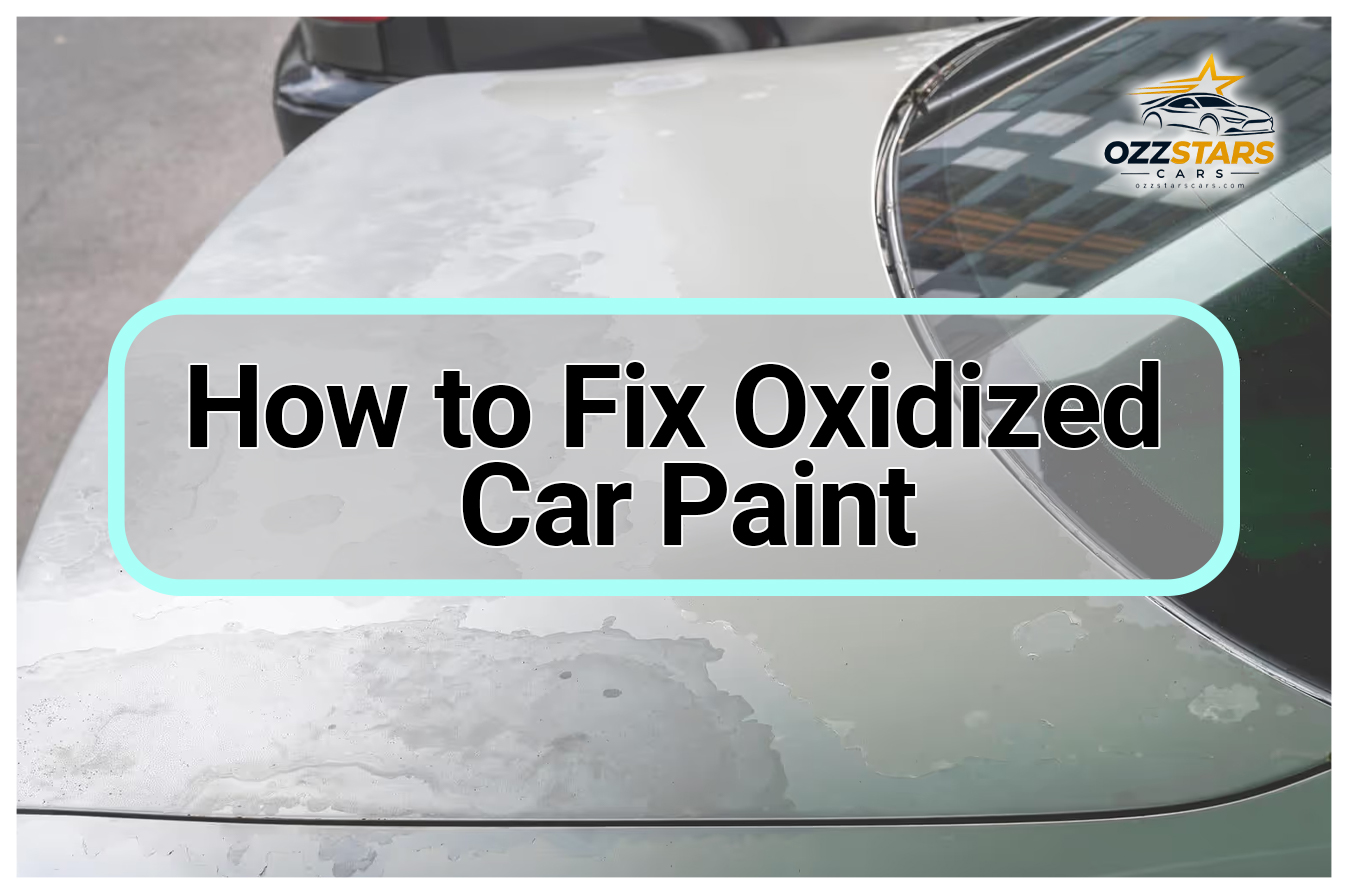
| White or milky patches, flaking edges, rough texture that stays after decontamination | Flakes or clear film come away | Clear coat failure | No. This is a refinishing decision |
Single-stage paint carries color and gloss in one layer, with no separate clear coat on top. It is common on older cars and on some solid colors. When it oxidizes, the pigment itself is at the surface, which is why color comes off on the cloth.
Basecoat and clear coat paint has a transparent layer protecting the color. When it weathers, the clear goes dull first. When it fails, it separates from the color underneath, and no amount of abrasion reattaches it.
The wipe test, before any product touches the car
- Wash and fully dry one panel, ideally a horizontal one like the hood or roof, where sun damage is usually worst.
- Rub a clean white microfiber cloth firmly over a small area.
- Look at the cloth. Color on the cloth means single-stage oxidation. A clean cloth on a hazy panel means clear coat.
- Look closely at the panel edges and at any white patches. If you can see a raised edge where a clear film is lifting, or if flakes come away, stop here.
If the clear coat is lifting, polishing is the wrong tool. Abrading around a peeling edge can speed up the peeling, and the surface underneath has no clear coat left to level. That is a conversation with a body shop about refinishing the panel, not a product choice.
How to fix oxidized car paint, step by step
This is for the first two rows of the table: chalky single-stage paint and weathered clear coat.
Wash first, then decontaminate. Bonded contamination sitting on the surface will be dragged around by a polish pad and add scratches of its own. If the paint still feels rough after washing, clay the paint before any polishing so you are working on the surface itself, not on what is stuck to it.
Work in the shade on a cool, clean panel. Product dries too fast on hot paint to be worked or removed cleanly.
Start with the least aggressive product. A polish refines. A compound cuts. The difference between a polish and a compound matters more than usual here, because oxidized single-stage paint often responds to a fine polish, and cutting harder than you need removes pigmented paint you cannot get back.
Test one small section and judge it before doing the car. If the color comes back with a polish, use the polish everywhere. Only step up if it does not.
Follow the maker's directions for the product you are using. As one example, Meguiar's technical bulletin for Ultimate Compound, read September 11, 2026, lists oxidation among the defects the product is intended to remove and gives a hand method: a small amount on a foam applicator pad or clean cotton terry towel, one section at a time, moderate pressure, overlapping circular motions, and removing the excess immediately (Meguiar's technical bulletin). The bulletin also says to apply it in the shade to a cool, clean surface. Its statements that it cuts "without scratching" and makes traditional compounds obsolete are the maker's own claims, not independent findings.
Expect color on the pad with single-stage paint. That is oxidized pigment coming off, and it is exactly what the process is supposed to do. It is also a reminder that you are removing paint.
Remove residue before it dries, with a clean towel and light pressure, and inspect in good light.
Protect the result straight away. Polishing removes the damaged surface and leaves fresh paint exposed to the same sun that caused the problem. A wax or sealant goes on afterwards; the polish itself is not protection.
Safety: what the product labels require
Read the safety data sheet for any compound or polish before you start. Meguiar's bulletin, for example, directs users to its safety data sheet for additional safety information and carries the instruction to keep the product out of reach of children. The SDS is where the maker lists the protective equipment it specifies for that product, and it varies between products.
The US Environmental Protection Agency's general guidance for household products applies here too: follow label instructions carefully, increase ventilation, and never mix products unless the label directs it (EPA indoor air guidance, read September 11, 2026). Work outdoors in open shade or in a well-ventilated garage.
If you use a machine polisher, the tool maker's manual governs. Its instructions on eye protection, cord handling, pad attachment and speed are the ones to follow, not a general guide.
Where the fix runs out
Every pass spends paint. On clear coat, the protective layer is finite and does not grow back. On single-stage paint, the layer you are polishing is the color itself. Clear coat is a resource you spend, and heavily oxidized paint has usually already lost some of it to weather before you begin.
Edges and body lines are thinnest. Paint is usually thinner on sharp creases and panel edges, and that is where a machine or heavy hand pressure goes through first. Stay off them or treat them lightly.
Color on the cloth that never clears. If a single-stage panel keeps giving color after repeated passes and the finish is not improving, there may not be enough healthy paint left to restore.
Scratches are a separate question. Oxidation is a surface condition. If a fingernail catches in a mark, use the fingernail test for scratch depth to decide whether it is polishable at all, because oxidation removal will not level it.
Whole-car restoration is a scoping job. If the entire car is heavily oxidized and swirled, read what paint correction removes, and what it cannot before committing to a weekend, since the honest answer may be a partial result or a respray.
What does not fix it
Wax alone. A wax or glaze can darken a dull surface temporarily and make it look better for a while. It does not remove the oxidized layer, and the chalkiness returns as it wears off.
Scrubbing harder with a household cleaner. Kitchen abrasives are not graded for automotive paint and can cut unevenly. Use products made for the paint on a car.
Ignoring the cause. A car that lives outdoors in strong sun will oxidize again. Regular protection and shade slow it down.
This site has not restored an oxidized car, and nothing on this page is presented as our own result. What is here is the mechanism, a published paint standard, and the maker's own directions.
FAQ
Can oxidized car paint be restored?
Chalky single-stage paint and lightly weathered clear coat can often be restored by polishing, because the damage is in the surface layer. Clear coat that is flaking, peeling or turning white in patches cannot be polished back and needs refinishing.
How do I know if my paint is oxidized or the clear coat is failing?
Rub a clean white cloth on a washed panel. Color on the cloth points to oxidized single-stage paint. A hazy panel with a clean cloth points to weathered clear coat. Lifting edges, flakes or white patches that stay after cleaning point to clear coat failure.
Can I fix oxidized paint by hand?
Often, yes, especially on single-stage paint and small areas. Several product makers publish hand directions for their compounds. A machine covers a whole car more evenly, and heavily oxidized cars are more practical by machine.
Does wax fix oxidized paint?
No. Wax can make dull paint look darker for a short time, but it does not remove the damaged layer. Remove the oxidation first, then apply wax or sealant as protection.