Wet Car Carpet Mold Smell: Why It Keeps Coming Back
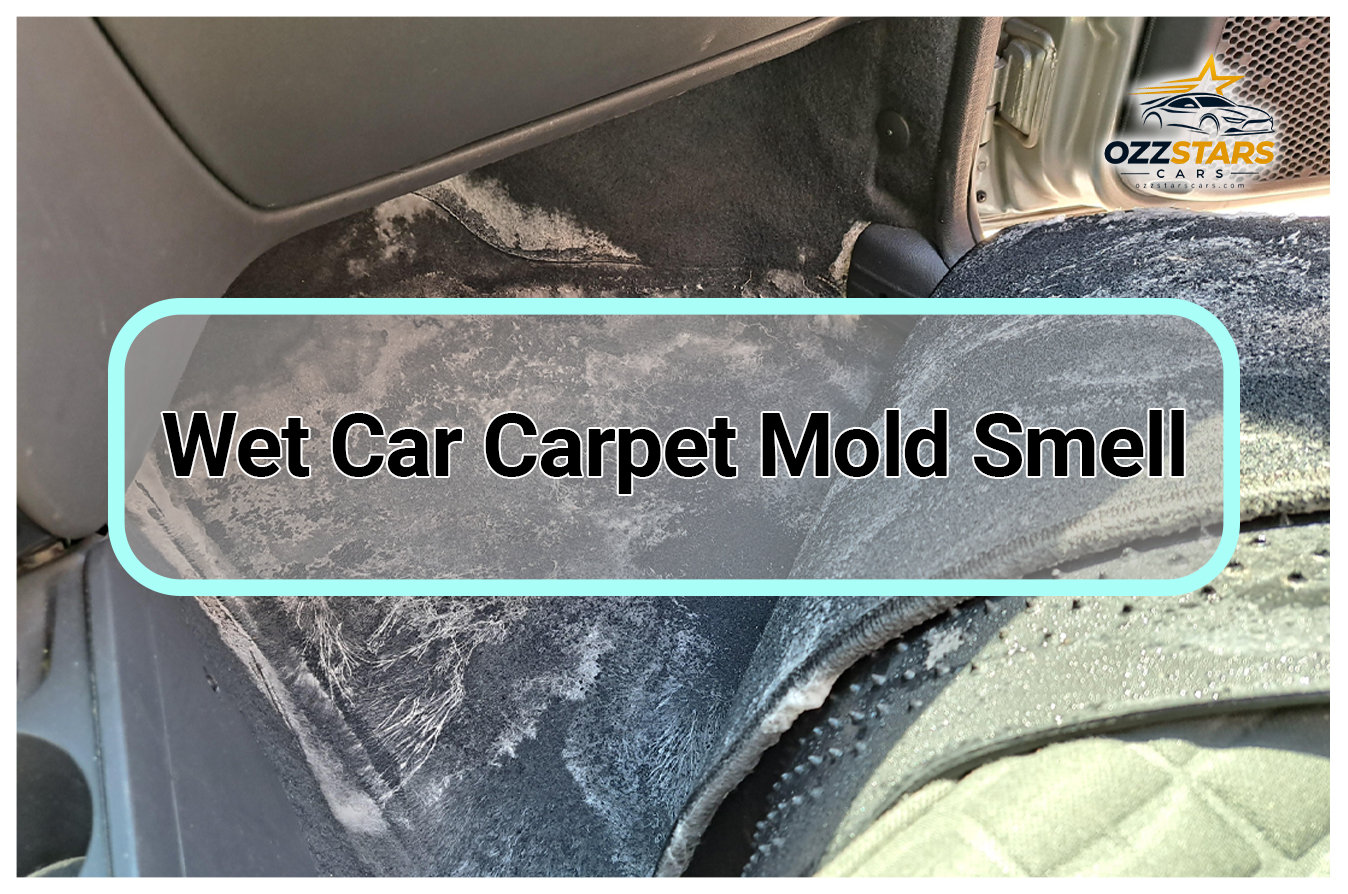
A wet car carpet mold smell that disappears and then returns a week later almost always means the water never left. The top of the carpet dries, but the padding underneath and the metal floor below it stay damp, and mold and bacteria keep growing out of sight. The fix has three parts, in this order: stop the water getting in, dry the layers under the carpet rather than just the surface, then clean or replace what has gone moldy. Speed matters, because the EPA says water-damaged items should be dried within 24 to 48 hours to prevent mold growth.
This guide explains why the smell cycles, how to check what is still wet, where the job stops being a cleaning job, and how to dry car carpet and padding without creating a new problem.
Why the smell comes back after the carpet feels dry
A car's floor is not one layer. On many cars there is the carpet you see, a backing, and then padding or sound-deadening material laid over the metal floor pan. Water that soaks through the carpet collects in that padding and sits on the metal.
The carpet on top is the part that gets air and sun, so it dries first and feels fine to the touch. Meanwhile it acts like a lid over the wet padding. On every warm day, moisture and the musty smell from what is growing underneath rise back up through the fibers. You vacuum, spray something, the smell fades, and a week later it is back, because the source is still there.
The EPA's brief guide to mold, moisture and your home (read September 24, 2026) puts it plainly: "The key to mold control is moisture control." It also says that "absorbent or porous materials, such as ceiling tiles and carpet, may have to be thrown away if they become moldy." The guide is written for houses, but the principle carries over to a car, with less airflow and more insulation working against you.
Stop here first: when this is not a cleaning job
Before you pull out a vacuum, check whether any of these apply. Each one means the car needs a professional, not a detailing routine.
- The car was flooded. If water came up over the floor from outside, from a flooded road, a storm or a flooded garage, treat it as flood damage. A U.S. Department of Justice consumer notice on flood-damaged vehicles (the NMVTIS "Buyer Beware" notice, read September 24, 2026) warns that "severe water damage can make vehicles' electrical systems, including their airbag sensors, prone to failure," and that such a car "may no longer be safe or roadworthy." Contact your insurer and have the car inspected.
- The liquid is not plain water. If the damp patch feels oily or slimy, has a color, or smells sweet or chemical rather than musty, stop cleaning and have a shop look at it.
- An airbag or SRS warning light is on. Many cars have wiring, connectors and seat sensors under and around the front seats. Mazda's CX-5 owner's manual section on its passenger occupant classification sensor (read September 24, 2026) says: "Do not spill any liquids on the front seats or under the front seats." It lists spilled liquids and a washed seat among the conditions in which the sensor "cannot detect a passenger sitting on the front passenger's seat correctly." If a warning light appears, follow your manual and have the system checked by a dealer.
- The padding needs to come out. Lifting a car's carpet usually means removing the seats, which are bolted in with safety-critical fasteners and often carry airbag and seat belt wiring. That is a job for a shop or an auto upholstery specialist.
Protect yourself before you start
Mold is not only a smell problem. According to the same EPA guide, molds produce allergens and irritants, and inhaling or touching them may cause allergic reactions, trigger asthma attacks in people who are allergic, and irritate the eyes, skin, nose, throat and lungs. The EPA advises that anyone with health concerns "consult a health professional before starting cleanup." If you or anyone who rides in the car has asthma or allergies, talk to a doctor before deciding to do this yourself.
For the cleanup, the EPA guide suggests limiting exposure with an N-95 respirator, gloves and goggles (it recommends goggles without ventilation holes). Work with the doors open, outdoors if you can.
Two chemical rules apply. First, the EPA warns: "Never mix chlorine bleach solution with other cleaning solutions or detergents that contain ammonia because toxic fumes could be produced." Second, household bleach does not belong on car carpet anyway, because it can permanently discolor the fibers. Use products labeled for automotive carpet or for mildew on fabric, one at a time, exactly as the label directs.
Where did the water come from?
You cannot dry a carpet that is still being fed water, so the source comes first.
Some sources are one-off events: a spilled drink, a window or sunroof left open in the rain, or snow melting off boots all winter. If you can tie the wet patch to an event like that, drying and cleaning is the right next step.
If you cannot, assume the water is still getting in. Finding a leak is a diagnosis job, not a cleaning one, and a body shop or mechanic has the tools to trace it. Cleaning a carpet that gets wet again with the next rain is wasted work, and the smell will return every time.
The press test: is the padding still wet?
Your hand on the carpet surface will not tell you much. Pressure will.
Fold a few sheets of dry paper towel into a thick pad. Press it hard into the carpet at the lowest point of the footwell, where water tends to collect, and hold it there for a minute with your weight behind your hand. If the paper comes up damp, the layers underneath are still wet, whatever the surface feels like. Test a few spots, and repeat every day while you dry the car. When the paper comes up dry at every spot, several days in a row, you are close.
Fixing a wet car carpet mold smell: how to dry it properly
This is the part that decides whether the smell comes back. The goal is to get water out of the padding, not just off the fibers.
1. Take the mats out and dry them separately
Remove every floor mat and trunk liner and dry them outside the car, standing up so both sides get air. A wet mat left on a wet carpet traps moisture in both.
2. Extract, do not just blot
Use a wet/dry vacuum with a narrow nozzle and press it firmly into the carpet as you pull it slowly toward you. Pressure squeezes water up out of the padding where the vacuum can reach it. Go over the same area many times, working from the edges of the wet patch toward the lowest point. Keep this to extraction only: do not pour water or cleaning solution into the carpet at this stage, and take particular care around and under the front seats, where the wiring and sensors described above sit.
3. Move air across and through the carpet
Park where the car can sit with the doors open on a dry day, with a fan blowing across the footwell. Moving air does most of the work. Do not leave any heater running in or near the car unattended, because a household heater in an enclosed car is a fire risk. In damp weather the car will dry slowly, and it may take several days of repeated extraction and airflow.
4. Recheck with the press test every day
Do not trust the surface. Press-test the same spots daily. If the paper keeps coming up wet after several days, the padding is holding more water than you can pull through the carpet, and it needs to come out through a shop.
5. Clean only once it is dry
When the press test stays dry, vacuum thoroughly, then clean the affected area with a carpet or upholstery product labeled for automotive use and for mildew odor, following its label for dilution and dwell time. Use as little liquid as you can and extract it straight away, so you do not undo the drying. Then work through the rest of the cabin, as in our guide to cleaning a car interior in the right order, because the whole interior has been sitting in the same damp air.
6. Know when replacement is the honest answer
If the smell comes back even after the padding tests dry, or you can see mold on the carpet backing, the EPA's point about porous materials applies: moldy carpet and padding may have to be replaced, not cleaned. An auto upholstery or trim shop can remove the seats, replace the padding or carpet, and check the floor pan underneath. Ask for a quote before deciding.
Why fresheners, baking soda and odor sprays do not fix it
Every one of these works on the smell, not the water. An air freshener layers a scent over mold that is still growing. Baking soda on a damp carpet can clump in the fibers and does nothing for the padding below. Odor sprays can reduce what you notice for a few days, which is exactly the cycle this article started with: it dries, then it smells again. The lasting fix is removing the moisture, then removing whatever grew in it.
It is the same principle behind cleaning an engine bay safely: the skill is knowing where water must not go, and keeping it out.
Keeping the floor dry from now on
- Use all-weather mats in wet seasons. They hold water on top where you can tip it out, instead of letting it soak into the carpet.
- Take wet things out. Umbrellas, gym bags, wet towels and snowy boots release moisture into a closed car.
- Check after heavy rain. A press test in each footwell after a storm can catch a leak before it becomes a smell.
- Fix the source, not the symptom. If water keeps appearing, have the leak found and repaired before cleaning again.
FAQ
Can mold in car carpet make you sick?
According to the EPA, molds produce allergens and irritants that may cause allergic reactions, trigger asthma attacks in allergic people, and irritate the eyes, skin, nose, throat and lungs. The EPA advises consulting a health professional before cleanup if you have health concerns.
How long does a wet car carpet take to dry?
There is no fixed time. It depends on how much water reached the padding, the weather and how much air you can move through the car. The EPA says water-damaged items should be dried within 24 to 48 hours to prevent mold, so start extraction and airflow right away, and use the press test to decide when it is dry.
Can I use bleach on moldy car carpet?
It is not recommended. Bleach can permanently discolor car carpet, and the EPA warns never to mix chlorine bleach with cleaners containing ammonia because toxic fumes could be produced. Use a product labeled for automotive carpet and follow its label.
Do I need to replace the carpet?
Not always. If the padding dries fully and the smell does not return, cleaning may be enough. If the smell persists or mold is visible on the backing, the EPA notes that moldy porous materials such as carpet may have to be thrown away, and a trim shop is the right call.
Is it safe to drive with a wet car floor?
That depends on why it is wet. If the car was flooded, or an airbag or SRS warning light is on, have it inspected first. Mazda's manual, for example, says not to spill liquids on or under the front seats, and lists liquid spilled on the seat among the conditions that stop its passenger seat sensor from detecting a passenger correctly.
Dry it from the bottom up. The smell leaves with the water.