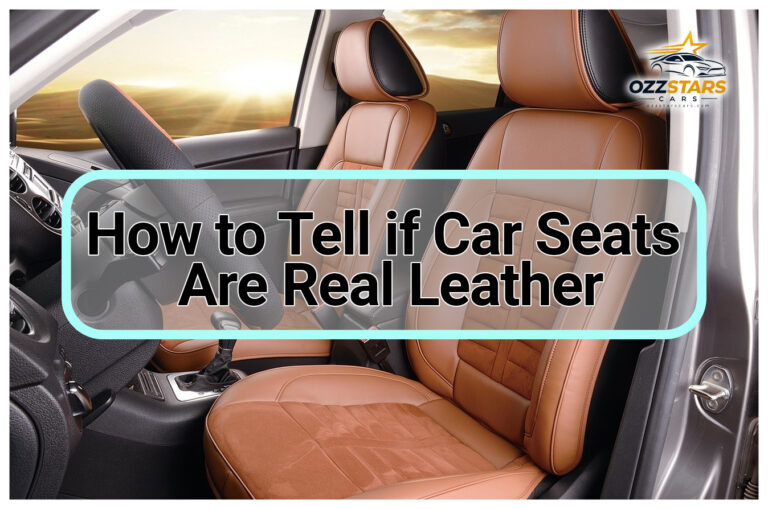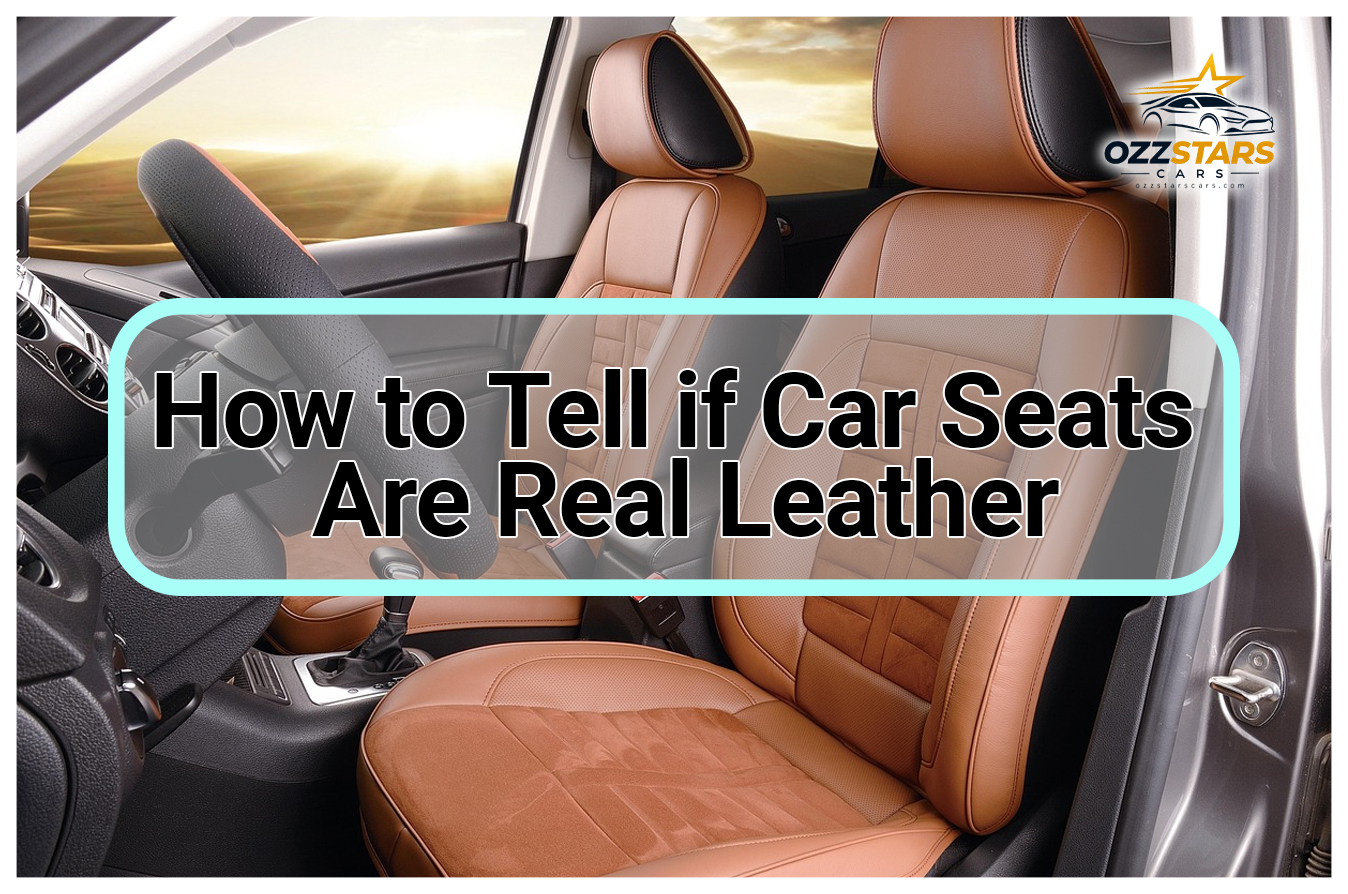
How to Tell if Car Seats Are Real Leather
Here is how to tell if car seats are real leather: check the grain first. Genuine leather has irregular, non-repeating grain and small natural marks because it comes from an animal hide; vinyl and leatherette are embossed by a roller, so the pattern repeats every few inches if you look across a wide panel. Back that up with a smell test (leather has a warm, faintly earthy note; vinyl smells like a plastic shower curtain), a five-second palm test (leather warms up almost immediately because it is a natural conductor; vinyl stays cooler longer), and the window sticker or owner's manual, which will say "leather-trimmed," "leatherette," "leather-appointed" or a brand-specific name like MB-Tex or SofTex if it is not the real thing. No single test is conclusive on its own; running two or three together settles it.
Why the material actually matters here
Leather car seats matter for more than bragging rights. Genuine hide and its synthetic look-alikes age differently, they need different cleaning products, and they hold different resale value. Put the wrong conditioner on vinyl and nothing bad happens; put a vinyl-formulated cleaner with strong surfactants on unfinished aniline leather and you can strip the dye. Knowing what is actually on your seat bottoms decides which bottle you reach for, and it decides how much you should trust the word "leather" printed anywhere in the listing when you are buying used.
How to Tell if Car Seats Are Real Leather: Five Tests That Actually Work
These are the same signals automotive leather specialists point to. One4Leather's guide to spotting real automotive leather, read 2026-09-18, walks through grain, feel, smell, heat and water behavior as the practical checks that separate hide from a synthetic surface, in the same order used below.
1. Look at the grain up close
Real leather is cut from an animal hide, so its surface texture is a record of that hide: pores, faint scars, and a grain pattern that never repeats twice because no two square inches of skin are identical. Run your eye across a wide panel, like a full seat back, and on genuine leather you will not find the same swirl or pore cluster showing up in a regular interval. Vinyl and bonded leatherette are made by pressing a textured roller or mold into a polymer sheet, so the same grain unit repeats at a fixed spacing, especially visible on a large, flat area like a seat bottom or armrest.
2. Smell it
Leather is tanned animal hide, and the tanning process (chrome or vegetable tanning, plus the oils and finishes applied afterward) leaves a distinctive, warm smell that manufacturers of synthetic materials have never fully replicated, because it comes from the organic material itself, not an additive. Vinyl and PU leatherette are petrochemical products, and even the ones marketed with a "leather scent" additive tend to smell sweeter or more chemical up close, particularly right after the car has sat in the sun.
3. Do the palm-heat test
Rest your bare hand flat on the seat for four or five seconds without pressing hard. Leather is a natural, semi-porous material and a comparatively good conductor of heat relative to plastic, so it picks up your body heat quickly and starts to feel warm almost immediately. Vinyl and PU are synthetic polymers with lower thermal conductivity, so the same square inch stays cool noticeably longer under your palm. This is the same logic behind checking paint correction results by feel rather than eye alone: touch tells you things a glance does not.
4. Try a small water drop
Automotive leather is finished with a topcoat for durability, but the hide underneath is still a fibrous, semi-porous material, so a drop of water tends to darken and slightly spread at the surface rather than sit as a perfect bead. Vinyl and PU leatherette are essentially a continuous plastic skin with no fiber structure to absorb into, so water beads and rolls rather than soaking in at all. Test this only on a hidden spot, like the underside of a cushion bolster, and wipe it dry immediately afterward.
5. Read the actual label, not the marketing word
This is the test people skip, and it is often the fastest one. Automakers are required to disclose upholstery material in the window sticker or owner's manual, and the wording is specific once you know what to look for. "Leather," "genuine leather," "Nappa leather" or "full-grain leather" mean real hide. "Leather-trimmed," "leather-appointed," "leatherette," or a proprietary trade name (Mercedes-Benz's MB-Tex, Lexus's NuLuxe, Toyota's SofTex, Hyundai's H-Tex) mean a synthetic surface, sometimes with real leather only on the seating and back surfaces and vinyl everywhere else. If a listing just says "leather interior" with no further detail, treat that as marketing language rather than a material spec until you have checked the grain, smell or feel yourself.
The naming confusion is the point, not an accident
Terms like "leather-appointed" exist because full-grain leather covering every seating surface, bolster and armrest is expensive and heavy, and most manufacturers blend it: real hide where your body actually touches the seat, vinyl or leatherette on the sides, back and lower bolsters where wear is highest and contact is lowest. That is standard industry practice, not a defect, but it means checking one spot and assuming the whole seat matches it is how people get fooled. Check the seating surface, the bolster and the back separately before concluding anything about the whole seat.
It helps to think of this the way you would think about a can of car care product with three similar-sounding names on the shelf. Just as polish, compound and glaze are three different products doing three different jobs despite sounding interchangeable, "leather," "leather-trimmed" and "leatherette" are three different materials wearing similar-sounding names, and the label wording is doing real work if you read it closely.
What this changes about how you clean and protect the seat
Once you know which material you actually have, the care decision gets simple. Genuine leather needs a pH-balanced leather cleaner and a conditioner formulated for hide, applied on a schedule, because the natural oils in leather migrate out over time and the surface can crack if it dries out. According to Lexol's own product lineup, read 2026-09-18, the company sells a separate leather-specific line and a dedicated vinyl product, Lexol Vinylex, specifically because the two materials do not respond the same way to the same chemistry. Using a leather conditioner on vinyl mostly does nothing useful; using a vinyl-style cleaner with stronger solvents on unprotected aniline leather can dull or strip the finish.
That decision is a smaller version of a question detailers ask about exterior protection too: is it worth spending on a dedicated protectant at all, once you know what you are protecting? The reasoning behind whether a ceramic spray coating is worth the money is the same shape as the leather-conditioner question. Both come down to matching a specific product to a specific material rather than reaching for whatever is already under the sink, and in both cases the wrong match either does nothing or causes damage you then have to fix.
It is also worth being honest about the limits. A leather conditioner keeps hide supple and slows drying and cracking, but it will not stop a seam from splitting under years of sun exposure, and it will not undo dye wear on a well-used driver's seat bolster. In the same way that a ceramic coating does not protect paint from everything, a leather conditioner is maintenance, not armor. Knowing the material tells you the right product; it does not make the product invincible.
A quick decision guide
| What you find | Likely material | What it means |
|---|---|---|
| Irregular grain, warms fast under palm, water darkens slightly, warm smell | Genuine leather | Use a pH-balanced leather cleaner and conditioner on a regular schedule |
| Repeating grain pattern, stays cool longer, water beads and rolls off | Vinyl or leatherette (MB-Tex, SofTex, NuLuxe, H-Tex, etc.) | Use a vinyl-specific cleaner and protectant; leather conditioner is wasted |
| Leather feel on the seating surface, repeating grain on the sides and bolsters | Mixed (leather-appointed) | Clean each surface with the product that matches that surface, not the whole seat at once |
If you are checking a used car before buying it and you cannot run the water or heat test comfortably in front of a seller, the grain check under good light and a close look at the window sticker or build sheet will get you most of the way there on their own. Combine those with even a quick smell test at the door before you sit down, and you have enough information to trust or question whatever the listing claims.
FAQ
Can real leather and vinyl feel the same to the touch?
They can feel similar for a second or two, especially on a cold day when leather has not yet had a chance to warm up. That is exactly why the palm-heat test asks you to hold contact for four or five seconds rather than a quick tap; the difference shows up in how fast the material responds, not in the very first instant of contact.
Does "leather-appointed" mean fake leather?
Not entirely. It usually means the main seating and back surfaces are genuine leather, while the sides, bolsters and back panels are vinyl or leatherette. It is a mixed-material seat, not a fully synthetic one, which is why checking more than one spot on the seat matters.
Is vinyl or leatherette actually worse than real leather?
Not automatically. Vinyl and modern PU leatherettes resist water, sun fading and cracking better than untreated leather in some cases, and they cost less to repair. The honest tradeoff is texture and smell, not durability in every category.
Will a smell test still work on an older car?
Age reduces the effect somewhat because leather's natural smell fades over years, and prior cleaning products leave their own scent behind. Pair the smell test with the grain and heat checks rather than relying on it alone in an older interior.
What if the seat has an aftermarket cover installed?
Any test performed over an aftermarket seat cover is testing the cover, not the seat underneath. Lift a corner or check an area the cover does not reach, like the very edge of the base, before drawing a conclusion.