How to Prevent Car Paint Fading in Sun (and Why It Starts)
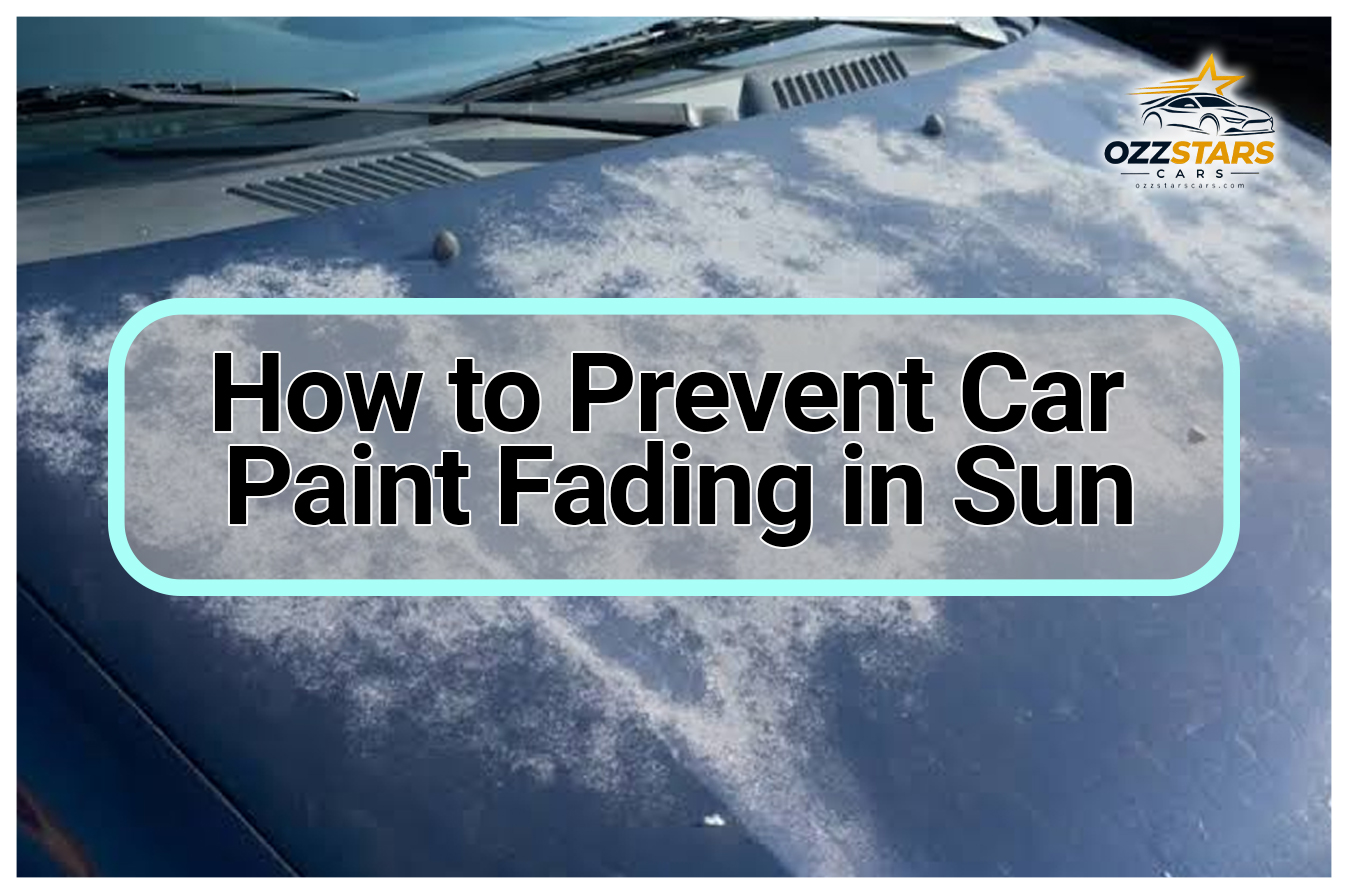
The most reliable way to prevent car paint fading in the sun is to limit how much direct sun the paint gets: park in a garage, carport or shade when you can, use a clean, breathable cover if you cannot, and keep the paint washed and protected with wax, sealant or a coating. Those steps slow the damage. They do not reverse it. On most modern cars, "fading" on the roof and hood is really the clear coat on top wearing out, and once that clear layer starts to fail, no wax brings it back.
The rest of this guide explains why the sun reaches the roof and hood first, why the damage on a modern car looks different from the pink, chalky red on an old one, and what each kind of protection can honestly do.
Why the roof and hood fade while the doors do not
The sun hits the flat, upward-facing panels of a parked car far more directly than the sides. The roof, hood and trunk lid face the sky for hours. The doors face sideways, so they catch sunlight at a lower angle for much of the day.
That is why a car can look fine from the side and tired from above. The reader who notices the roof and hood going chalky while the doors look new is seeing exactly this pattern: the damage follows the dose of sunlight, and the horizontal panels get the biggest dose.
Heat adds to it. Dark paint absorbs more sunlight than light paint, so a black or deep red hood in full sun runs hotter than a white one in the same spot. Heat and ultraviolet (UV) light together are what age a finish.
How paint fades: two kinds of paint, two different failures
To understand what you are looking at, it helps to know that cars have been painted in two main ways.
Single-stage paint (also called monocoat) mixes the color and the protective binder into one layer. Basecoat and clear coat puts the color in one layer and then covers it with a separate clear layer. Most modern cars use the second system.
A 2003 paper by Ford Motor Company researchers in the Journal of Coatings Technology, Testing Accelerated Weathering Tests for Appropriate Weathering Chemistry, which we read on September 27, 2026, explains the difference clearly:
- On single-stage paint, when the top surface degrades in the weather, "pigment particles are exposed that can scatter light." That is the chalky, faded look. It shows up gradually as gloss loss and color change.
- On basecoat and clear coat paint, a clear layer "with a UV screening additive overlays the pigmented layer." When the clear surface degrades, the pigment is not exposed, which the authors call "the primary reason why clearcoat/basecoat paint systems can look glossy much longer without waxing or polishing than monocoat paint systems."
The same paper adds a warning that matters for owners: clear coat systems "are entirely capable of failing suddenly and catastrophically by clearcoat cracking and/or peeling with little or no gloss loss indication that failure is imminent."
The clear coat's UV protection also runs down. The paper describes measuring "the rate at which the concentration of clearcoat ultraviolet light absorber (UVA) additive decreases during weather exposure" to see "how long the clearcoat can screen underlying basecoat from UV radiation," and notes that oxidation where the clear coat meets the color layer "can lead to failure by clearcoat peeling." The journal's profile of lead author John Gerlock credits him with first finding that UV absorbers "were consumed during coating weathering, leading to a loss of protection."
In plain terms: the clear coat carries its own sunscreen, and years of sun use it up.
Why red and black get the blame
Red and black have a reputation for fading first, and there is some truth in it, but the reasons are different.
Red on older single-stage paint is the classic case. Owners and body shops widely describe old single-stage reds turning pink and chalky, because the pigment sits right at the surface with no clear layer over it. We could not find a paint maker's published data ranking colors by fade rate, so treat any precise "red fades X times faster" claim with caution.
Black and other dark colors absorb more heat, and dark paint shows every flaw. A haze, a dull patch or the first signs of clear coat breakdown are much easier to see on black than on silver or white, where the same damage can hide for years.
On a modern clear-coated car of any color, the thing to watch is the clear coat itself. A modern red car is far less likely to turn pink than an old one, but its clear coat can still wear through on the roof and hood.
How to tell what is happening to your paint
| What you see | Likely cause | What it means |
|---|---|---|
| Even chalky dullness, color rubs off on a cloth | Oxidized single-stage paint | Often improves with polishing, within limits |
| Dull, hazy patch on the roof or hood, no color on the cloth | Clear coat surface starting to degrade | May improve with polishing if the clear coat is still intact |
| White, cloudy or milky patches | Clear coat breaking down or lifting | Polishing will not fix it; needs refinishing |
| Flaking or peeling edges, rough patches you can feel | Clear coat failure | Needs a body shop; protection products cannot repair it |
Our guide on how to fix oxidized car paint walks through telling chalky, hazy and failing paint apart in more detail. If you are unsure, a body shop or paint professional can look at the panel and tell you.
How to prevent car paint fading in sun: what actually helps
Limit the sun exposure
This is the step that matters most, because every other product only slows what the sun is doing.
- Park in a garage or carport whenever you can.
- Choose shade at work and at home, and think about which side of a building gets afternoon sun.
- Use a car cover if the car sits outside for long periods. Put it on a clean, dry car, because a cover over dirt can rub grit into the paint every time it moves in the wind. Choose one that lets moisture escape.
Keep the paint clean
Dirt, bird droppings, tree sap and other deposits sitting on a hot panel add to the damage. Kia's EV6 owner's manual, in its exterior care section, which we read on September 27, 2026, advises washing the car "thoroughly and frequently at least once a month" and says not to "wash the vehicle in direct sunlight or when the body of the vehicle is warm." Your own manual may give different guidance, so check it.
Keep a protective layer on top
Wax, sealant and ceramic coatings add a thin layer over the clear coat. That layer takes the weather first, keeps the surface cleaner and makes deposits easier to remove.
Kia's manual gives a simple rule for timing: "Wax the vehicle when water will no longer bead on the paint. Always wash and dry the vehicle before waxing." That is more useful than a fixed calendar, because how fast protection wears off depends on the product, the climate and how the car is washed.
Our explainer on wax, sealant and ceramic coating covers what each one is and how they differ.
What wax and coatings cannot do
This is the part product labels rarely spell out.
- They cannot replace the clear coat's own UV protection. Some wax, sealant and coating makers say their products contain UV inhibitors. Check the label for what the maker actually claims. We could not find independent data showing how much extra UV protection a consumer wax adds on top of a factory clear coat, so we do not treat it as a sunscreen that stops fading on its own.
- They cannot fix failed clear coat. Wax over a milky or peeling patch may look slightly better for a short time. The failure underneath keeps going.
- They wear off. Every protective layer is sacrificial. When water stops beading, it is time to reapply.
Polishing has limits too. It can remove light oxidation and haze from the top of intact clear coat, but every polish removes a little of that clear layer, and it does not grow back. Our guide on how many times you can polish a car explains why polishing is a resource you spend, not a routine fix. Polishing a thin, sun-worn clear coat can bring failure closer.
Other habits that help
- Repair chips promptly. Kia's manual says deep scratches or stone chips "must be repaired promptly. Exposed metal will quickly rust."
- Do not wash or wax a hot panel. Products can dry and streak on hot paint.
- Watch the roof and hood. Look at them from a low angle in good light every few months. Catching a dull patch early gives you more options.
- Think about matte or wrapped finishes separately. They follow their maker's care rules, which often forbid polish and some protectants.
FAQ
Can faded car paint be restored?
Sometimes. Chalky single-stage paint and light haze on intact clear coat often improve with polishing. White, milky or peeling clear coat cannot be polished back and usually needs refinishing by a body shop.
Does wax stop car paint from fading?
Wax helps keep the surface clean and protected, and some makers say their products include UV inhibitors. It does not replace the clear coat's own UV protection, and it will not stop fading on a car that sits in full sun every day.
Why is only my roof and hood fading?
Those panels face the sky and get the most direct sunlight and heat. The doors and sides catch sunlight at a lower angle, so they age more slowly.
Do car covers prevent sun fading?
A cover blocks direct sunlight, which is the main cause. Use one on a clean, dry car, and choose one that lets moisture escape, so it does not trap damp or rub dirt into the paint.
Does red paint really fade faster?
Older single-stage reds are widely reported to turn pink and chalky. On modern clear-coated cars, the bigger risk for any color is the clear coat wearing out, and dark colors make that damage easier to see.
Shade first, clean paint second, protection third. That order does more for sun-worn paint than any single product.