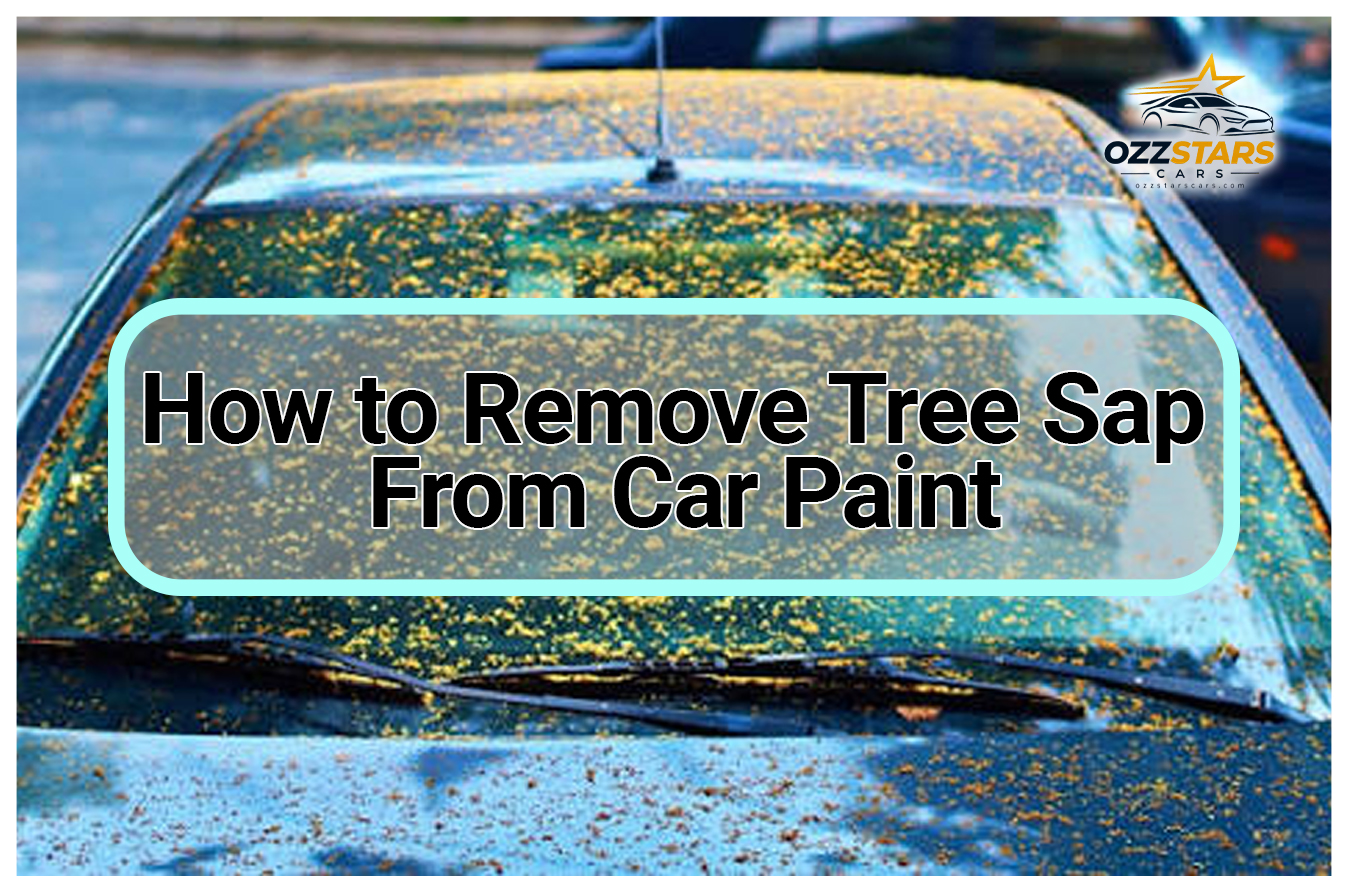
How to Remove Tree Sap From Car Paint (Even Hardened)
Here is how to remove tree sap from car paint once it has set hard: wash the area first, then dissolve the sap instead of scraping it. Dab a little rubbing alcohol on a soft microfiber cloth, hold it on the drop to soften it, and wipe gently. If that fails, use a tree sap or bug and tar remover made for car paint, tested on a small spot first and used as its label directs. Then wash the spot and put wax or sealant back on. Never pick or scrape it off.
That is the short version. The rest of this guide explains why hardened sap behaves the way it does, how to tell whether what is on your car is sap at all, and what to do if a mark is left once it is gone.
Why hardened sap will not just wash off
Tree sap, the resin some trees produce, starts out soft and runny. Left on a panel in the sun, it dries and hardens into something closer to a clear, glassy bead. At that point it is no longer sitting loosely on the paint. It is gripping the clear coat, the transparent top layer that protects the color underneath.
Car wash soap is made to lift dirt and grime, which is why a normal wash slides straight over a hardened drop. Resin does not break down in soapy water the way road film does. It softens in the right solvent, which is why the removal methods that work are all about dissolving the sap and letting it release, not about more pressure.
This is also why scraping is the worst option. A hardened drop is stuck to the clear coat. Force it off with a fingernail, a card or a blade and you risk taking a chip of clear coat with it, or dragging the hard edge across the surrounding paint.
Kia's EV6 owner's manual puts the carmaker's view plainly in its exterior care section, which we read on September 27, 2026: "Insects, tar, tree sap, bird droppings, industrial pollution and similar deposits can damage your vehicle's finish if not removed immediately." On tar and insects, it adds: "use a tar remover, not a scraper or other sharp object." The same logic applies to sap. Your own car's manual may word it differently, so check its care section too.
First, check that it is really tree sap
Many sticky spots on cars parked under trees are not sap at all. They are honeydew, a sugary liquid that aphids and other sap-feeding insects excrete onto whatever sits below them. Oregon State University Extension explains that honeydew is essentially tree sap that aphids and other sucking insects drink and then excrete.
The difference matters because the fix is different.
| What you see | Likely cause | What usually works first |
|---|---|---|
| A fine, even mist of small sticky dots across the roof, hood and glass | Honeydew from insects | A normal wash with car wash soap and water |
| Separate raised drops or blobs, often amber or clear, that feel hard | Tree resin | Softening with a solvent such as rubbing alcohol or a sap remover |
| A dull ring or dip in the paint with nothing raised on top | A mark left behind after sap or another deposit | Not a cleaning job; see the section on marks below |
So start with a proper wash. If the spots disappear, you were dealing with honeydew and you are done. If hard beads remain, you have resin, and the steps below apply.
How to remove tree sap from car paint, step by step
Work in the shade on a panel that is cool to the touch. Consumer Reports advises using removal products in a shady area and in minimal amounts, and a cool panel stops products drying on the paint before they can work.
1. Wash the area first
Wash and rinse the panel so there is no grit around the sap. In Consumer Reports' guide to getting tree sap and bugs off a car, which we read on September 27, 2026, a detailer explains that washing first "removes any sediment and grime from the area you will be working in." Skip it and every wipe that follows grinds that grit into the paint.
2. Try rubbing alcohol on a soft cloth
Consumer Reports suggests you "dab some rubbing alcohol on a cloth as your first line of attack. That may be all you need to get the job done." Use a clean, folded microfiber cloth, because a soft, clean towel is far less likely to scratch. Our explainer on microfiber towels for car paint covers what to look for and when to retire one.
Dampen the cloth rather than soaking it. Hold it against the drop for a short time so the alcohol can soften the resin, then wipe gently in one direction. If the drop is thick, repeat the hold and wipe rather than pressing harder. The aim is for the sap to let go, not to be forced off.
Rubbing alcohol is flammable. Keep it away from heat, sparks and flames, use it with good airflow, and cap the bottle between uses.
3. Move to a dedicated sap or tar remover if needed
If alcohol does not shift it, Consumer Reports suggests a specialized tree sap or bug and tar remover from an auto parts store, and adds that "it's best to test any cleaner or removal product out on a small spot of paint," because some can damage the clear coat.
With any remover:
- Follow the label for how to apply it, how long to leave it on and how to rinse it off. Do not guess at a longer wait for a stubborn drop.
- Test first on a small, hidden area of the same paint.
- Use it in the open air, not in a closed garage, and wear gloves if the label or safety information calls for them.
- Never mix products. Do not put one remover on top of another, or on top of alcohol. Use one, rinse or wash it off, then try the next if you must.
4. Wash the spot again
Consumer Reports' advice is to "clean with soap and water immediately after removal of the tree sap." That takes off leftover solvent and residue so nothing keeps working on the paint.
5. Clay any stubborn residue that remains
Sometimes the bulk of the drop comes away but the paint still feels slightly rough where it sat. A clay bar or clay mitt, used with plenty of lubricant, can lift that last bonded film. Clay is for residue, not for a thick drop: rub clay over a full bead of sap and you just smear it around. Our guide to clay bars and clay mitts explains how to use them without marring the paint.
6. Put protection back on
Alcohol and removers strip wax and sealant along with the sap. Consumer Reports advises applying wax to the treated areas afterward. A fresh layer also gives the next drop something to stick to other than the clear coat, which makes it easier to remove.
What not to do with hardened sap
- Do not scrape with a fingernail, razor blade, plastic card or anything sharp.
- Do not dry-wipe the drop with a tissue, paper towel or dry cloth.
- Do not reach for harsh household solvents such as nail polish remover, paint thinner or lacquer thinner. They are not made for automotive clear coat, and the risk of dulling or softening the finish is not worth it.
- Do not use kitchen or bathroom cleaners unless the label says they are safe for car paint.
- Do not work on a hot panel in direct sun, where products can dry and stain before you can wipe them off.
Special cases: matte paint, coated cars and plastic trim
Matte and satin paint. These finishes are designed not to shine, and rubbing, polishing or some solvents can leave shiny patches that cannot be undone. Check the carmaker's or wrap maker's care guidance before trying anything stronger than a wash. Our guide on how to care for matte paint explains why the usual rules flip on these finishes.
Ceramic coated cars. A coating can make sap easier to release, but some coating makers restrict which chemicals you should use on their product. Check the coating maker's instructions before using a solvent or remover on it.
Trim, glass and lights. Unpainted plastic trim, rubber seals and headlight lenses are different materials from painted metal. Check that any remover's label lists them before letting it touch them.
If a mark is left after the sap is gone
Once the area is clean and dry, look at it under good light from a low angle. If it matches the paint around it, you are finished.
If you can see a dull ring, a faint outline or a slight dip where the drop sat, the clear coat itself has been marked. That is no longer a cleaning job, and no amount of extra remover will fix it. Pouring on more product at this point only risks more damage.
What you can do depends on how deep the mark is:
- A very light dull patch may improve with a fine polish by hand or machine.
- A distinct outline or dip usually needs the clear coat leveled around it with machine polishing. Our explainer on what paint correction removes, and what it cannot covers the limits.
- A mark you can catch with a fingernail, or cracked paint, may be deeper than polishing can safely reach. A body shop or professional detailer can look at it and tell you your options.
Polishing removes a thin layer of clear coat every time, and it does not grow back. Start with the gentlest option, and get a professional opinion if you are not sure.
How to reduce sap problems in the first place
- Park away from trees that drip, when you have a choice.
- Check the car often during the months when your local trees drip most, and remove fresh drops while they are still soft. Soft sap comes off far more easily than hardened sap.
- Keep the paint protected with wax, sealant or a coating, so drops land on that layer instead of bare clear coat.
- Keep a small kit handy: a clean microfiber cloth and a small bottle of rubbing alcohol or quick detailer, stored away from heat.
- Consider a car cover for a car that sits under trees for long periods, bearing in mind that a cover on a dirty car can rub grit into the paint.
FAQ
What dissolves hardened tree sap on a car?
Rubbing alcohol on a soft cloth is the usual first step, and Consumer Reports calls it the "first line of attack." If that fails, use a tree sap or bug and tar remover made for car paint, tested on a small spot and used as its label directs.
Can I use WD-40 or cooking oil to remove tree sap?
Some people do, but they are not made for car paint, and they leave an oily film that has to be washed off afterward. A product whose label says it is safe for automotive paint is the safer choice, and your owner's manual may name approved cleaners.
Will a car wash remove tree sap?
A car wash rarely removes hardened sap, because resin does not break down in soapy water. It will usually remove honeydew, the sticky insect residue that is often mistaken for sap.
Can tree sap permanently damage car paint?
It can leave a mark in the clear coat, especially if it sits for a long time in the heat. Light marks can often be polished out. Deeper marks may need a body shop to assess.
How long can tree sap stay on a car?
There is no safe fixed period. Kia's owner's manual says deposits including tree sap can damage the finish "if not removed immediately," and sap only gets harder to remove as it dries. Deal with it as soon as you notice it.
Sap that has gone hard is stubborn, but it is rarely a disaster. Dissolve it, do not fight it, then check the paint and protect it again.