Dual Action Polisher for Beginners: The 3 Machine Types
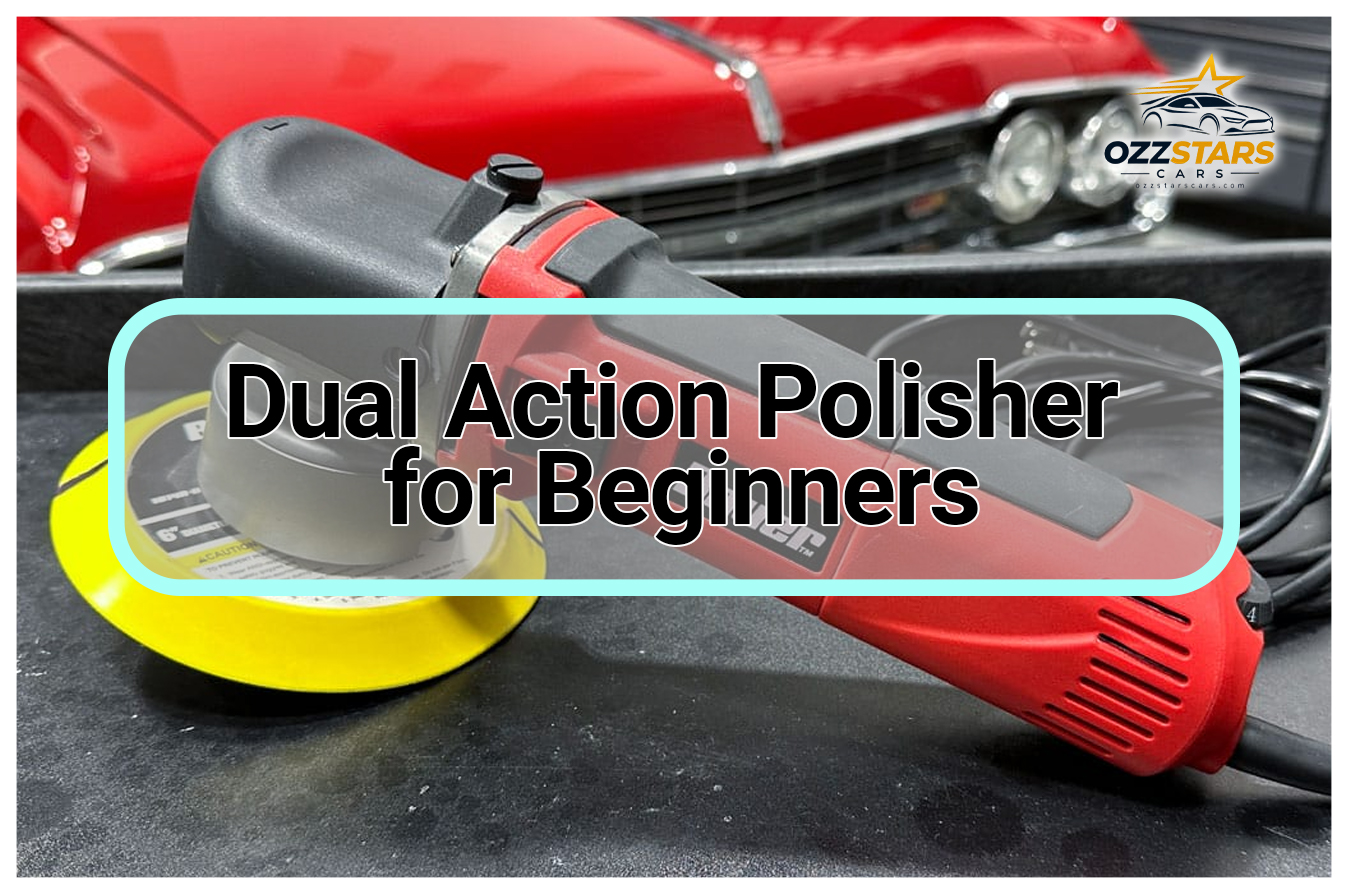
Short answer. A rotary spins the pad on one fixed axis, generates heat quickly, and can cut through clear coat on an edge or a body line in seconds. A dual action polisher adds a second, orbiting motion, which spreads the heat and lets the pad stall instead of digging in. A forced rotation machine drives both motions through gears, so the pad cannot stall. The dual action is the machine a first-time user starts with, and the reason is damage tolerance, not results.
This page is about the machine and how to hold it safely. It is not a paint correction tutorial, and it does not cover sanding of any kind.
The three mechanisms, and why the difference is a safety difference
Rotary. The pad turns in a circle around a single fixed axis, at the speed the machine is set to, continuously. Every point on the pad follows the same path over the paint, so friction and heat build in one place. That is why a rotary cuts fast, and it is also why it is the machine that removes clear coat when attention slips.
Dual action, also called random orbital. The drive shaft moves the backing plate in a fixed orbit, and the pad itself sits on a free-spinning bearing, so it rotates only as friction allows. The pad's path over the paint is irregular, which spreads heat over a wider area. Crucially, the pad can stall: when you press too hard or work a curve, the rotation stops and the machine mostly jiggles. That stall is a design feature and it is the safety margin.
Forced rotation, sometimes called gear driven. A gear train drives both the orbit and the pad's rotation, so the pad keeps turning regardless of pressure or contour. That removes the stall, which removes the safety margin the dual action gives you, while keeping the orbiting motion that stops the heat concentrating in one spot. It sits between the other two.
The ranking that matters is not cutting power. It is what happens when you make a mistake. On a dual action, the usual result of an error is a hazy patch or nothing at all. On a rotary, the usual result of the same error is paint that needs respraying.
Why a dual action polisher for beginners is the standard advice
Because it fails safely. The stall means excess pressure reduces the work being done rather than increasing it. That is the opposite of how a rotary behaves, where pressure and dwell time both increase heat.
Because heat is the thing that destroys paint, and the orbiting motion moves the pad's contact point around constantly. Clear coat softens before it burns, and softened clear coat is where sudden failures start.
Because the consequences of the pad edge catching are smaller. A rotary pad running against a raised body line or a sharp edge concentrates its whole contact patch on a narrow strip of paint that is thinner there than anywhere else on the panel.
Because you can learn what the paint is telling you before the machine can outrun you. Reading gloss, feeling heat with the back of a hand between passes, noticing when a pad has loaded up: these are learned skills, and the dual action gives you the time to learn them.
None of that makes machine polishing a low-risk job. It makes the failure mode recoverable more often. The rest of this page assumes the worst case, because that is the one that costs money.
Before the machine is switched on
Eye protection first. A pad throws polish, dried product and any grit it picks up, at speed and at head height. In the United States the workplace requirement for eye and face protection is OSHA's 1910.133, read 2026-09-08, which accepts protectors built to the ANSI/ISEA Z87.1 standard. That marking is printed on consumer safety glasses too, and it is the thing to look for. Everyday prescription glasses are not eye protection.
Tie back long hair, remove a hanging lanyard, remove rings and a watch, and roll or fasten loose sleeves. Power tool manuals carry this warning because a spinning backing plate catches fabric and hair and does not let go. It is the single most common serious injury route with a handheld rotating tool.
Deal with the cord before you start. Route it over your shoulder or clip it away from the panel. A cord that drops across paint gets dragged under the machine, and a cord you step on pulls the machine off line while it is running.
Decontaminate the paint first. A single piece of grit trapped in a pad becomes an abrasive point spinning at speed. Paint that has just been washed can still be gritty, and why clean paint still feels rough explains what is bonded to it and why a mitt slides straight over it.
That decontamination step is a safety step, not a cosmetic one. Working through the clay bar stage before any pad touches the car is what stops the machine driving trapped grit across a panel at speed.
Tape the vulnerable parts. Plastic trim, rubber seals, badges and sharp edges. Polish dries white in textured plastic and a pad edge burns trim quickly.
Holding and moving the machine
Start and stop with the pad flat on the paint. Switch the machine on only when the pad is already against the panel, and switch it off before you lift it. A pad spun up in the air throws product across the car and across you, and a machine set down while running walks off in its own direction.
Keep the pad flat. Tilting concentrates the work at the pad edge, which is where heat spikes and where clear coat is removed unevenly.
Keep it moving, slowly and continuously. A machine held still in one place is doing the one thing you never want it to do.
Use the machine's lowest useful speed while you are learning. Higher speed is more heat, and heat is the failure mechanism.
Check the panel with the back of your hand between passes. If it is warm, stop, move to another panel and come back later. Warm paint tells you before damage does.
Edges, body lines and trim: where damage actually happens
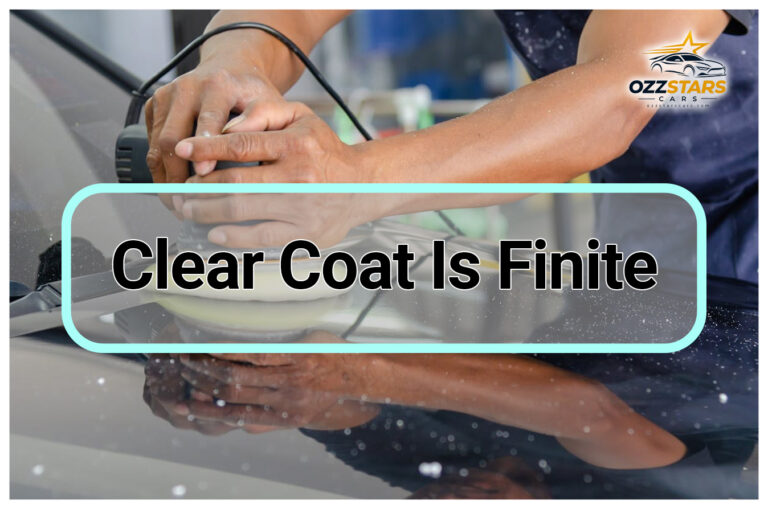
Clear coat is thinnest where a panel curves away, on ridges, along the top of a shoulder line, around door handles and at the edge of every panel. That is where paint fails first, and it is where a machine reaches first.
Avoid running the pad over a sharp edge or a raised crease. Work up to them and stop. Where a panel is heavily curved, professionals often reduce speed and pressure or finish that area by hand.
Keep the pad off plastic and rubber. Both scorch and neither can be corrected.
Watch for the pad edge catching a gap, at panel seams, spoilers, mirror bases and grille surrounds. A catch pulls the machine sideways in an instant.
If you burn through, the job is over
Burn-through means the clear coat has been removed and the color coat or the primer beneath it is exposed. On a dark car it looks like a dull, slightly discolored patch that no amount of polishing improves, because there is nothing left to polish.
It cannot be fixed with product. No compound, glaze, coating or wax restores clear coat. The repair is refinishing that panel or that section at a body shop, and the color has to be matched.
A rotary can do it in seconds on an edge, at a speed and in a spot where nothing looked wrong a moment earlier. That is the honest reason a first machine is a dual action.
Stop conditions, written down: stop if the panel feels hot, stop if the paint on a ridge changes appearance, stop if the pad catches, stop if you cannot see clearly what you are working on, and stop if you are tired. Every one of those is where the expensive mistakes cluster.
Choosing between the three, without buying advice
We do not rank or recommend machines on this site. What is worth thinking about, in order:
The mechanism, which is the whole subject of this page and the biggest decision in it.
The orbit or throw, which is how far the backing plate travels in its orbit. A longer throw covers ground faster and is less controllable in small spaces. A shorter throw suits tight, curved panels.
The pad size the machine is designed around, since a large pad on a curved panel contacts unevenly, and small pads handle bumpers and pillars.
Weight and where the machine's mass sits, because a heavy machine held at arm's length on a roof is how pressure gets applied without you deciding to apply it.
The pad and the product do the cutting, not the machine. Which is why the difference between polish and compound is a bigger factor in the outcome than the label on the tool.
What this page does not cover
What the machine is for. Removing defects is a separate decision with separate limits, described in what paint correction actually removes, and what it cannot.
Why the defects are there in the first place, which for most daily drivers is the wash. The mechanics of how swirl marks get put into paint during washing explain why polishing a car that is washed badly is a repeating expense.
Sanding. We do not cover wet sanding or any abrasive paper on clear coat, at any grade. That work removes clear coat deliberately, it is measured with a paint depth gauge, and it belongs with a professional.
FAQ
Which polisher should someone use for their first machine?
A dual action, sometimes called a random orbital. Its pad can stall under pressure instead of digging in, and its orbiting motion spreads heat over a wider area, so a mistake is more likely to produce a hazy patch than exposed primer.
Can a dual action polisher damage paint?
Yes. It is more tolerant, not safe. It can burn trim, scorch a sharp edge, damage paint through a loaded pad carrying grit, and remove more clear coat than intended if it is held in one place or run hot.
What is a forced rotation polisher?
A machine that drives both the orbit and the pad rotation through a gear train, so the pad cannot stall. It cuts more consistently than a dual action, and it removes the stall that gives a dual action its margin for error.
How do I know if I have burned through the clear coat?
The area looks dull or discolored and does not improve with further polishing, because there is no clear coat left to refine. It is not repairable with any product and needs a body shop.
Do I need eye protection to machine polish a car?
Yes. A spinning pad throws product and grit at head height. Look for the ANSI/ISEA Z87.1 marking, the standard OSHA accepts for eye and face protection in its 1910.133 rule.
Sources read 2026-09-08: OSHA 29 CFR 1910.133, Eye and face protection, and the ANSI/ISEA Z87.1 consensus standard it accepts.
This page names no machine brand, publishes no price, ranks no product and makes no purchase recommendation. Follow the safety instructions supplied with your own machine, which take precedence over any general guidance here. Nothing on this page has been tested by this site.