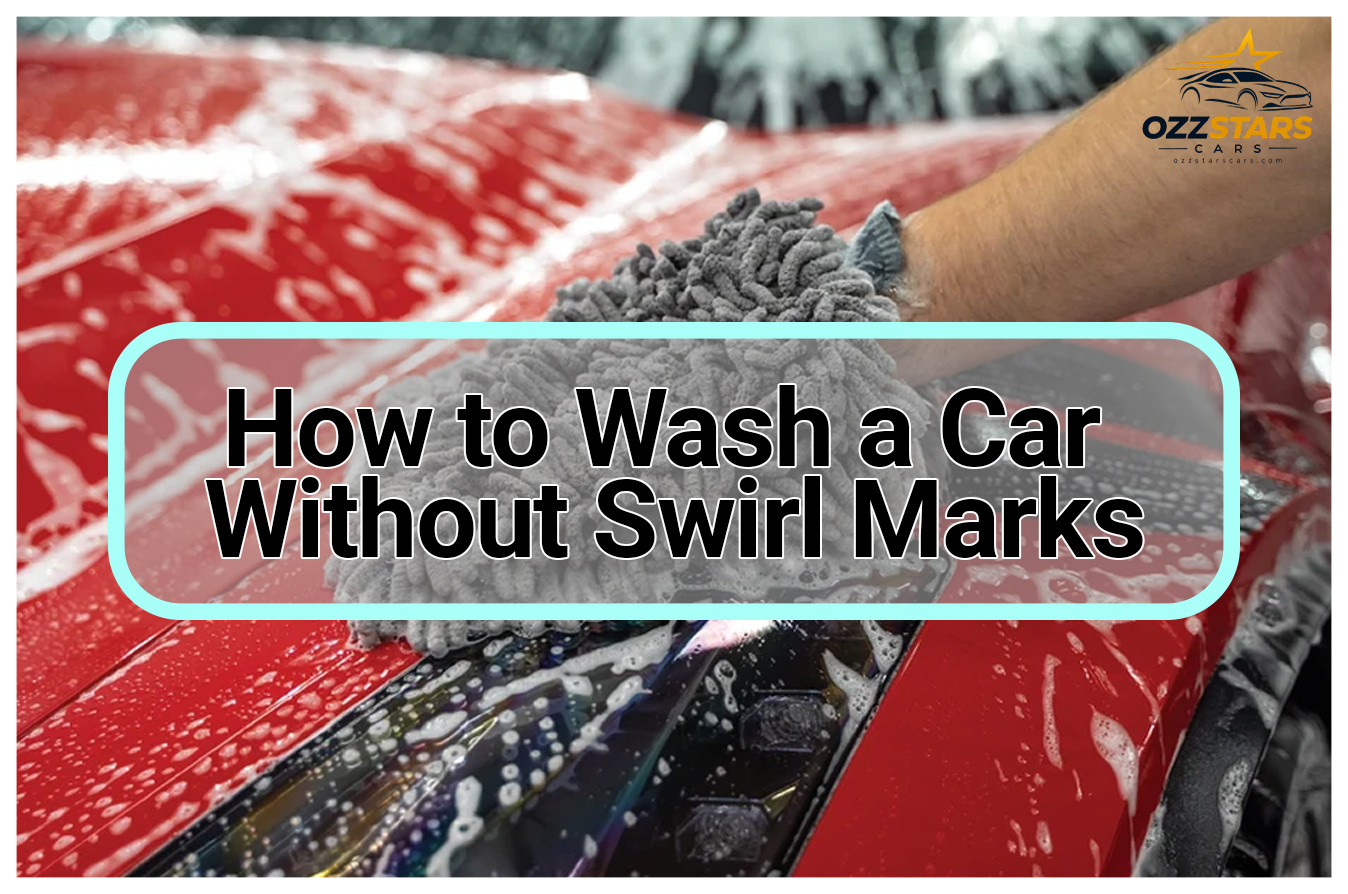
How to Wash a Car Without Swirl Marks
A swirl mark is not paint wearing out. It is a fine scratch, cut into the clear coat by a piece of grit that got dragged across it, usually by the wash itself. The fix is not a better soap or a softer towel. It is keeping grit off the paint in the first place, and getting it out of the mitt the moment it lands there. Every habit in this guide, the two-bucket method, the pre-rinse, straight-line motion, wash order, mitt choice, and grit guards, is one idea applied to a different point in the wash.
That is the whole mechanism, stated once, plainly, so the rest of this makes sense: a mitt loaded with grit is sandpaper. A mitt kept clean is not.
Why washing a car makes it look worse over time
Look at any car under bright, low-angle light, a parking garage lamp, direct sun at a low angle, headlights at night, and the paint often shows a web of fine, criss-crossed scratches. That pattern is what gives swirl marks their name. It happens because the wash mitt was carrying dust, road grit, or sand, and the motion of washing dragged those particles across the clear coat under pressure, the same way sandpaper works, just finer and slower.
This is not caused by one bad wash. It accumulates. A car washed carelessly every week for two years has had roughly a hundred chances to pick up new fine scratches, and the surface eventually looks dull and hazy even though nothing has "damaged" it in any single, dramatic sense. The clear coat is still there. It is just covered in thousands of tiny scratches that scatter light instead of reflecting it cleanly.
The one mechanism behind everything below
Grit gets onto paint two ways: it is already sitting on the surface (dust, pollen, road film), or it gets transferred there by the wash tools themselves, a dirty mitt, a mitt dipped back into water that already has grit floating in it, a towel that was dropped on the driveway. Every technique detailers use exists to interrupt one of those two paths.
- Pre-rinse removes the loose grit before a mitt ever touches the paint.
- The two-bucket method keeps the mitt from picking grit back up out of its own wash water.
- Straight-line motion reduces how hard any remaining particle gets pressed into the paint, compared with scrubbing in circles.
- Top-down wash order stops grime from the dirtiest, lowest panels being carried upward onto cleaner ones.
- Mitt and wash-media choice decides how easily the tool releases grit instead of holding it against the paint.
- Grit guards give a bucket somewhere for that released grit to go, so it stays out of the mitt on the next dip.
None of these fixes the others' job. Skipping any one of them reopens the same door the rest are trying to close.
Rinse before the mitt touches anything
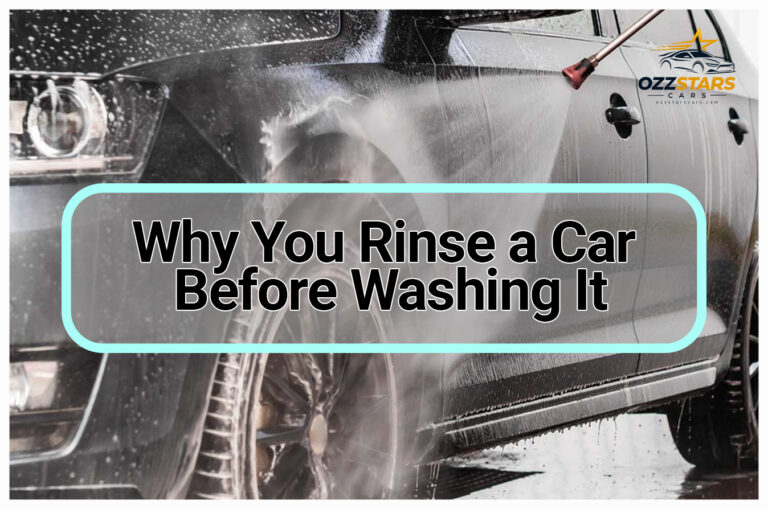
The single biggest reduction in swirl risk happens before any soap or mitt is involved: a thorough rinse. Loose dust, pollen, and road film wash away with plain water, and every particle that leaves in the rinse is one that never has the chance to get pressed into the clear coat later. A car that goes straight from "looks dusty" to "mitt on paint" is starting the wash with abrasive material still sitting on the surface. The full reasoning, including where detailers disagree on how much pre-rinsing actually helps once foam is involved, is in Why You Rinse Before the Mitt Ever Touches the Paint.
The two-bucket method, in one paragraph
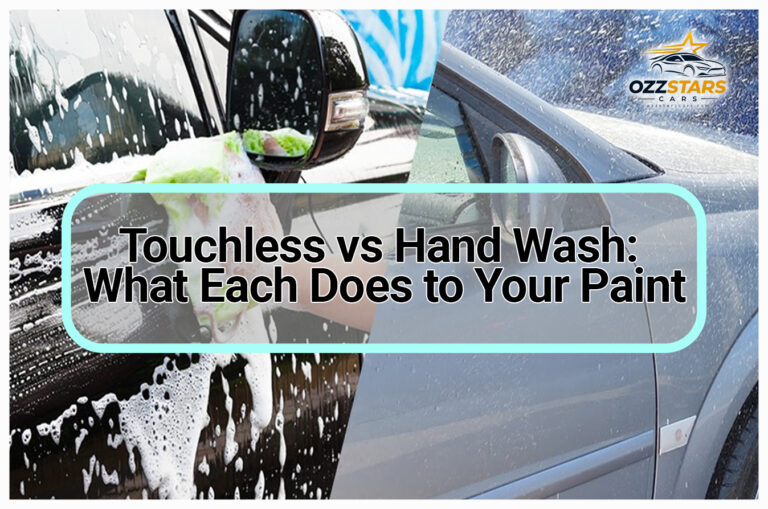
Fill one bucket with wash solution and a second with plain water. Load the mitt from the wash bucket, clean a panel, then rinse the mitt in the plain water bucket before reloading it with soap. The plain-water bucket is where grit gets rinsed off the mitt instead of carried straight back into the clean soap. Detailing brands such as Chemical Guys and Autogeek both teach this as standard technique for exactly that reason: a single bucket eventually turns into a reservoir of the dirt you just washed off, and every dip after that reloads the mitt with it. The full setup, including where a grit guard fits into each bucket, is covered in The Two-Bucket Method, and What It Actually Prevents.
Straight lines, not circles
Wipe in straight, overlapping lines, front to back or side to side on flat panels, rather than scrubbing in circles. A circular motion grinds any trapped particle back and forth across the same small area repeatedly, which is exactly the swirl pattern you can see under bright light later. A straight pass moves a particle once, in one direction, then the mitt travels past it. It is a small change in wrist motion with a real effect on the pattern left behind. The mechanics of why direction matters, and how much pressure is too much, are in Straight Lines or Circles: The Motion That Causes Swirls.
Wash order: top down, and the bottom panels last
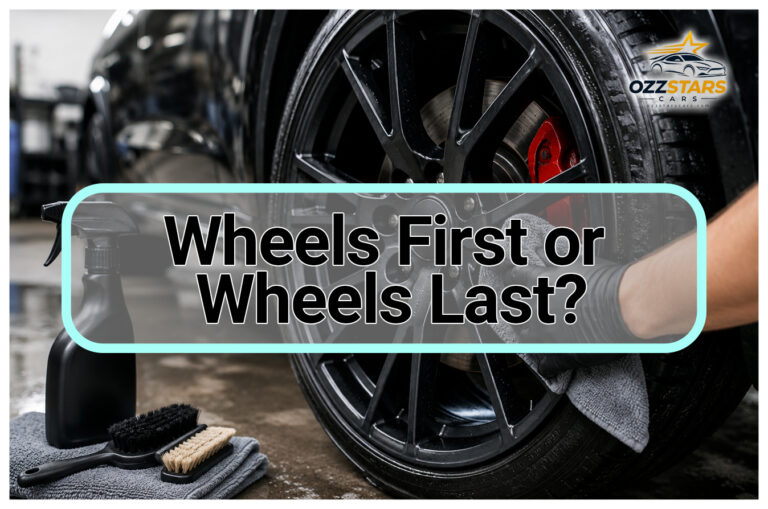
Road grime is not distributed evenly over a car. The lower third, rocker panels, lower doors, bumpers, carries the most road debris and brake dust, while the roof and upper panels usually carry the least. Washing top to bottom means the dirtiest water and grime run downward onto areas that are about to be washed anyway, instead of a mitt carrying that grime upward onto panels that were already clean. Wheels and lower panels get their own separate pass, ideally with dedicated tools that never touch the paint above. The full sequence, panel by panel, is in Top-Down Wash Order, and Why the Bottom Panels Come Last.
What the mitt itself is doing
Not every wash mitt behaves the same way once it is loaded with grit. Some materials hold particles up against the surface as you wipe; others let go of them more readily when rinsed. Pile depth, material, and how the mitt rinses out all change how much of the grit picked up from the paint stays trapped in the fibers versus getting flushed out in the rinse bucket. This matters independently of technique, because a technically perfect two-bucket wash still drags grit across the paint if the mitt itself will not release what it is holding. What actually separates a mitt that holds grit from one that releases it is covered in Mitts, Sponges and Wash Media: What Holds Grit and What Releases It.
Do grit guards actually help
A grit guard, the ridged plastic disc that sits in the bottom of a bucket, is genuinely useful for one specific job: it gives the mitt something to press against so trapped grit releases and sinks below the guard, out of reach of the next dip. It does not clean dirty water. It does not rescue a mitt that was dropped on the driveway and never rinsed off. It is one small, honest piece of the same mechanism as everything above it, not a separate solution. The evidence for what it does and does not do is in Grit Guards: Do They Actually Do Anything?.
What washing carefully cannot fix
None of this reverses swirl marks that are already in the paint. Careful washing only stops new ones from being added. If a car already looks hazy under bright light, that is a separate problem, correction and polishing, not prevention, and it is not something this guide claims to solve. The honest limit is worth stating plainly: a perfect wash routine protects the paint you have; it does not restore the paint you already scratched.
FAQ
Does washing my car actually cause swirl marks, or is that overstated?
Washing itself does not cause them. Grit dragged across the paint by the wash tools does. A careful wash with clean tools and the right motion adds essentially none.
Is a two-bucket setup really necessary for a normal daily driver, or is that detailer overkill?
It is the single highest-value habit on this list because it directly stops the mitt from reloading itself with grit. It costs one extra bucket and a few seconds per dip.
How often do swirl marks actually show up if I skip these steps?
It varies with how dusty or gritty the environment is, but the mechanism is cumulative: every wash without a rinse, clean water, and straight-line motion is another chance to add fine scratches, whether or not they are visible yet under normal light.
Can I use dish soap or a household cleaner instead of car shampoo?
That question is outside this guide, since it involves the chemistry of the product rather than the mechanical motion of the wash, but it does not change anything about the two-bucket, pre-rinse, or motion habits above.
What is the single most important habit if I only change one thing?
Rinse thoroughly before the mitt ever touches the paint. It removes the most abrasive material before the highest-friction step of the whole process even begins.