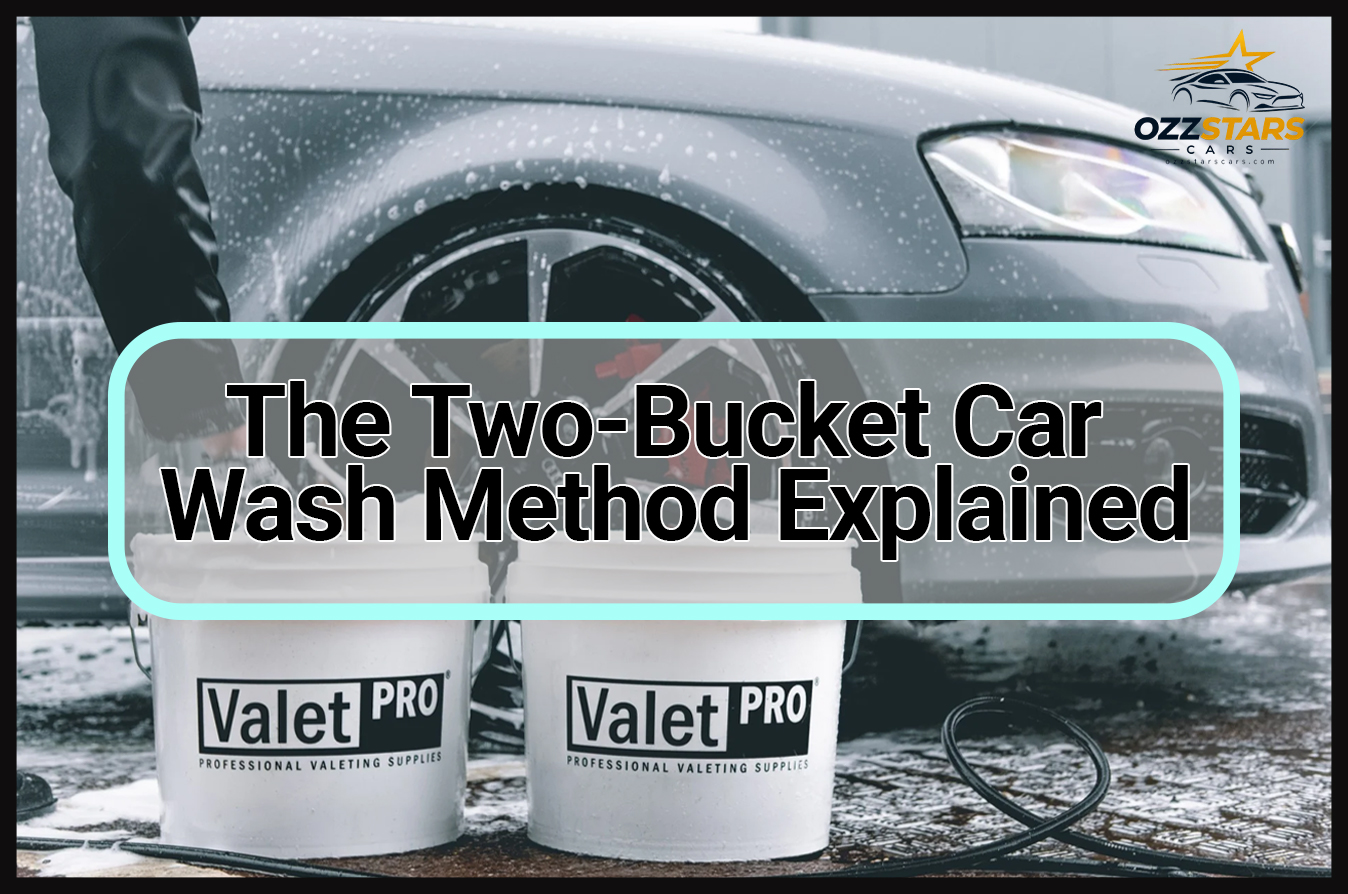
The Two-Bucket Car Wash Method Explained
The two-bucket method uses one bucket of soapy wash water and a second bucket of plain rinse water, so a loaded mitt gets rinsed clean before it goes back into the soap. With one bucket, every dip after the first few wipes reloads the mitt with the same grit it just picked up off the car. With two, the grit gets rinsed off into the second bucket and stays there instead of going back onto the paint. It is not detailer theatre. It is a direct fix for a specific, mechanical failure mode of washing a car with one bucket.
What actually goes wrong with a single bucket
A wash bucket does not stay clean once a mitt starts working. Every pass across a dusty panel deposits sand, road grit, and dirt into the wash water. With only one bucket, the next dip pulls the mitt back through that same water, and grit clings to the fibers again. From that point on, every fresh dip is loading the mitt with the exact material it is supposed to be removing. The wash still looks like it is working, foam and lubrication mask the abrasion happening underneath, but the mitt is now doing the job of very fine sandpaper for the rest of the wash.
This is the mechanism behind swirl marks covered in How to Wash a Car Without Putting Swirls Into It: a mitt loaded with grit scratches, a clean mitt does not. The two-bucket method is the single most direct way to keep the mitt in the second category for the whole wash, not just the first few panels.
How the setup actually works
- Bucket one holds water mixed with car shampoo. This is where the mitt gets loaded before touching a panel.
- Bucket two holds plain water, nothing else. This is where the mitt gets rinsed after every panel, before it goes back into bucket one.
- The sequence per panel is: dip the mitt in the soap bucket, wash one section, dunk and swirl the mitt in the rinse bucket to release trapped grit, then reload from the soap bucket for the next section.
The order matters. Rinsing in bucket two before reloading from bucket one is the entire point. Skipping the rinse step and just alternating buckets for convenience defeats the method.
What a grit guard adds to the setup
A grit guard is a ridged plastic disc placed in the bottom of a bucket, usually the rinse bucket, sometimes both. When the mitt is pressed and worked against the ridges while rinsing, trapped grit releases more thoroughly and sinks below the guard, out of reach of the mitt's next pass through that water. Without a guard, some particles simply resettle near the bottom of the bucket and can still get picked back up on the next dip. A guard is not required for the two-bucket method to work, but it makes the rinse step meaningfully more effective. The honest limits of what a grit guard does and does not fix are covered separately in Grit Guards: Do They Actually Do Anything?, because it is worth being specific rather than treating it as a cure-all.
Does the two-bucket method replace a pre-rinse
No, and this is a common misunderstanding. The two-bucket method manages grit that is already in the wash water or gets picked up mid-wash. It does nothing about the loose dust and debris sitting on the paint before the mitt ever arrives. That is a separate step, and skipping it means the mitt's first few passes are working against a dirtier surface than they need to. The reasoning for rinsing first is in Why You Rinse Before the Mitt Ever Touches the Paint.
Does the motion inside the two-bucket method matter too
Yes. A perfect two-bucket setup still allows grit to scratch the paint if the mitt is scrubbed in tight circles rather than wiped in straight lines, because circular motion grinds any remaining particle against the same small area repeatedly. The two-bucket method reduces how much grit is in the mitt at any given moment; it does not eliminate it entirely, so the motion used still matters. That mechanic is explained in Straight Lines or Circles: The Motion That Causes Swirls.
Is it actually necessary, or is a hose and one bucket good enough
For a car that is genuinely lightly dusty and gets washed frequently in a low-grit environment, the risk from a single bucket is lower, though still present. For most daily drivers, especially anything parked outside, driven on gravel, dirt, or salted roads, or washed less than weekly, enough grit accumulates in a single bucket within the first few panels that the risk becomes real well before the wash is finished. The cost of a second bucket is small, one extra container and a few seconds per dip, against a real and cumulative risk. That is why it has become the standard recommendation across most detailing guidance rather than a niche habit.
What the two-bucket method does not do
It will not undo scratches that are already in the paint, it will not compensate for a dirty or dropped mitt, and it will not make a low-quality wash mitt behave like a better one. It manages one specific failure mode, grit recirculating through wash water, cleanly and reliably. Everything else in a careful wash, the rinse, the motion, the order, the mitt itself, is doing separate work, covered in How to Wash a Car Without Putting Swirls Into It.
FAQ
Do I need a grit guard for the two-bucket method to work?
No. The two buckets alone do most of the work by separating soap water from rinse water. A grit guard improves how thoroughly the rinse bucket releases trapped grit, but the basic method functions without one.
How much water should be in each bucket?
This guide does not specify a volume, since the right amount depends on the bucket size and the vehicle, and no single figure applies across every setup. The relevant point is that both buckets should be full enough that the mitt is fully submerged when rinsed.
Can I reuse the same rinse water for the whole wash?
The rinse bucket will accumulate grit over the course of a wash the same way a single bucket would, just more slowly since only rinsed-off material goes into it. Swapping it out partway through a larger vehicle or a particularly dirty wash reduces that buildup.
Does the two-bucket method work with a foam cannon or snow foam pre-wash?
Those are separate steps that happen before the mitt touches the paint. The two-bucket method still applies once hand-washing begins; the pre-wash step just reduces how much grit is on the surface when that starts.
Is the two-bucket method only for people with a driveway and hose?
The method itself only requires two containers of water and a mitt, so it works anywhere a car can be washed by hand, including situations without a hose, which is covered separately for readers without a driveway.