How to Remove Ice From Windshield Without Scratching
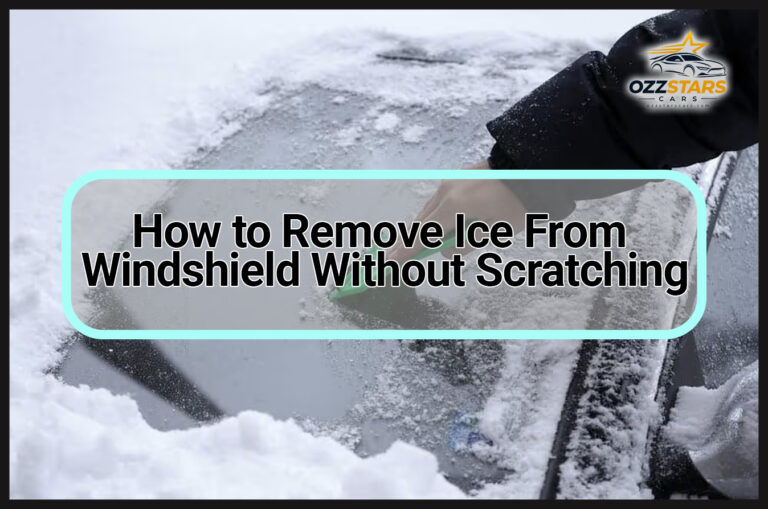
Here is how to remove ice from windshield without scratching it: soften the ice before you scrape, and keep grit away from the scraper blade. Start the car outdoors, run the defroster on the windshield, and give it a few minutes. Then use a clean plastic scraper at a low angle to lift the softened ice in sheets. Never pour hot water on the glass, never run frozen wipers, and never use a scraper on the paint. Brush snow off painted panels with a soft snow brush or foam head instead.
Most "scraper scratches" are not caused by the scraper at all. They are caused by what is trapped under it. The rest of this guide explains why, and what that means for the glass, the wipers and the paint.
Why ice scraping leaves fine lines on glass
Windshield glass is hard, and a plastic scraper on its own is softer than the glass. So when a reader tells us "I scraped it and now there are fine lines across the glass," the plastic is rarely the culprit. Three things usually are.
Grit under the blade. Road grime, sand and dried salt spray sit on the windshield all winter. When ice forms over that film and you scrape hard, the blade drags those particles across the glass. Sand is largely quartz, which is harder than glass, so it can mark the surface where the plastic cannot.
A damaged scraper edge. A scraper that has been thrown in the trunk, stepped on or used to chip at thick ice develops nicks. A nicked edge concentrates force on small points and can trap grit in the notch.
Metal and improvised tools. Keys, metal spatulas and metal scrapers can scratch or chip glass. Some people use a plastic card in an emergency; it is softer than metal, but it has a small, sharp edge and gives you little leverage, so it tempts you to press hard.
The common thread is force plus contamination. Take away both and the risk drops a long way.
How to remove ice from windshield without scratching: step by step
The order matters here, because each step reduces the force you need in the next one.
1. Check the tailpipe, then start the car outdoors
Before you start the engine after snowfall, make sure the tailpipe is clear. The CDC's "Clear Snow from Tailpipes" guidance (read on September 27, 2026) warns that a blocked tailpipe lets carbon monoxide, "an odorless, colorless, and deadly gas produced by your engine," build up inside the vehicle. You can read the CDC's tailpipe safety message in full. Never warm a car up inside a garage, even with the door open, and do not leave anyone sitting in the car while you clear it.
2. Run the defroster and let the heat do the work
Set the climate control to windshield defrost with the fan high. Your owner's manual will show the right setting, and many cars also have a rear window defroster button. Leave it running while you clear snow from everywhere else. As the glass warms from the inside, a thin layer of water forms between the glass and the ice. That water layer is what lets the ice release instead of grinding.
Let the temperature rise gradually. Warm air from the vents is not the same as pouring hot water, but a gentle start is kinder to glass that already has a chip in it.
3. Clear loose snow first, with the right tool
Use a snow brush or foam snow broom to push loose snow off the roof, hood and windows before you touch the ice. Push it away from you rather than dragging it back and forth. Clear the roof completely, because snow sliding forward when you brake can cover the windshield, and snow blowing off at speed can hit the drivers behind you.
4. Scrape softened ice at a low angle
Once the edges of the ice start to go dark or slushy, hold a clean plastic scraper at a shallow angle and push in short strokes. You are trying to slide under the ice and lift it, not shave it off. If the scraper skips or chatters, stop. That means the ice is still bonded and you need more time with the defroster, not more force.
Before the first stroke, wipe the scraper edge with your glove to knock off any grit left from last time. If the blade has visible nicks, replace the scraper. It is a cheap part compared with a marked windshield.
5. Use a de-icer spray if you are short on time
A commercial windshield de-icer spray loosens ice faster than heat alone. Follow the label for how to apply it and how long to wait. Use it outdoors, keep it off your skin and out of your eyes, and never mix it with other cleaning products. Spraying one section at a time helps, because melted ice on a very cold windshield can refreeze before you reach it.
6. Free the wipers last, gently
Do not switch the wipers on while they are frozen to the glass or buried in snow. The resistance can tear the rubber, bend the arm or strain the wiper motor. Let the defroster release them, then lift each arm gently. Do not scrape the rubber blade itself, because a torn edge will smear and can drag grit across the glass every time it runs.
What not to do, and why each one causes damage
| Shortcut | What can go wrong | Do this instead |
|---|---|---|
| Pouring hot or warm water on the glass | Sudden temperature change can crack the windshield, especially one with a chip, and the water can refreeze | Run the defroster and wait |
| Using a metal scraper, keys or a spatula | Metal can scratch or chip glass | Clean plastic scraper |
| Scraping the paint, roof or mirrors | Scraper edges and trapped grit leave scratches in clear coat | Soft snow brush or foam broom |
| Running frozen wipers | Torn blades, bent arms, strained motor | Wait for the defroster to free them |
| Driving with a small "porthole" cleared | You cannot see pedestrians or cars at the sides | Clear every window and mirror fully |
| Warming the car in a closed garage | Carbon monoxide buildup | Start it outdoors with the tailpipe clear |
Don't forget the paint: where most winter scratches really happen
The windshield gets all the attention, but paint is far softer than glass. Clear coat marks easily, and winter is when it is most likely to be dragged across while dirty. A car that has been driven on treated roads carries a film of salt and grime on every panel. Rub a stiff brush or a scraper over that film and you are effectively sanding the finish.
A few rules keep the paint safe:
- Never use an ice scraper on paint. If a mirror housing or the roof has a crust of ice, let the car warm up and let it soften, or leave it.
- Push snow, do not scrub it. A foam snow broom or a soft-bristle snow brush moves snow in one direction without grinding it in.
- Keep the brush clean. A brush that has been lying in a slushy footwell picks up grit and puts it straight back on the paint.
- Wash the salt off on milder days. Less grime on the car means less to drag around the next time it snows. Our guide on how often to wash your car lays out what different authorities recommend.
The fine, circular haze you sometimes see in spring sunshine is the same kind of damage as wash-induced swirls. If you want the mechanism behind it, we explain what causes swirl marks and why direction and contamination matter more than technique names.
How to prevent ice so there is less to scrape
The easiest ice to remove is the ice that never formed. None of these is essential, but each reduces how hard you have to work in the morning.
- A windshield cover or frost guard. A fitted cover that tucks into the doors keeps frost off the glass. Put it on a clean, dry windshield so it does not trap grit against the glass.
- Wipers up or protected. In freeze-thaw weather, some drivers lift the wiper arms off the glass overnight so the blades cannot freeze to it. Check your owner's manual first, because some cars have a service position for the wipers and some arms should not be left raised.
- Winter-grade washer fluid. Summer fluid can freeze in the reservoir and lines. Use a washer fluid rated for your temperatures and follow the label.
- Park where the morning sun reaches the windshield. Sun on the glass starts the thaw for you. It is a small thing, but it is free.
- A garage or carport, when available. If you do park in a garage, remember the rule above: start the car outside, never inside.
When the glass is already scratched or chipped
Light wiper arcs and fine marks from grit are a cosmetic annoyance, but a scratch that catches your fingernail or a chip in the driver's line of sight is a different matter. That is damaged glass, and it is a job for an auto glass specialist, not a cleaning guide. If the glass is chipped, be especially gentle with heat, because a chip is a weak point where a crack can start.
If a specialist recommends replacing the windshield and your car has a driver-assistance camera mounted behind the glass, that camera needs to be recalibrated after the new glass goes in. Ask the glass shop how they handle it before you book.
For paint, the same fingernail check is a useful first step. Our explainer on whether a scratch can be buffed out walks through what that test tells you and where it stops being reliable.
Frequently asked questions
Can I use a credit card to scrape ice off my windshield?
In an emergency, a plastic card is safer than metal, but it is a poor tool. Its edge is small and it gives you little leverage, so people press hard, and pressure is what drags grit across the glass. Let the defroster soften the ice first, use the card at a very low angle, and buy a proper plastic scraper.
Is it OK to pour warm water on a frozen windshield?
We do not recommend it. A sudden temperature change can crack the glass, especially if there is already a chip, and water poured onto very cold glass can refreeze into a smoother, harder sheet of ice. The defroster, and a de-icer spray used according to its label, are the safer options.
Why does my windshield have scratches after scraping ice?
Usually because grit was trapped under the scraper blade, the blade itself was nicked, or a metal tool was used. Clean the scraper edge before use, replace it when it is damaged, and let the ice soften so you do not need heavy pressure.
Can I use an ice scraper on my car's paint?
No. Clear coat is much softer than glass and scratches easily, especially with road grime on it. Use a soft snow brush or foam snow broom on paint, and let any ice on painted surfaces melt as the car warms.
How long should I run the defroster before scraping?
There is no single number, because it depends on the thickness of the ice, the outside temperature and your car. Wait until the ice at the base of the windshield starts to look wet or slushy and the scraper slides under it without chattering. If it still skips, give it more time.
Clear the whole car, keep the tools clean, and let heat do the hard part. Drive informed.