How to Protect Car Paint at the Beach From Sand and Salt
The simplest way to think about how to protect car paint at the beach is to split the problem in two. Sand is an abrasive: it scratches when something drags it across the paint, so keep it off and never wipe it off dry. Salt is a corrosion accelerator: it matters most where the paint is already broken, so rinse it off with fresh water soon after a beach trip and deal with stone chips before they reach bare metal. A wax, sealant or coating helps with both, but it is not a shield, and it does nothing for a chip.
That split explains the film you find after two weeks by the sea, and why much of the damage people blame on "salt air" actually starts somewhere else.
Sand and salt do different kinds of damage
A lot of beach car care advice treats sand and salt as one enemy. They are not, and the fix for each is different.
Sand scratches. Beach sand is made of hard mineral grains. Sitting still on the paint, it does very little. The moment you wipe it with a towel, brush it off with your hand, drag a cover over it or lean a sandy surfboard against the door, those grains act like sandpaper on the clear coat. The result is fine scratches and scuffs, concentrated where people touch the car.
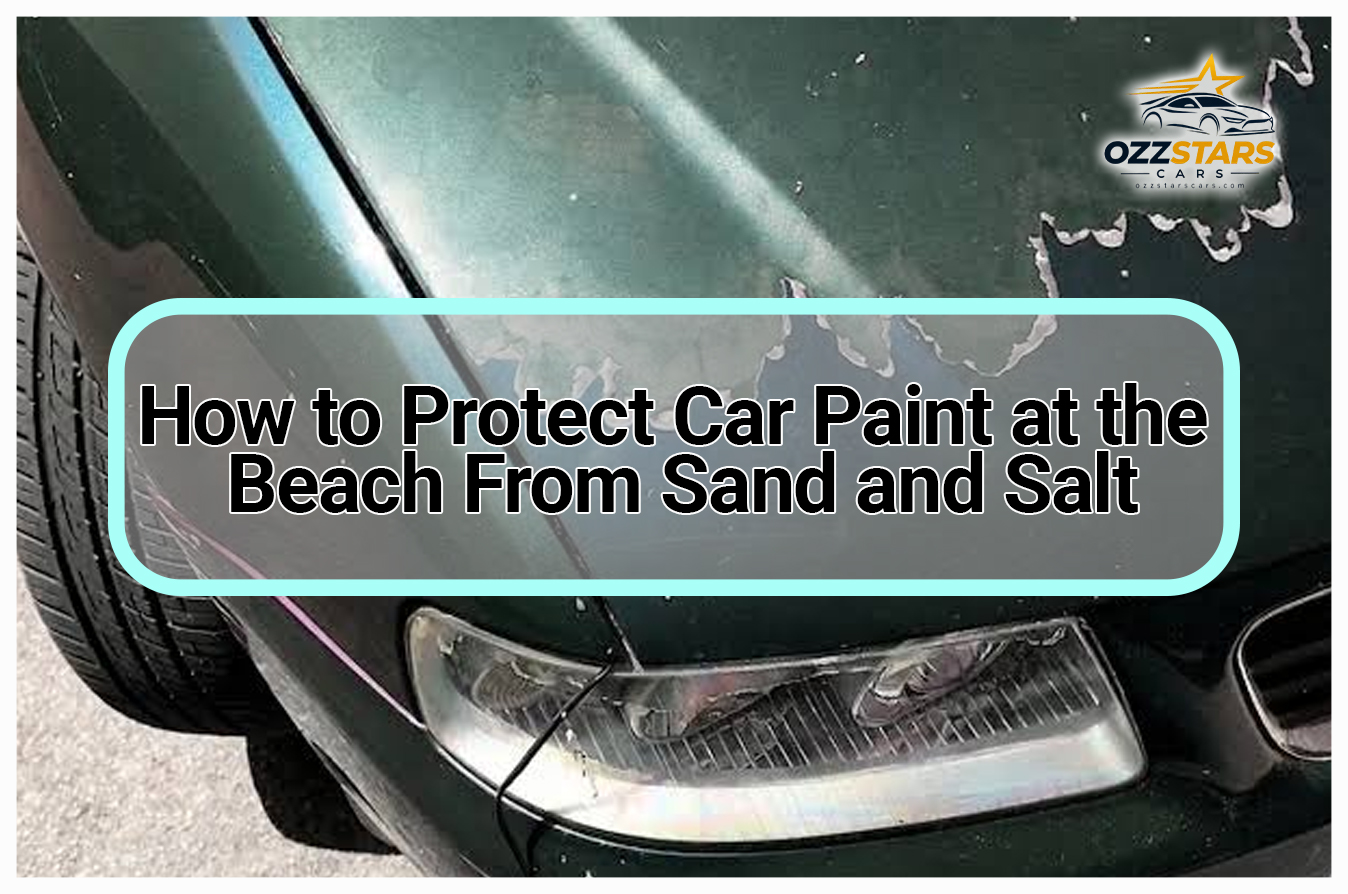
Salt corrodes metal. Salt spray drifts inland on the breeze and dries on the car as a hazy film. On intact paint, that film is mostly a cleaning problem, because the paint stands between the salt and the steel. Where the paint is chipped or scratched through, salt and moisture reach the metal and speed up rust. Kia's online US owner's manual (the 2023 edition we read on September 27, 2026) lists "road salts, dust control chemicals, ocean air and industrial pollution" as common causes of accelerated corrosion, and states that "Deep scratches or stone chips in the painted surface must be repaired promptly." You can read Kia's exterior care guidance in full.
So the priorities are: keep sand from being rubbed in, keep salt from sitting on the car for long, and keep the paint unbroken.
How to protect car paint at the beach before you go
A little preparation reduces how much you have to fix afterward.
- Start with a clean car. Salt and sand stick more readily to a car that is already carrying a film of road grime.
- Put a protection layer on the paint. A wax, paint sealant or coating makes the surface slicker, so salt film and loose sand rinse off more easily with less contact. Apply it to clean, dry paint in the shade and follow the product's instructions, including cure time. Be realistic about what it does: our explainer on what a coating does not protect you from covers why no layer stops a grain of sand being dragged across it.
- Check for chips and scratches through to metal. The front edge of the hood, the leading edge of the roof and the area behind the wheels collect stone chips. Our guide to stone chips on the hood explains when to seal a chip and when to leave it for a body shop. A chip that is sealed before the trip is one less entry point for salt.
- Pack for sand. A bag or tub for sandy towels, shoes and toys keeps them off seats and away from door edges.
At the beach: parking and loading without scratching
In our view, the minutes around arriving and leaving are when paint is most at risk, because that is when sandy people and sandy gear are closest to the car.
Park with the wind in mind, where you have the choice. On windy days, blowing sand can strike the side of a car that faces the beach. Parking a little further back, or behind a dune fence or building, reduces how much reaches the paint. Follow local parking rules; this is only about choosing among legal spots.
Shake out gear away from the car. Shaking a towel beside an open door sends sand onto the paint and into the door seals. Walk a few steps downwind first.
Do not lean anything sandy on the paint. Boards, chairs, coolers and bags all carry grit on their undersides. Load them onto a blanket or into the trunk, not across the roof or against a door.
Brush yourself off, not the car. If sand has blown onto the car, leave it. Brushing it away with a hand or a towel is exactly the dry wipe you are trying to avoid. It can come off with water later.
Watch the door seals and sills. Sand collects in the rubber seals and on the door sills and gets ground in each time the door closes. Tapping loose sand out of the sills before you shut the door helps.
After the beach: rinse first, then wash
The Kia manual quoted above also advises paying attention to accumulated salt, dirt and mud and making sure "the drain holes in the lower edges of the doors and rocker panels are kept clear and clean." Sand is very good at blocking those holes, so the lower edges deserve extra attention after a beach trip.
A sensible order:
- Rinse with fresh water before anything touches the paint. Start at the roof and work down, letting the water carry sand off the car. Spend time on the lower doors, the sills, the wheel arches and the area behind the bumpers, where salty spray and sand collect. If you use a pressure washer, keep a sufficient distance from the car, as the Kia manual advises, and do not aim it directly at seals or badges. Our guide on why you rinse a car before washing it explains what the rinse does and what it leaves behind.
- Open the doors and trunk and rinse or wipe the jambs and sills with a damp cloth once most of the sand is gone.
- Wash with a car shampoo and a clean mitt if the salt haze is still there once the car dries. Rinse the mitt often, because a single hidden grain of sand can travel around the car with it.
- Dry gently. Salt water that dries on the car leaves a haze and spots. A soft drying towel with light pressure is the goal; see how to dry a car without scratching it for the technique.
How soon should you do this? We have not found a measured deadline we would stand behind, so we will not give you one. The direction in the owner's manual guidance we read is simply not to let salt and grime build up. After a day at the beach, the same day or the next is a reasonable habit.
Living or parking by the coast long term
A two-week vacation and a home on the waterfront are different problems. If the car lives near the sea:
| Habit | Why it matters |
|---|---|
| Regular fresh-water rinses between washes | Removes salt film before it builds up, with no contact |
| Keeping a protection layer maintained | A slick surface releases salt film more readily |
| Checking the lower edges and chips every few weeks | Catches broken paint before rust starts at the edge of a chip |
| Covered or sheltered parking where possible | Less salt spray and blowing sand reaching the paint |
| A dry, ventilated garage rather than a damp one | Kia's manual warns against parking in "a damp, poorly ventilated garage" |
A car cover can help at a coastal home, but only on clean paint. A cover pulled over a salty, sandy car and flapping in a sea breeze is a slow abrasive. If you use one, wash first and make sure it fits snugly.
When it is more than a cosmetic problem
Salt air does its real damage out of sight: on the underside, in seams and around fasteners. If you see bubbling paint along the bottoms of the doors, around the wheel arches or at the edges of chips, that is corrosion working under the paint, and it is worth having a body shop look at it rather than covering it with wax. Anything under the car that looks flaky or swollen, especially near brake lines, suspension parts or mounting points, belongs with a qualified mechanic, not a detailing guide.
Frequently asked questions
Does salt air damage car paint?
Salt spray on intact paint is mainly a cleaning problem, but it speeds up rust wherever the paint is chipped or scratched through to metal. Kia's owner's manual lists ocean air among the common causes of accelerated corrosion and says chips should be repaired promptly. Regular fresh-water rinsing and sealing chips are the two most useful habits.
How do I get sand off my car without scratching it?
With water, not a towel. Rinse from the top down with fresh water and let it carry the sand away before anything touches the paint. Only wash with a mitt once the loose sand is gone, and rinse the mitt often.
Will a ceramic coating protect my car at the beach?
A coating makes the surface slicker, so salt and loose sand rinse off more easily. It does not stop sand from scratching the paint when something is dragged across it, and it does nothing for a chip that has already reached bare metal.
Should I use a car cover when parking by the sea?
Only on a clean car, and only with a cover that fits snugly. A loose cover over sandy or salty paint can rub in the wind and scuff the finish.
Do I need to rinse the underside of my car after the beach?
Salt and sand collect underneath and in the lower edges of the body, so rinsing the wheel arches, sills and lower doors is worthwhile. If you see rust or damage underneath, have a mechanic or body shop inspect it rather than treating it yourself.
Keep the sand moving with water, keep the paint unbroken, and the coast is a lot less hard on a car. Drive informed.