Sticky Car Interior Plastic Fix: What Works and What Harms
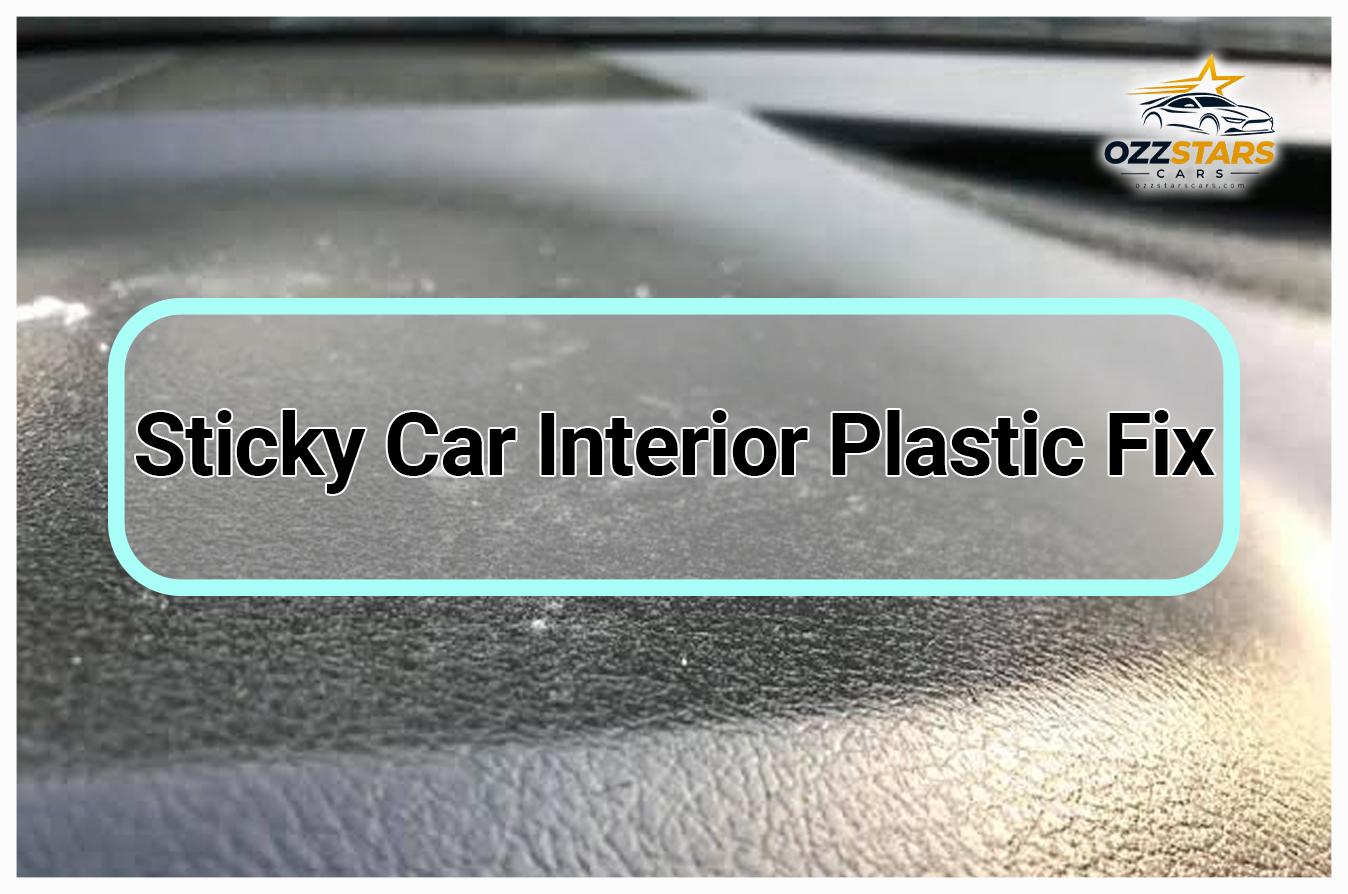
The short answer: sticky interior plastic is usually not dirt. It is the thin, rubbery soft-touch coating on the part breaking down, and no cleaner or dressing turns it back into a solid. The only lasting sticky car interior plastic fix is to remove that failed layer (most often with isopropyl alcohol on small, non-safety parts), then leave the hard plastic bare, recoat it, send it to a refinisher, or replace the part. First rule out a spill or old dressing, and never strip an airbag cover or the top of the dashboard.
That is the whole answer in one paragraph. The rest of this guide explains why it happens, how to tell which problem you actually have, and how to decide, part by part, which of the five fixes fits.
Why Soft-Touch Plastic Turns Sticky
Many interior parts are hard plastic underneath with a thin rubbery coating on top. That coating is what gives a door pull, a window switch or a console lid its soft, grippy, velvet feel. It is usually a polyurethane-type paint film, and it is thin, so once it fails you are quickly down to the hard plastic.
Polyurethane coatings of this kind break down slowly through a process called hydrolysis: moisture in the air attacks the long molecular chains and cuts them into shorter ones. Heat speeds it up, sunlight adds its own damage, and the oils and lotions from your hands work on the parts you touch most. As the chains get shorter, the coating stops behaving like a rubbery solid and starts behaving like a thick, tacky liquid. That is why a car parked for years in a hot, humid climate often goes sticky first.
Three things follow from that, and they shape every fix below:
- It is not reversible. Drying or cleaning can make the surface feel better for a while, but the broken coating keeps breaking.
- It spreads with touch and heat. The parts your hands use most, and the parts in direct sun, usually fail first.
- Covering it does not cure it. A dressing or protectant on top of a failing coating just adds another layer of goo.
First, Confirm It Is Actually the Coating
Before you reach for a solvent, rule out the easier problems. A sticky surface from a spilled soda needs soap and water, not a stripping job. Use this quick triage:
| What you see and feel | Likely cause | What to do first |
|---|---|---|
| One sticky patch, often near a cupholder or seat edge | Spill or food residue | Interior cleaner on a damp microfiber towel |
| Tacky film that appeared soon after a detail or car wash interior wipe | Dressing or protectant buildup | Clean with an interior cleaner and a dry towel; stop using the dressing |
| Tacky everywhere your hands touch: switches, door pulls, knobs | Soft-touch coating breakdown | Go to the decision table below |
| Coating smears, peels or leaves color on a white cloth | Advanced coating breakdown | Stripping, refinishing or replacement |
| Hard plastic itself is soft, warped or cracking | Heat or UV damage to the part | Replacement; cleaning will not help |
The white-cloth check matters. A General Motors service bulletin (No. 06-00-89-029T, June 2020, filed with NHTSA), which we read on 2026-09-23, tells technicians not to use cleaners that show color transfer to the wipe or change the look of a surface when tested in a hidden spot, because those are signs of chemical attack. If a mild interior cleaner on a white microfiber towel lifts color off the part, the coating is already coming apart.
If a spill or a dressing turns out to be the cause, the same bulletin recommends mild, neutral-pH cleaners applied to a towel rather than sprayed onto the surface. That is also the gentlest first step on any sticky part, because it tells you whether the tackiness comes off or stays.
The Decision Most Guides Skip: Which Part Is It?
Most advice online jumps straight to "wipe it with rubbing alcohol." That works on some parts and is a bad idea on others. The right fix depends on what the part does and what is printed on it.
| Part | Safe to strip yourself? | Better route |
|---|---|---|
| Small removable knobs, door pulls, grab handles, console lids | Usually yes, after a hidden-spot test | Strip and leave bare, or strip and recoat |
| Switches with printed or backlit symbols | Risky | Refinisher or replacement part |
| Upper dashboard, anything that can reflect into the windshield | No | Replacement, refinisher, or leave it |
| Steering wheel hub, passenger airbag panel, any trim marked SRS or AIRBAG | No | Dealer only |
| Large or highly visible panels on a valuable or classic car | Possible, but results show | Professional refinishing |
Three of those rows need explaining.
Printed and backlit buttons. On many backlit switches, the symbol you see at night is made by cutting through a dark paint layer over clear or translucent plastic. A solvent strong enough to remove a sticky soft-touch coating can also remove the paint that forms the icon, which leaves you with a button you cannot read. Test on the edge of the button, away from the symbol, and stop at the first sign of the graphic softening. If the symbol matters, a refinisher or a replacement switch is the safer path.
The top of the dashboard. Stripping a soft-touch coating usually leaves the plastic underneath with a different texture and more shine. On a door pull that is cosmetic. On the upper dash it is a visibility problem. The GM bulletin warns that solvents such as alcohol can raise gloss unevenly, which may cause reflections in the windshield, and the Tesla Cybertruck Owner's Manual interior cleaning page, which we read on 2026-09-23, tells owners not to polish the upper dashboard for the same reason. A slightly sticky dash that you do not see in the glass is safer than a shiny one that you do.
Airbag covers. The steering wheel center, the passenger airbag door in the dash, and trim panels marked SRS or AIRBAG are part of a safety system. The Tesla manual states plainly that no substance should enter an airbag cover because it could affect correct operation. Do not soak, strip, scrape or recoat these. A sticky airbag cover is a question for the dealer, not a weekend job, and removing the airbag module to work on it is shop work, full stop.
Sticky Car Interior Plastic Fix: Five Options, Gentlest to Most Final
1. Clean and live with it (light tackiness only)
If the part is only slightly tacky, a neutral-pH interior cleaner on a microfiber towel, followed by a dry towel, may make it comfortable again for a while. It will not stop the breakdown. Skip dressings and protectants on that part: they sit on top of the failing coating and make it worse to touch.
2. Strip the coating with isopropyl alcohol
This is the most common DIY sticky car interior plastic fix, and it works because alcohol dissolves the broken-down coating so you can wipe it away. Be clear about what you are doing, though: you are deliberately removing a factory finish. Both the GM bulletin and the Tesla manual advise against alcohol on interior surfaces for normal cleaning, and the Tesla manual notes its warranty does not cover damage from cleaning products it does not recommend. If the car is still under warranty, ask the dealer first (see fix 5).
If you go ahead on a small, non-safety part:
- Remove the part if you can do it without breaking clips, so no alcohol drips onto other trim, screens or wiring. Your owner's manual or a service manual shows how it comes off.
- Ventilate. Work outdoors or with the doors open. Isopropyl alcohol is flammable, so keep it away from heat, sparks and flames, and read the warnings on the bottle.
- Wear gloves. Nitrile gloves keep the goo and the solvent off your skin.
- Test a hidden spot. Watch how the plastic underneath looks once the coating is off.
- Apply to the towel, not the part. Wipe in small sections and switch to a clean area of the towel often, because the coating transfers quickly.
- Use whatever concentration the bottle and your source direct. We are not going to give you a strength or a soak time; follow the product label.
- Finish with a damp towel and dry it.
Use alcohol on its own. Never mix it with bleach or any other cleaner. Mixing cleaning chemicals can release harmful fumes, and the label on each product is the authority on what it can be used with. The same logic of knowing what not to spray applies under the hood, as our guide to what you must not spray when cleaning an engine bay explains.
Expect the result to look different from factory. Some owners find the bare plastic has a slight sheen or a slightly uneven color. The sticky feel is gone, but so is the soft feel.
Some guides suggest a melamine foam sponge for stubborn residue. That foam is a fine abrasive, so it can haze or scuff the plastic underneath. If you try it, test first and use very light pressure.
3. Strip and recoat
After stripping, a small part can be recoated with an interior trim paint or a soft-touch coating sold for plastics. Surface prep, primer, drying and cure times vary by product, so follow the maker's instructions exactly and pick a low-gloss finish for anything near the windshield. A DIY recoat can look good on a knob or a pull. On a large visible panel, uneven texture is easy to spot.
4. Send it to a refinisher
Specialist interior refinishing shops strip sticky parts and apply a new, harder coating. You usually have to remove the parts yourself and ship them, and turnaround is measured in weeks, so plan around the car being without them. This is the route that gets closest to a factory look on large or visible parts. Ask the shop what finish they apply, whether they can preserve printed or backlit symbols, and what happens if the new coating fails.
5. Replace the part, or ask the dealer
A new part starts over with a fresh, intact coating. On a car still under warranty, ask the dealer whether sticky trim is covered before you touch it with a solvent, because stripping it yourself can end that conversation. On an older car, ask for the part number and check availability. For airbag covers and switches with safety functions, this is the only route we would point you to.
How to Slow It Down on Parts That Are Still Fine
You cannot make soft-touch coatings last forever, but you can stop helping them fail:
- Keep the heat and sun off. A reflective windshield sunshade when you park outdoors cuts both.
- Keep hand products off the trim. The Tesla manual specifically warns against letting alcohol-based hand sanitizer touch the steering wheel. Let sanitizer, sunscreen and lotion dry on your hands before you drive.
- Skip silicone and oily dressings on soft-touch parts. The GM bulletin tells owners to avoid silicone and wax-based products on interiors. Clean with a neutral interior cleaner and a dry towel.
- Let humid air out. In a hot, humid climate, cracking a window or running the air conditioning before you park helps the cabin dry out.
These are the same "the product and the surface decide the method" rules that apply outside the car. A matte finish, for example, is ruined by the same waxes and polishes that make gloss paint look good, which is why caring for matte paint means the usual rules invert. Soft-touch trim is the interior version of that problem.
What This Fix Cannot Do
We want to be direct about the limits. No product brings a failed soft-touch coating back to its original feel. Stripping trades a sticky surface for a harder, sometimes shinier one. Recoating at home rarely matches factory texture across a whole panel. And some parts, airbag covers above all, are not cosmetic parts at all. If a site or a product promises a one-wipe cure that restores the soft finish, that promise does not match how the coating fails.
We have not tested these methods on a car ourselves. This guide is built from manufacturer care guidance and the chemistry of the coating, so check your own owner's manual and product labels before you start.
FAQ
Why is the plastic in my car sticky?
Most sticky interior plastic is a soft-touch coating breaking down. Moisture, heat, sunlight and skin oils cut its molecular chains into shorter ones until it turns tacky. A spill or a heavy dressing can also leave a sticky film, so clean the part with a mild interior cleaner first to rule those out.
Does rubbing alcohol fix sticky car plastic?
Isopropyl alcohol can remove the failed coating from small, non-safety parts, which gets rid of the sticky feel. It does not restore the soft finish, and it may leave the plastic shinier. Some manufacturers advise against alcohol on interior surfaces, so check your manual and warranty first.
Can I use a protectant or dressing to stop the stickiness?
No. A dressing sits on top of a coating that is already breaking down and usually makes the surface feel worse. The only lasting options are removing the coating, recoating, refinishing or replacing the part.
Is it safe to clean a sticky steering wheel airbag cover?
Wipe it only as your owner's manual directs. Do not strip, soak or recoat it, and do not let liquid get into its seams. Ask a dealer about a sticky airbag cover, because it is part of the airbag system.
Will the stickiness come back after I strip it?
Once the soft-touch coating is gone, the bare plastic underneath is not what went sticky, so that part should stay dry to the touch. A DIY recoat or a new part will age on its own schedule, and heat and sunlight still matter.
Clean first. Strip only what is safe to strip. Leave safety parts to the dealer.