PPF vs Ceramic Coating: Different Jobs, Not Rivals
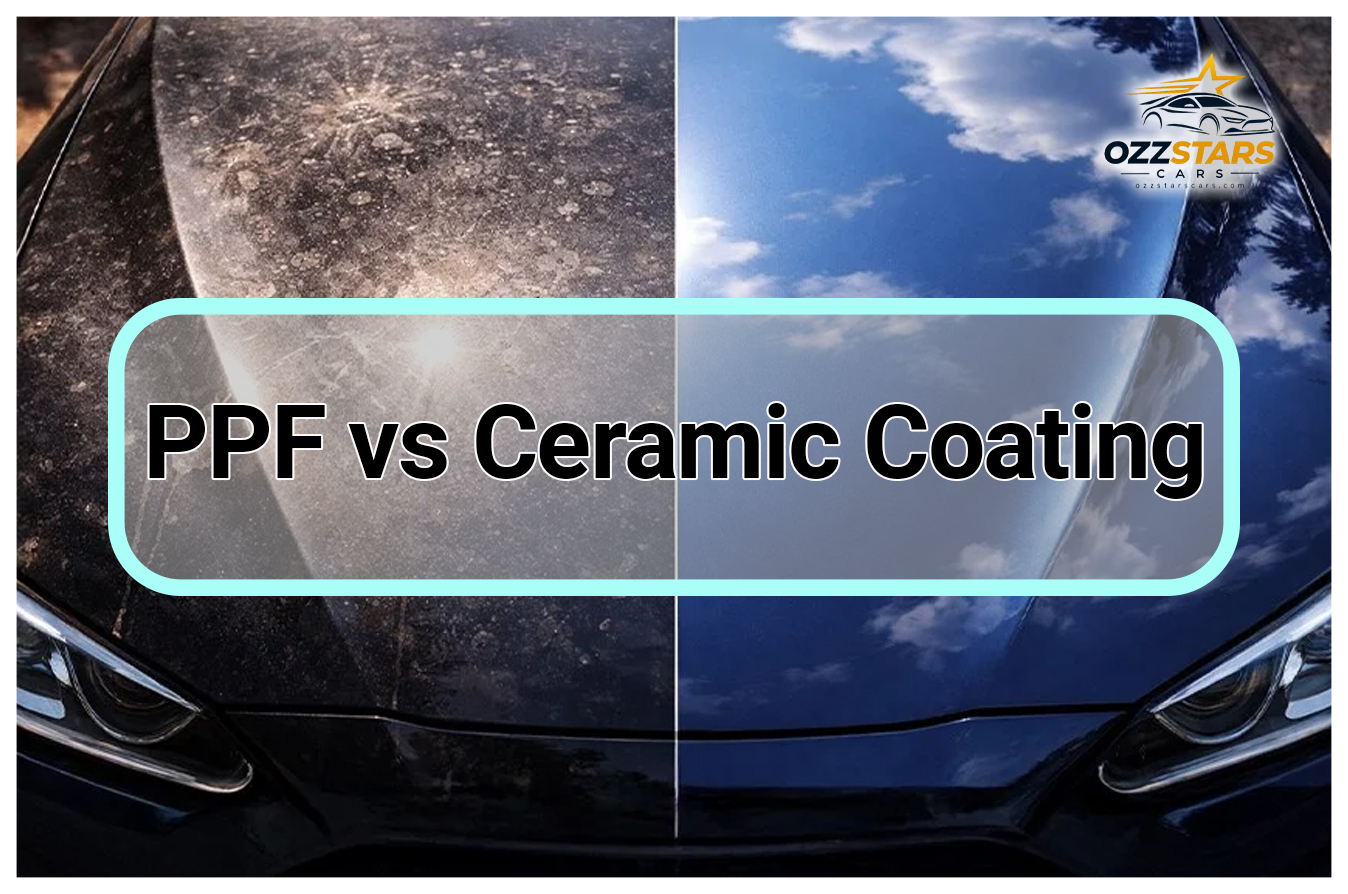
Short answer. Paint protection film is a thick, elastic urethane film that takes a physical hit so the paint does not. A ceramic coating is a hard layer a few microns thick that changes how contamination sticks to the surface and how easily it washes off. Film is for impact. Coating is for chemistry and cleaning. They solve different problems, and people routinely have both on the same car.
Once you have that straight, the buying question stops being which one wins and becomes which problem you actually have.
What each product physically is
Paint protection film is a plastic layer with real thickness. 3M's published product data for its Scotchgard Paint Protection Film Pro Series describes an 8 mil thermoplastic polyurethane film, roughly 203 microns, carrying a clear urethane topcoat, and states that minor scratches in the topcoat disappear when heat is applied (3M product page, read 2026-09-08). Thickness and elasticity are the whole mechanism: the film deforms and absorbs energy that would otherwise chip paint.
A ceramic coating is a cured liquid measured in single microns. It is hard, it is thin, and it is bonded to the clear coat. Nothing about it absorbs an impact, and no amount of hardness compensates for having almost no thickness.
That is the entire difference, and every practical consequence follows from it. A stone that would chip paint will usually be stopped by film and will not be stopped by a coating. A bird dropping left in the sun is a chemistry problem, and there the coating is the useful product.
What the warranties actually say, which is the part nobody quotes
This is where the marketing and the paperwork separate, and reading the document is free.
XPEL's published warranty information, read 2026-09-08, gives ten years on its Ultimate Plus paint protection film. What it covers is yellowing, cracking, blistering and delaminating, which are ways the film itself can fail. Among the stated exclusions are damage from the physical impact of rocks or road debris, damage from improper washing or automatic car washes, water spots and stains, scratches to the painted surface, and damage caused by non-XPEL ceramic coatings. Coverage requires professional installation.
Read that carefully. The film is sold to stop stone damage, and the warranty is a guarantee against manufacturing defects in the film, not a promise that your paint will never be marked. Those are not the same product, and a customer who assumes the first has misread the second.
Coating guarantees have the same shape. Gtechniq's published guarantee terms, read 2026-09-08, run to nine years on its top coating but guarantee against color fading and loss of gloss from UV, require application by an accredited detailer, require registration within 30 days, and require an inspection every 12 months. Stone chipping and scratching are listed among the things that void the cover.
So neither document promises what the category advertises. In the United States, the Federal Trade Commission publishes guides for the advertising of warranties and guarantees, which set out how warranty terms should be presented to consumers. The practical takeaway for a buyer is simpler: ask for the warranty document before the deposit, not after.
PPF vs ceramic coating: which one your car actually needs
You want film if the damage you are worried about arrives at speed. Motorway miles, gravel roads, a car that lives behind trucks, a dark front bumper full of small chips. Film is normally fitted to the parts that get hit: the bumper, the leading edge of the hood, mirrors, the strip behind the wheels, and door edges and cups.
You want a coating if the damage you are worried about lands and sits. Bird droppings, bugs, tree sap, water spots, road film, brake dust. The coating does not prevent these, but it slows how strongly they attach and makes removal easier, which in practice is how paint gets damaged less.
You want both if you can afford both, which is why installers offer film on the front and coating over the whole car. That is not upselling by itself. It is two different jobs.
You want neither yet if the paint is already marked. Both products preserve what is under them. Deciding what paint correction actually removes comes first, because anything you seal or cover is fixed in place until the film or coating comes off.
Living with film, which is not the same as living with paint
Film has edges, and edges are where trouble starts.
The front of the car takes the chemistry as well as the impacts. Bug residue is acidic and it bakes on, and it sits exactly where film usually is. Our guide to removing bugs from the front of a car applies to a filmed bumper as well as a painted one, with the extra caution that aggressive scrubbing at a film edge can lift it.
Automatic washes are named in the warranty for a reason. Brushes and high pressure jets aimed at an edge are the two ways a well fitted film starts to peel. Our comparison of touchless washing against a hand wash is worth reading before you assume touchless is automatically safe for filmed panels, because the trade there is chemical strength for mechanical contact.
Drying is where water hides. Water sits along film seams and runs back out afterwards, leaving marks on a car you thought was dry. The technique in our guide to drying a car without scratching it matters more on a filmed car, not less.
Self-healing is real and specific. The topcoat recovers fine surface marks with heat, as 3M states. It does not repair a cut through the film, and it does not repair the paint underneath.
The honest limits of both
Film is visible if it is fitted badly, and on some colors the edge of a panel-cut installation can be seen at certain angles. Wrapped edges cost more labor and look better.
Film ages. The warranties list yellowing, cracking and delamination precisely because they happen, which is why removal and replacement is part of owning it.
A coating does not make paint scratch resistant. The 9H figure quoted throughout this category comes from ASTM D3363, a pencil hardness test that records the hardest graded lead that will not cut a coated panel. It is a laboratory comparison and it has nothing to say about stones or keys.
Neither product removes the need for a decent wash routine, and both are degraded fastest by the same thing: grit dragged across the surface.
FAQ
Is PPF better than ceramic coating?
Neither is better, because they do different jobs. Film physically absorbs impacts and is measured in thousandths of an inch. A coating is a few microns thick and changes how contamination bonds to the surface. If you want protection from stone chips, that is film. If you want easier cleaning and better resistance to bird droppings and road film, that is a coating.
Can you put a ceramic coating over paint protection film?
It is commonly done, and coatings intended for film are sold for it. Check the film maker's warranty first, because at least one major manufacturer excludes damage caused by another company's ceramic coating from its film warranty.
Does PPF really stop stone chips?
It stops many of them, which is the honest version. Film manufacturers warrant their product against defects such as yellowing, cracking and delamination, not against every impact, and a large enough stone at speed can still mark the paint underneath.
How long does paint protection film last?
Warranty periods published by film manufacturers run for years and are tied to professional installation and to defects in the film itself. This site does not publish a lifespan figure of its own, because real life depends on climate, sun exposure, washing and how the car is used.
Do I still need to wash a car that has film and a coating?
Yes, and how you wash it matters more than either product. Both are degraded by grit being dragged across them, and both have warranty language that excludes damage from improper washing.
Sources read 2026-09-08: XPEL published warranty information for paint protection film; 3M published product data for Scotchgard Paint Protection Film Pro Series; Gtechniq published guarantee terms and conditions; US Federal Trade Commission, Guides for the Advertising of Warranties and Guarantees; ASTM D3363, Standard Test Method for Film Hardness by Pencil Test.
Manufacturers are named only as the source of their own published specifications and warranty terms. This page publishes no price, no product ranking and no test result of our own. No film or coating has been fitted or tested by this site.