Do Car Covers Damage Paint? When They Help, When They Hurt
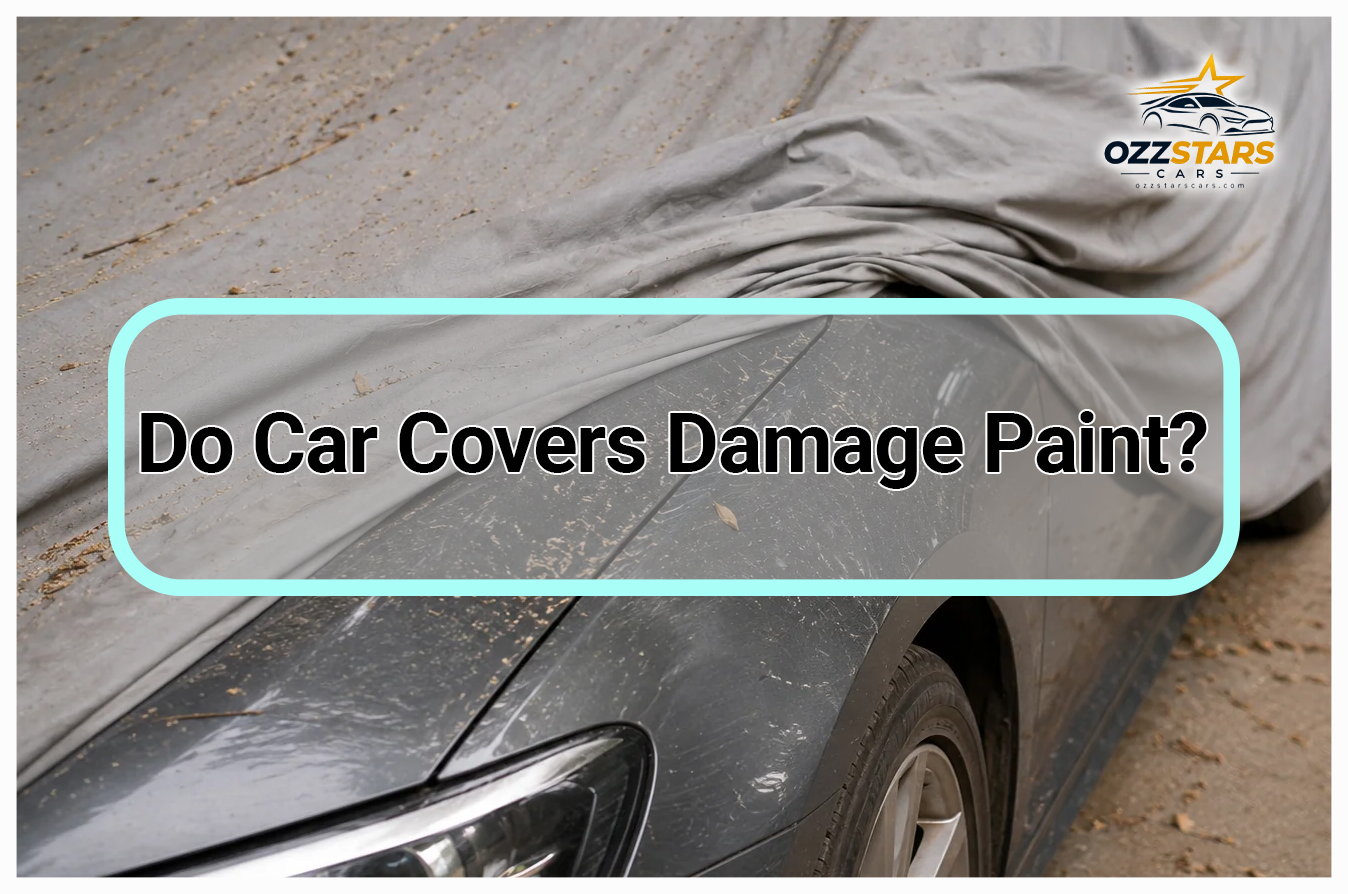
Do car covers damage paint? They can, but the cover is rarely the cause on its own. Damage comes from what is between the cover and the paint, and from movement. A cover put on a dirty car, pulled across it, or left loose to flap in the wind will rub grit into the clear coat and leave fine scratches. A clean cover that fits well, on a clean and dry car, parked out of strong wind, protects the finish from dust, sun and droppings. The conditions decide the outcome, not the cover.
That is why you will find detailers who blame covers for swirl marks and cover makers who say they protect paint. Both are describing real cars. They are describing different conditions.
Do car covers damage paint? Why a cover can scratch
A car cover is a large piece of fabric in contact with the whole top half of the car. Anything that makes that fabric move while there is grit underneath it turns it into a very large, very gentle sanding sheet. Four things cause most of the trouble.
Dirt on the car. Dust, pollen, sand and road film sit on the paint. When the cover goes on, and every time it shifts, those particles are pressed and dragged across the clear coat. This is the same mechanism behind wash-induced swirl marks.
Dirt on the inside of the cover. The inside of a cover picks up grit every time it touches the ground, gets folded against its dirty outer side, or is stored somewhere dusty. A car can be spotless and still get scratched by a cover that is not.
Wind. A cover that is loose or unsecured moves constantly in the breeze. Each movement is a small rub. Over days and weeks outdoors, that adds up, particularly on the high points: mirrors, roof edges, fender tops and the front of the hood.
Moisture and heat. A cover that holds moisture against paint for long periods, especially in heat, is not doing the finish any favors. Covering a wet car is the most common way this happens.
When a car cover protects paint
Under the right conditions, a cover is genuinely useful. It keeps settling dust off a car that is garaged for long periods. It reduces direct sun on the paint and interior. It stops bird droppings, tree sap and pollen from landing on the finish in the first place.
The clearest case for a cover is indoor storage. A car that sits in a garage for weeks at a time collects a surprising layer of dust, and removing that dust means wiping or washing, which is contact. A soft, clean cover on a clean car, in a space without wind, prevents the dust and has almost nothing to rub against.
Outdoors, the case is more mixed. The cover does keep off sun and droppings, but wind, weather and a car that gets dirty between washes all push the risk up. For a car driven every day and parked outside, many owners find that a cover is more hassle than help, and that regular washing with a good technique protects the paint better. Our guide to how to wash a car without swirl marks covers that side.
Indoor vs outdoor: a quick decision table
| Situation | Cover risk | What we would weigh |
|---|---|---|
| Garaged car, stored for weeks or months | Low, if car and cover are clean | Good use case for a soft, breathable indoor cover |
| Garaged car used most days | Low to moderate | Worth it only if you will put it on a clean car each time |
| Outdoor car in a sheltered spot, washed regularly | Moderate | Fit and wind securing matter most |
| Outdoor car in an exposed, windy spot | Higher | A loose cover here rubs constantly; consider whether you need one |
| Dirty car, covered anyway | High | Wash first or leave it uncovered |
| Wet car or damp cover | Higher | Let both dry before covering |
This is a judgment table, not a set of measured results. Your climate, where you park and how often you wash all shift the balance.
How to use a car cover without scratching the paint
If you decide a cover makes sense, the way you use it matters more than which one you bought.
Start clean and dry
Wash and fully dry the car before covering it. Coverstore, a car cover maker, gives the same starting point in its own installation instructions (read September 27, 2026): "Clean the exterior to remove all dirt and dust" and let the vehicle dry completely. The same car cover installation and removal instructions also say to "Allow engine and exhaust pipes to cool" before the cover goes on, so do not cover the car straight after a drive.
Put it on without dragging
Do not throw the cover over one side and pull it across. Instead, start from the roof, which is the highest point, and unroll or unfold the cover outward toward the front and rear, then let the sides down. Lift and place rather than slide. Keep the cover off the ground as you work, because anything it picks up from the driveway goes straight onto the paint.
Secure it against wind
A cover that follows the car's shape moves less than a loose, generic one. If the car is outdoors, use whatever securing method the cover is designed for, such as underbody straps, cords or a cable, so gusts cannot lift and shift it. If a cover keeps billowing even when secured, it is probably the wrong size for the car.
Take it off the same careful way
Removing the cover is where a lot of rubbing happens, because people drag it off in a hurry. Release any straps, then lift the cover off from one end, folding it onto itself rather than pulling it across the paint.
Fold it so the inside stays clean
Fold the sides in toward the middle so the inside surfaces face each other, then roll it from one end. That keeps the dirty outer side away from the inner lining that sits against your paint. Coverstore's instructions add that if the cover is damp, you should "allow it to dry before folding," and that it should be "completely dry before storage."
Clean the cover itself
A cover's inner surface collects dust over time, however careful you are. Clean it the way its maker's care label or instructions describe, because fabrics differ in what they tolerate. If there is no care information, ask the maker rather than guessing.
What to look for in a cover, without the brand names
We do not rank covers or recommend brands. These are the criteria that matter for paint, whatever you buy:
- Fit for your car. A cover shaped to your model moves less in wind than a loose, one-size cover.
- A soft inner surface. The side that touches the paint should be smooth and soft, and should stay clean.
- Breathability. A cover that lets moisture escape is less likely to hold dampness against the paint.
- Indoor or outdoor rating. Indoor covers are designed for dust in still air. Outdoor covers are designed for weather. Using an indoor cover outdoors, or the reverse, is a mismatch.
- Securing points. For outdoor use, some way of anchoring the cover under the car.
- Clear care instructions. If the maker does not tell you how to clean it, you will struggle to keep the inside clean.
Check each of these against the product's own description and the maker's instructions rather than a listing's headline.
Already have fine scratches from a cover?
If you have been using a cover and now see fine, hazy scratches in bright sunlight, particularly on the roof, hood and fender tops, the cover and grit together are a likely cause. These marks are usually in the top layer of the clear coat. Our explainer on what paint correction removes, and what it cannot covers how they are dealt with and why polishing is a finite resource.
Do not confuse cover marks with sun damage. A chalky, faded look on the roof and hood is oxidation, which is a different problem; see how to fix oxidized car paint for how to tell them apart.
Frequently asked questions
Can a car cover scratch clear coat?
Yes, when grit is trapped between the cover and the paint and the cover moves. Clean paint, a clean cover, a good fit and protection from wind all reduce that risk sharply.
Is it bad to put a car cover on a dirty car?
Yes. Any dust or grit on the paint gets pressed in and dragged around as the cover goes on, shifts and comes off. If you cannot wash the car first, it is usually better to leave it uncovered.
Should I cover my car outside every day?
It depends on where you park and how often you wash. In a sheltered spot on a car you keep clean, a well-fitted cover can help. In an exposed, windy spot on a car that gets dirty between washes, the cover may do more rubbing than protecting.
Can I put a car cover on a wet car?
It is better not to. Moisture trapped under a cover can sit against the paint for a long time. Let the car and the cover dry first.
Do car covers damage paint on a garaged car?
Much less often. Indoors there is no wind to move the cover and far less grit landing on the car, so the main risks are putting it on a dirty car or using a dirty cover. Keep both clean and a cover is one of the easiest ways to keep dust off a stored car.
A cover is a tool, not a guarantee. Use it on clean paint, keep it still, and keep it clean. Choose carefully.