How to Make a Used Car Look Better Before Selling
If you want to know how to make a used car look better before selling, the honest answer is short: make it clean, make it empty, and make it look looked-after. A thorough wash, a decontaminated and dried finish, an interior with nothing personal left in it, clean glass and wheels, and a neutral smell do most of the work. Small, honest cosmetic fixes can help. Heavy paint work, cheap resprays, and anything that looks like hiding a problem usually cost more trust than they gain.
Nobody can promise you a number for any of this, and we will not pretend to. What we can do is explain why each step matters to a buyer, which ones carry risk, and where the effort is usually wasted.
Why appearance matters to a buyer at all
A buyer cannot see a car's history. They cannot see how it was serviced, how it was driven, or whether it sat outside for years. So they read what they can see, and they read it as evidence.
A car that is dirty, cluttered and smells of old food tells a buyer that the owner did not pay attention. Fairly or not, they start wondering what else was ignored: oil changes, tire rotations, that warning light. A clean, emptied car does not prove good maintenance either, but it removes a reason to doubt. That is the real job of appearance prep. It is not to make the car look new. It is to stop the car's appearance from arguing against you.
This also explains why some efforts backfire. Anything that looks like concealment, such as fresh paint on one panel, a thick layer of shine on worn plastics, or a heavy perfume smell, invites exactly the suspicion you were trying to avoid.
How to make a used car look better before selling: the order that works
The sequence matters because each step makes the next one easier and less risky. Work from the inside out, and from dirtiest to cleanest.
1. Empty it completely
Start by removing everything that is not part of the car: chargers, papers, loose coins, gym bags, child seats you are keeping, and whatever lives in the trunk, door pockets and spare wheel well. An empty car photographs better and lets a buyer picture it as theirs.
Keep the things that do belong with the car together in one place: both keys if you have them, the owner's manual, and your service records. Those papers are often more persuasive than any amount of shine.
2. Clean the interior before the exterior
Interior cleaning kicks dust and debris out through the doors, so doing it first means you are not undoing a fresh wash. Vacuum from the top down, under and between the seats, and in the trunk. Wipe hard surfaces with a cleaner the label says is safe for them. Our guide on how to clean a car interior in the right order walks through the sequence and the materials that need different treatment.
3. Deal with smell by removing its cause
Smell is one of the fastest ways a buyer forms an impression. The reliable fix is to find and remove the source: spilled drinks in the carpet, food under a seat, a damp floor, a dirty cabin air filter. Covering an odor with a strong air freshener tends to make buyers wonder what is being covered. If the car has a smell you cannot find the source of, a damp one in particular, it may point to a water leak, which is worth diagnosing rather than masking.
4. Wash the exterior properly
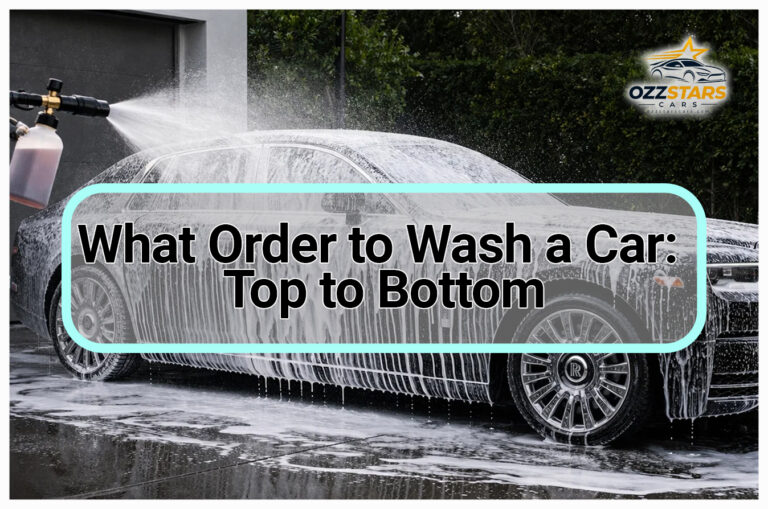
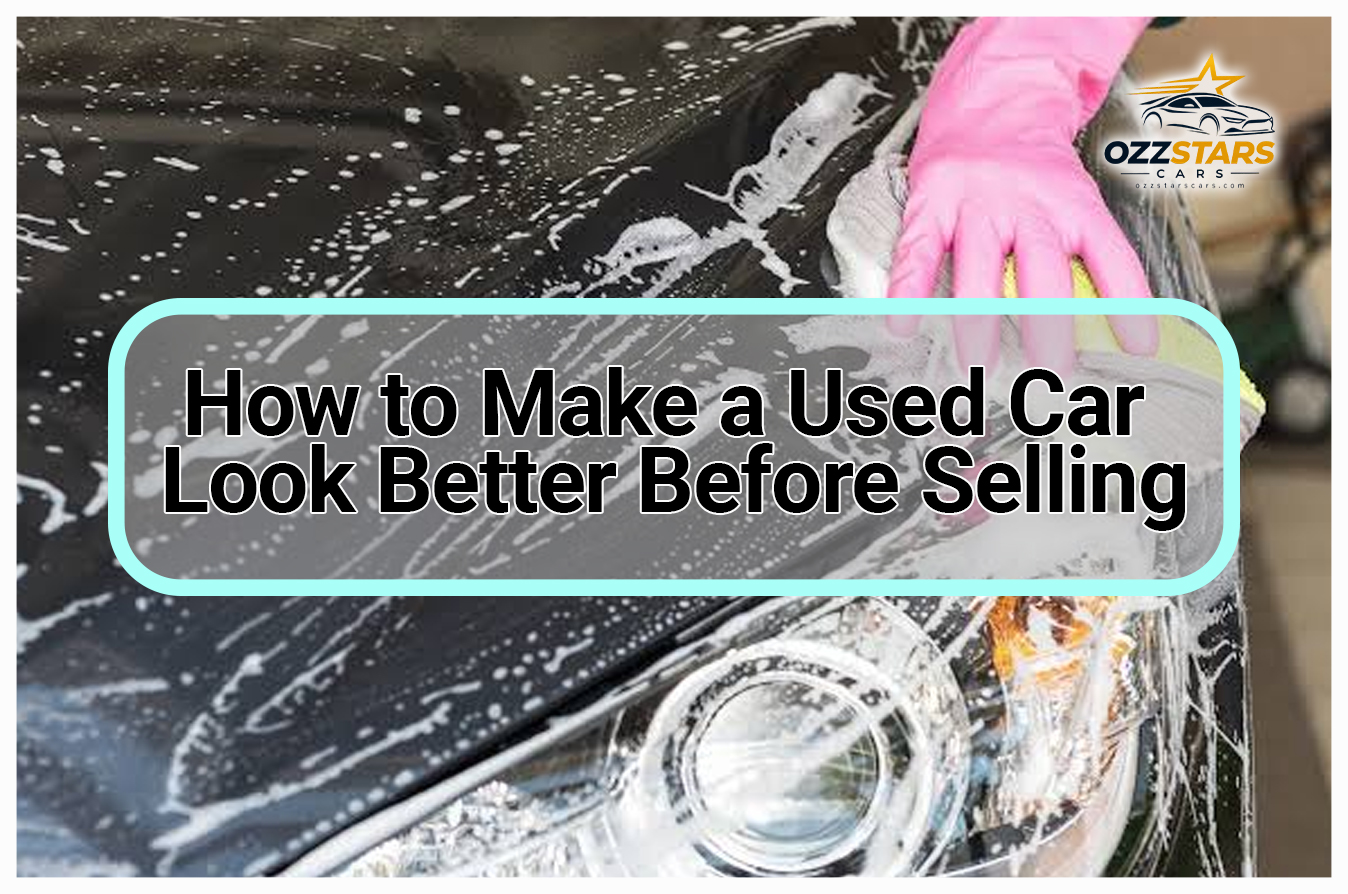
A careful hand wash removes the dirt without adding new scratches, which matters because swirl marks show up clearly in listing photos taken in sunlight. If you are not sure about your technique, our guide to washing a car without swirl marks explains what causes them and how to avoid them. Do the wheels and tires too; brake dust on the wheels is one of the first things that makes a car look tired.
5. Decontaminate and protect, if the paint feels rough
After washing, run a clean hand in a thin plastic bag across the paint. If it feels gritty, bonded contamination is dulling the finish. Clay or an iron remover can take that off, and a coat of wax or sealant afterward adds gloss and makes the car easier to keep clean until it sells. This step is optional, and it stays low risk when you follow each product's own instructions.
6. Clean the glass, inside and out
Hazy inside glass is easy to overlook and very visible in photos taken toward the light. Clean it last, after any interior sprays, so overspray does not settle on it.
Small cosmetic fixes: which ones are worth considering
Once the car is clean, you will see its real condition. This is where people either make sensible small repairs or start spending on things a buyer will not value. There is no universal rule, because it depends on the car, its price range and who is likely to buy it. These are the trade-offs to weigh.
Stone chips. Small chips on the hood and front bumper are expected on any car that has been driven. Sealing a chip that has gone through to metal can help keep rust from starting; trying to make it invisible often leaves a raised blob that looks worse than the chip. Our piece on stone chips on the hood explains the difference between fixing, sealing and leaving a chip alone.
Light scratches. Some scratches sit only in the clear coat and can be polished out; others go deeper and cannot. The fingernail test for scratch depth gives you a quick first read before you spend time or money on one.
Worn or broken small parts. A missing trim clip, a cracked interior cover or a burned-out interior bulb are small, but each one is a visible reason for a buyer to ask for a discount. They are often simple to replace. Check the owner's manual or a parts supplier for the right part.
Wiper blades and floor mats. Worn wiper blades streak the windshield on a test drive, and a torn mat is one of the first things a buyer sees when they open the door. Both are consumables; check current prices yourself before deciding.
What often backfires
These are the changes that most often cost a seller more than they gain, usually because they look like hiding something or create a new problem.
A partial respray or a large touch-up job
A single freshly painted panel rarely matches the rest of the car exactly, and a buyer or their inspector who notices it will wonder why it was painted. If a panel was repainted after an accident, say so; a buyer who finds out later will trust nothing else you told them.
Heavy compounding on thin or old paint
Clear coat is finite. Aggressive cutting to chase every mark removes some of it, and on older or previously polished paint you risk going through it. If the paint looks chalky and faded rather than scratched, that is a different problem from scratching, and more cutting is not the answer to it.
Glossy dressing on everything
A thick, shiny layer on dashboards and trim can look greasy, attract dust and, in the wrong places, create a real hazard. Armor All's own label for its Original Protectant, on its Original Protectant product page (read September 28, 2026), states it is "Not for use on floors, vehicle controls (pedals, grips, steering wheels), bench or cycle seats, cycle tires, brake drums and other surfaces where slipperiness may be hazardous." A buyer on a test drive with a slick steering wheel or pedals is a safety problem, not a presentation problem. Read the label of whatever dressing you use and keep it off controls, floors and pedals.
Tire dressing where the label does not allow it
Tire dressings differ in where their makers say they may go. Read the label, apply only to the surfaces it names, and wipe off any excess. The tread is what grips the road, and a buyer is about to drive the car.
Masking a mechanical problem with cosmetics
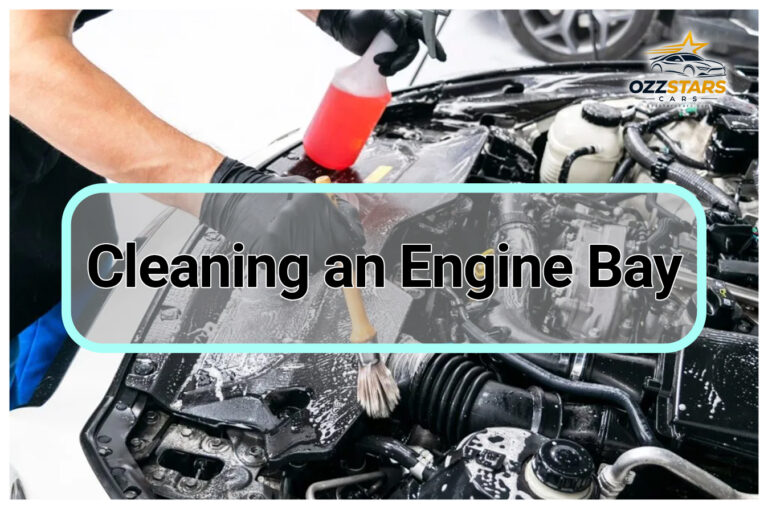
A clean engine bay looks good, but a freshly wiped engine can also look like someone removed evidence of a leak. If you clean under the hood, do it gently, keep water away from electrical parts, and do not hide anything. A warning light, a leak or a noise is a question for a mechanic, and disclosing it is part of selling honestly.
Photos: where the prep actually pays off
Most private buyers see your car first as photos. The prep you did matters most here, so a few habits help it show:
- Shoot in even light. Bright midday sun creates harsh reflections that hide the paint's color and exaggerate any swirls. Overcast light or open shade is kinder.
- Pick a plain background. A clean driveway or an empty parking lot keeps the attention on the car.
- Show the interior honestly. Include the seats, dashboard, trunk and any wear. Photos that skip an area tell buyers there is something there you did not want them to see.
- Photograph flaws you know about. Showing a known scuff up front tends to build trust and saves you a wasted viewing.
Safety while you prep
Car care chemicals are made to be used as their labels say. Work in good ventilation, especially with interior cleaners in a closed garage. Never mix products, and never combine different cleaners in the same bucket or spray bottle. Wear gloves if the label calls for them, and keep products away from children and pets. If a product's label and your car's owner's manual disagree about a surface, follow the more cautious one.
Frequently asked questions
Is a professional detail worth it before selling a car?
It can be, especially if you lack the time or the car needs deep interior cleaning. Whether it makes financial sense depends on the car's value, its condition and what the detail costs where you live. We cannot tell you it will pay for itself, because nobody can measure that reliably for a single car.
Should I fix dents and scratches before selling?
Small, clean repairs can remove an obvious reason for a discount, while large or visible paint work may raise questions. Any repair after accident damage is something a buyer deserves to be told about.
How do I get rid of a smell in a car before selling?
Remove the source first: clean spills from carpets and seats, clear out food, check for damp flooring, and replace a dirty cabin air filter. Masking a smell with fragrance tends to make buyers suspicious.
Does washing and waxing a car increase its value?
It does not change the car's history or mechanical condition, which is what drives value. It does change the buyer's first impression and helps your photos, which can make the car easier to sell. We have no reliable figure for how much, and we would be wary of anyone who gives you one.
What should I avoid doing to a car before selling it?
Avoid dressing on pedals, steering wheels and floors, tire dressing outside the surfaces its label allows, heavy compounding on thin paint, strong air fresheners, and anything that hides a mechanical or accident history.
A clean, honest car sells on trust. The goal is not to make it look new, it is to let it look like what it is: a car someone took care of. Drive informed. Sell carefully.